Thinking and reasoning about social systems

Updated on 20 April 2024

Laws and social norms in industrialised societies have been shaped by the metaphor of society as a factory and the metaphor of people as machines more than most people realise. In the emerging technoverse, biological life is perceived as becoming irrelevant. The many ways in which atomised nuclear families depend on abstract institutions is considered normal, and all those who depend on assistance from others in unusual ways are pathologised. Social power can be understood as the privilege of not needing to learn. As we live through the current human predicament we are well advised to understand capitalism as a collective learning disability that actively contributes to human and non-human suffering. A holistic social justice approach rather than a mechanistic rule based approach to collaboration between groups is at the core of the neurodiversity, disability, and indigenous rights movements.

  1. Fossil fuelled scientism of progress
  2. Social consequences of neoliberal ideology
  3. A social systems theory for the digital era
  4. The illusion of technocratic control
  5. Beyond the illusion of control
  6. Reflections with the vision of hindsight
  7. Inherent limitations of formalising social systems
  8. Evolutionary design
  9. Mental health is a function of communal health
  10. Collective learning disability induced by social power gradients
  11. Adopting a human scale aware precautionary principle
  12. Rediscovering the beauty of collaboration at human scale
  13. Conclusion
  14. References

Fossil fuelled scientism of progress

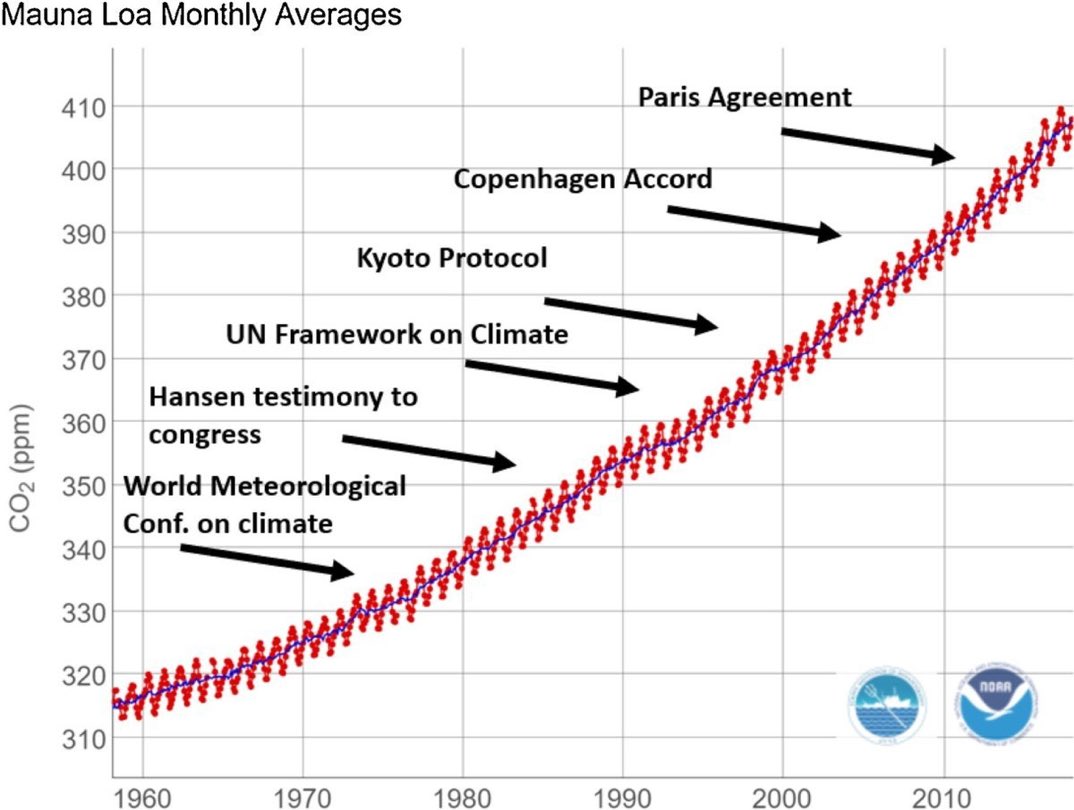
The preoccupation with technology and the exploitation of fossil fuels to expand industrial production accelerated following WWII, fuelling an illusion of infinite growth on a finite planet (Meadows et al. 1972). Anthropocentric confidence in technology and growth seems to have peaked in the 1980s, when neoliberalism was installed around the world as the future engine of wealth and prosperity.

Under the hood, the neoliberal engine was powered by the availability of computers and software, and by the economic logic of Moore’s Law (1965). The entanglement of digital communication technologies and neoliberal economics can be understood by examining the evolution of the dominant and most profitable use cases for digital automation.

Initially, the automation of logistics afforded by computers, software, and robotics allowed the production of material goods to be increased without the need for additional workers. By the 1990s however, many wealthy Western countries had reached a level of material affluence, automation, and offshoring that made it difficult to generate further profits from industrial automation. Instead, the invention of networked computing and the Web opened up new opportunities for economic growth in the abstract, non-physical digital realm, which was sold to investors and entrepreneurs as a virtually unlimited territory that awaited to be conquered – powered by the magic of Moore’s Law and neoliberal ideology (Palmer 2006).

Economic activity and the focus of automation thus shifted into domains that were one or more levels removed from the physical realm, i.e. into various forms of financial speculation, including the development of complex derivatives and entangled bundles of financial products. This increased the leverage of capital and the velocity of financial transactions, culminating in high frequency trading, speculative asset bubbles, and in the Global Financial Crisis of 2008.

Laws and social norms in industrialised societies have been shaped by the metaphor of society as a factory and the metaphor of people as machines more than most people realise. Humans are referred to as human ‘resources’, and human lives are assessed in terms of ‘net worth’ and ‘purchasing power’ (Hedges 2021). As these metaphors have expanded into the digital realm, they have not only warped our relationship with the natural world and our conception of humanity. They have also led to technocratic cults, in which corporations have taken on the role of sacred places of worship, and in which CEOs are the high priests, praising the divine qualities of artificially intelligent technologies (Rushkoff 2023). In the emerging technoverse, biological life is perceived as becoming irrelevant. When society is a factory, the only things that count in are things that can be measured (Deming 1982, 1984).

It is no coincidence that Taylorism, so-called scientific management, was conceived in the wake of the invention of the steam engine and machine assisted manufacturing, to complement the the laws of physics that governed the mechanics and the productivity of the machines on the factory floor.

Formalising the discipline of economics with mathematical tools allowed the scientific approach to managing humans to be extended to the scale of nation states – another conceptual building block for organising human activities in industrialised societies. There are a number of parallels between the impact of the development of economic theories on human society and the social impact of the development of the Internet.

Neither the Internet nor economics draw directly on an evidence based understanding of physics, biology, and human behaviour. Both the Internet and economic theories are best understood as prescriptive rather than as observational tools, as language systems that are based on specific European and North American cultural conventions that are assumed as ‘sensible’ (common sense) or ‘obvious’ (self-evident). With these language systems in place we can measure data flows and economic performance, but only in terms of the scope and the preconceived categories afforded by the formal protocols and languages (Rees 2023), (Alkhatib 2021), (Bowles 2016).

The introduction of a formal economic language system and the introduction of formal protocols for digital communication have shaped human culture around the social ideologies espoused by early industrialists and early information technology entrepreneurs. Over course of the last two centuries governments have become increasingly dependent on economists and information technology entrepreneurs in order to understand and engage with society, and also to understand what what technological options are on the horizon, to the extent that corporations directly advise heads of states (Pennington 2023). In this process anything that lies beyond the scope of what is deemed relevant or acceptable is discounted as non-essential or unproductive.

In the multiple bottom line approaches that have become popular in the context of the United Nation’s Sustainable Development Goals, the conveniently simplistic thinking becomes evident when metrics from the natural world are translated into monetary metrics, as if a monetary number can adequately represent the loss of biodiversity and the destruction of entire ecosystems in the name of economic progress.

Astute observers have been lamenting the chasm between digital hype and the way that technology manifests in our lives for decades (Nelson 1999). Based on what we have seen so far, we have to conclude that the design of digital services, when conducted within the bowels of transnational corporations, with millions and in some cases billions of users, without giving these users the ability to shape the design, is a form of corporate social engineering, whether intentional or not.

Social consequences of neoliberal ideology

The institutions and accepted cultural practices of the modern globalised world that consistently prioritise free flow of capital are traumatising the entire planet. The polycrisis, which is the modern human predicament that we are all living through, can be illustrated with three short cultural narratives:

  1. ‘Prayer for the Earth: An Indigenous Response to These Times’ (Rushworth 2024).
  2. The effects of the one-dimensional logic of global capital, illustrated by looking at the overall cultural and ecological impact on the small island nation of Nauru (Çenet 2023)
  3. The effects of the arbitrary anthropocentric cut-off points (Bettin 2024) of the bell curve in the social realm, illustrated by looking at the overall cultural and ecological impact on a small island nation such as Tuvalu (Malie, G. et al. 2023).

These narratives illustrate the cognitive and emotional blindspots that are baked into ‘normality’.

The life destroying impact of the modern human obsession with measuring, and then reducing the dimensionality of all problem spaces to the one-dimensional metric of financial capital can hardly be overestimated. The classic novel Flatland (Abbott 1884) comes to mind. Flatland illustrates the confusions and the loss of meaning created by reducing four dimensional spacetime to two spatial dimensions and the dimension of time, i.e. a reduction of a four dimensional problem space to three dimensions.

The semantic chemical building blocks of the biological world we inhabit contain thousands of dimensions. If we add emergent phenomena at larger levels of scale, we live in a world of millions and billions of semantic dimensions. We all have our own unique way of making sense of the world, from the perspective of the relational ecology of care that surrounds us.

And yet, we live in a world where human social affairs, across all levels of scale, are dominated by a one-dimensional metric. Some still recognise that there is biological life beyond finance, but our minds have been warped by extensive exposure to a one-dimensional metric.

The Anglosphere is leading the world in legal engineering and perception management.

A social systems theory for the digital era

The pioneering work on a universal social systems theory by Niklas Luhmann (JSTOR 2021) in the 1970s through to the 1990s provides a deep and insightful analysis of the effect that the emergence of modern one-to-many communication technologies, i.e. mass media, has had on the evolution of social systems. Many of Luhmann’s insights have only gained relevance in our era of ubiquitous many-to-many communication technologies, i.e. digital social media, which are controlled by global technology corporations.

Luhmann’s perspective and working method were informed by his background as a legal scholar. His work relied heavily on his idiosyncratic ‘Zettelkasten’ note-taking method, over the course of thirty years resulting in a set of drawers with over 90,000 index cards for his research. A digitised archive of all his index cards is available online in the Niklas Luhmann Archiv (University of Bielefeld 2024).

In Niklas Luhmann’s theory of social systems, culture is analysed and constructed at a population level scale that transcends human cognitive and emotional limits, in the form of explicit communication between abstract social subsystems, such as the media system, the legal system, the family system, the economic system, etc.

The illusion of technocratic control

Attempting to explain cultural evolution of socially powered-up super-human scale societies from a top-down, outside-in perspective is appealing from the perspective of the established institutional landscape. The top-down approach prioritises the perspective of so-called authorities over the perspectives of the thousands and millions of local and cosmolocal (Niaros et al. 2020) communities that shape lived experiences at human scale.

On the surface, mass media and digital social media seem to expose billions of humans to billions of perspectives. Upon closer examination this assumption turns out to be an oversimplification that obscures important systemic social power differentials. A small number of mass media organisations and social media celebrities have audiences that measure in the millions and billions, but at the receiving end of all acts of communication, all humans are constrained by cognitive and emotional limits, and by the physical limit of days that are constrained to 24 hours. By design, mass media and social media algorithms guarantee that a very small number of perspectives benefit from being thousands or millions of times more visible than others (Metzler et al. 2023).

Digitally connected humans are exposed to continuous communication overload, including the sensory overload generated by digital technologies. Niklas Luhmann’s theory is well suited for understanding the effects of the small number of perspectives that are amplified by digital algorithms. It is less well suited for understanding the bottom-up development of social movements that involve billions and trillions of communication acts at human scale.

With the help of machine learning algorithms, the latter factor of cultural evolution can be analysed to some extent, but in the current legal landscape, data usage rights and access limitations effectively only makes this capability available to the dominant players in the institutional landscape. The questions of interest for these players are by definition limited to the comfortable sphere of discourse that is framed by the world view of powered-up authorities. In fact, any analytical results that may threaten dominant cultural narratives are likely to be fed into the re-configuration of social medial algorithms, in ways that dampen inconvenient perspectives and that reinforce dominant cultural narratives.

By design, thoughtful critical narratives are highly unlikely to reach the wider public within non-judgemental framings and containers. Instead, the operators of social media platforms benefit greatly from simplistic attention grabbing narratives of all colours, thereby allowing established authorities to promote their perspectives as the ‘voice of reason’, consistently in favour of perpetuating the social power structure of the capitalist institutional landscape (Fischer 2009).

Beyond the illusion of control

Regardless – or rather due to – the way in which social medial algorithms evolve and the ways in which mass media are tied to dominant cultural narratives, peer-to-peer (P2P) communication at human scale is being used by billions of people, including encrypted and anonymous forms of communication. This somewhat less publicly visible infrastructure, which is increasingly de-centralised, diverse, and distributed, is the substrate in which social movements increasingly operate.

Human scale P2P collaboration ‘Together we know everything, together we have everything’ (P2P Foundation contributors 2023) is what remains after subtracting all the communications between mass media organisations, social media celebrities, big governments, and corporations. In contrast to the pre-Internet era, such collaboration has become cosmolocal, and is catalysing intersectional solidarity and global sharing of lived experiences on the margins of societies, and across social movements.

The diversity and the many millions of cosmolocal collaborations do not neatly fit into any finite comprehensible number of categories, and thus they escape analysis within Luhmann’s framework.

In Luhmann’s theory the focus is on communication between abstract systems, each of which may include many social agents, e.g. institutions and people. In this theory semantic integration between systems occurs in the explicit communication between systems.

This is a pragmatic approach to collective sensemaking in a powered-up social world of super-human scale systems in which one-to-many communications play a substantial, if not the dominant role, in maintaining cultural inertia. Relevant metrics include opinion polls, votes, and economic transactions. Typical outputs include persuasive communication, laws, and social norms. Key tools include mass media and social media.

Luhmann assumes culture is encoded in explicit communication between systems of social agents (Strauch 1989). In this context social agents can be individuals or institutions at any level of scale.

The public digital realm is entirely socially constructed in terms of explicit communication and explicit encoding of many rules. Therefore it lends itself to analysis with the help of Luhmann’s systems theory of society. 

Strengths

  • Analysis of socially constructed large scale systems involving millions of people.
  • Awareness of human cognitive limitations.
  • Awareness that anthropocentric control is an illusion.
  • Awareness that all large scale human decisions are likely to cause harm, often out of immediate sight of the decision makers.
  • Staying clear of moralising and recognising the dangers of moralising.

Weaknesses

  • Lack of acknowledgement of the role of collaborative niche construction within the evolution of all living ecosystems.
  • Lack of awareness of the limits of human scale, the diverse possibilities and dynamism that open up at human scale, and how corporate and state controlled large scale digital systems exclude all these possibilities, and, with the help of protocols and algorithms, cultivate public perceptions of both paradigmatic inertia and insignificant yet somehow dangerous irritants.
  • Lack of awareness of the innate collaborative tendencies of humans.
  • Naive belief that socially powered-up systems such as markets can channel self-interest into collective benefits.
  • Due to a focus on second order cybernetics, limited focus on the feedback loops between socially constructed super-human scale systems and biological and ecological systems, including the extent of ecological externalities, which already became apparent with the Limits to Growth, a weakness that could be rectified by considering higher order cybernetics (Yolles 2021), and with the help of the recursive formalism of higher order category theory (nLab 2024).

The Australian human scale permaculture pioneer David Holmgren (2023) would likely see similar limitations in Luhmann’s theory. The diversity and the many millions of cosmolocal collaborations today do not neatly fit into any finite comprehensible number of categories, and thus they escape analysis within Luhmann’s framework. Collaborations amongst permaculture practitioners are a good example.

Reflections with the vision of hindsight

Forty years ago we had less scientific evidence regarding all the factors that we can identify as weaknesses in Luhmann’s theory with the vision of hindsight. But already in the late 1990s, during Luhmann’s lifetime, educated people had access to plenty of indicators and warning signs, that all along indigenous people intuitively understood many of the flaws in our powered-up and hypernormative society. 

Collective cognitive dissonance in WEIRD societies (Henrich 2021) has been rising, yet has been kept out of the public discourse, precisely because of the way the modern media system functions in entirely socially constructed super-human scale systems, exactly as described by Luhmann. This is how WEIRD became truly WEIRD Theatre, i.e. WEIRDT (Bettin 2023c), and how hypernormative social norms and laws dehumanised, pathologised, and criminalised growing segments of the population, to an extent that has started to visibly erode the social license of established institutions and the associated paradigmatic inertia from the bottom up.

Like Marx, Luhmann is an excellent analyst. Unlike Marx he avoids speculating about the future. To avoid gambling with the future of humanity and to avoid unleashing even greater harm on the planetary ecosystem (Michaux 2023), we can build on the strengths of Luhmann’s insights as well as on what we now recognise as weaknesses in his theory. 

From what is known about Luhmann and his lifetime project of conceptualising the social world (Moeller 2021), (Schmidt 2021), (Morgner 2022), his perseverance, his idiocyncratic sense of humour, and his unique system of working, today many in the Autistic community would likely regard Luhmann as neurodivergent.

Inherent limitations of formalising social systems

The introductory lecture ‘Introduction to Luhmann & Systems Theory’ (Tohme and Gangle 2021) outlines how category theory can be used to formalise Luhmann’s theory.

Systems are human mental abstractions, they live in human minds, and via communication, especially dialogues, they incrementally find their way into other human minds with varying levels of fidelity (Lakoff and Johnson 1981). Luhmann’s theory focuses on the explicit communication between abstract systems, ignoring that these abstractions can only come into social circulation with the help of symbolic language, and that different people may have different mental models of a specific system (Milton 2012).

In the above introductory lecture, the abstract conceptual nature of systems is illustrated in the observation that ‘the system needs the environment, the environment does not need the system.’

The very definition of systems like the the legal system, the media system, the economic system, the family system, etc. will always be fuzzy, and the commonalities tend to be hard to pin down. The legal system is one of the least fuzzy systems, as only laws that are written down and have been enacted count. In contrast, the definition of a system like the media system is much less well defined and less formalised – yes, all communication acts can be identified, but which ones involve agents that are part of ‘the media system’?

Evolutionary design

Evolutionary design (Bettin 2021a) is an approach to sensemaking and adapting sociotechnological systems based on the principles of cultural evolution that can be derived from anthropological observations and from archaeological evidence about human scale societies that predate the emergence of civilisations.

In evolutionary design the notion of intentional design is entangled with the concept of evolution within an ecological context, resulting in a profound shift in underlying assumptions about the ability of human institutions to reliably produce predictable design outcomes, especially at larger scales, at which human cognitive and emotional limits come into play.

Cultural evolution entails not only the evolution of collaborative relationships and supporting tools within a group, but also the evolution of collaborative relationships between groups with many cultural commonalities, as well as between groups with few cultural commonalities.

In Evolutionary design the focus is on communication between concrete social agents, specifically on the evolution of shared understanding and knowledge co-creation, recognising that knowledge may pertain to the system or to the environment, and that the internal models that agents maintain act as the semantic integration points between systems. Many of these semantic integrations are not visible as explicit communication but show up in the form of tacit knowledge, i.e. as unobservable and often subconscious processes within each social agent.

This is an approach to collective sensemaking at human scale that aims to maximise shared understanding and long-term collaborations, which in turn depends on the ability to nurture psychological safety and maintain lifetime relationships. Relevant metrics are hard to quantify objectively and include mutual trust, wellbeing, and biodiversity. Typical outputs include tacit and explicit models of shared understanding of the world, not limited to social norms. Key tools include de-powered dialogue (Bettin 2023a), Open Space (Owen 2008), prosocial principles (Ostrom 2015), and design justice principles (Design Justice Network 2018).

The evolutionary design approach builds on experience with the bottom-up Socialisation, Externalisation, Combination, Internalisaton (SECI) model of knowledge co-creation (Nonaka et al. 2008), and on collaboration in Open Space.

The principles that underpin evolutionary design complement the social systems theory by Niklas Luhmann. Whilst the principles of evolutionary design have been distilled from thirty years of personal experiences with cultural evolution in human scale groups and between human scale groups (Bettin 2020), informed by foundational principles for the emergence of nested complex systems (S23M 2023) from a bottom-up, inside-out perspective, Niklas Luhmann starts with a top-down, outside-in perspective.

In contrast to Luhmann’s theory, the multi-level approach of evolutionary design does not assume completely functionally closed systems. Instead of the social system as a whole including a model of itself, evolutionary design recognises that each social agent within a social system is assumed to maintain an internal model of the whole social system and the environment. These internal models are always simplifications, as all agents are understood to have cognitive and sensory limits. In both approaches social agents may be part of one or more systems. 

In evolutionary design, culture is experienced and co-created at a human scale that is comprehensible for humans, adapted to human cognitive and emotional limits, in the form of shared understanding, by nurturing trustworthy lifetime relationships.

In complex, socially powered-up empires and modern nation states, i.e. hierarchically structured large scale societies, which are governed by abstract institutions with formal authority to make decisions that affect millions and sometimes even billions of people, both approaches have their place and complement each other.

Mental health is a function of communal health

The modern disciplines of psychology Fechner (1860) and psychiatry Reil (1808) are a product of the European industrial era, focused on helping individuals to cope with the mental burden and cognitive dissonance that is generated by having to function – or pretending to be functioning – as a cog in the industrialised machine. The problems of alienation are as old as industrialisation. Karl Marx is famous for writing extensively about the topic (1844).

After decades of outsourcing and offshoring, many of the so-called rich nations are no longer heavily industrialised in the classical sense of producing material goods. Instead, many people are employed in the so-called service sector, and many of those who have attained higher levels of education, i.e. certified professionals, work in bullshit jobs (Graeber 2018). Those performing such jobs feel that their job is largely meaningless, and in many cases, that it actively contributes to the modern human predicament.

This is the result of an oxymoronic economic system that literally optimises for the appearance of busyness. This is not a joke, and many marginalised people are fully aware of this fact.

The specific challenge that mental health professionals face is a Diagnostic and Statistical Manual American Psychiatric Association (2013) that reflects the cultural bias of Western ‘normality’, in which sanctified bullshit (Spicer 2020) is the informational fuel that runs the so-called economy. Therapists and psychiatrists have the best intentions, and most genuinely want to help people, but whatever assistance they provide, at the latest when their patients are sent back into the economic engine to ‘perform’ in the so-called economy that is liquidating the living planet, they will again suffer from predictable mental health problems.

Surviving on the edges of modern society is an art. The arts and regular immersion in genuinely safe Open Spaces help us imagine and co-create ecologies of care in which care and mutual aid are the primary values. Healthy artistic and Autistic life paths by necessity differ from ‘normality’ (AutCollab 2024).

There is an urgent need to catalyse Autistic collaboration and to co-create healthy Autistic, artistic, and otherwise neurodivergent whānau, i.e. extended chosen families, all over the world. Marginalised people depend on assistance from others in ways that are pathologised in hypernormative WEIRD societies (Bettin 2019). However, the many ways in which atomised nuclear families and individuals depend on abstract institutions in far away places is considered ‘normal’. The endless chains of trauma must be broken. 

Collective learning disability induced by social power gradients

The story of infinite economic growth and technological progress portrays a completely delusional and scientifically impossible world (Meadows 1972), (Rees 2023), which not only ignores biophysical limits, but also human cognitive and emotional limits. Nurturing the human capacity to extend trust to each other, and engaging in the big cycle of life as part of an ecology of care beyond the human is the biggest challenge of our times.

Social power can be understood as the privilege of not needing to learn, and taking the liberty of making decisions that affect large populations, in complete ignorance of our own individual human cognitive and emotional limits, which prevent us from fully comprehending the needs and unique circumstances of thousands of diverse communities and millions of people (Bettin 2021b).

Stepping back, looking across all empire building civilisations, the collective learning disability induced by powered-up social relationships can be traced to the following ways of systematically distorting and dismissing lived experiences:

  1. Oversimplification – by reducing complex problem spaces to a much lower (one!) dimensional space. This is the commonality across all pyramidal systems of power – there is one perspective that dominates over all others (Shiva 1996).
  2. Inducing a systemic power differential – by distorting the oversimplified one dimensional metric with the notion of ‘interest’. This is the religion of economics (Graeber 2011).
  3. Watering down the precautionary principle – via cognitive blind spots created by the arbitrary normalising cut-off points of the bell curve in the social realm. Example: entire island nations completely get ignored until they are doomed. Their local existence is deemed ‘insignificant’ in relation to what happens in the so-called ‘real’, i.e. the big ‘normative’ world where all decisions are made. This is the scientism that is blooming in the era of big junk data.
  4. Systematically exploiting the ambiguities of linear narratives – by nominating a convenient ‘authority’ for interpretation. For a current example, we only need to look at the way Julian Assange is treated by the British Crown. Last century the world had Soviet dissidents. This century the United States are producing American dissidents. The Anglosphere is ‘leading’ the world in legal engineering and perception management.
  5. Systematically exploiting cognitive blind spots – created by translations between different languages, again by nominating a convenient ‘authority’ for interpretation. Aotearoa is a poster child for this approach (Network Waitangi Whangarei 2012). This goes hand in hand with implicit assumption that some languages are more ‘primitive’ than others.
  6. A misguided focus on ‘winning’ arguments – rather than engaging in omni-directional learning to better understand each other. This is the bullying that is taught in business schools, i.e. the art of marketing, sales, and corporate power politics. The most honest conversation that I have had on this topic was with a former technology investor who describes business schools as ‘places that train people how to become a bad person’. My own attempts at educating MBA students in the neurodiversity paradigm were also disillusioning and traumatising.

None of this is new. The old Daoist scholars such as Lao Zi and Zhuangzi knew as much from lived experiences with powered-up empires over 2,500 years ago. The elements above are the cultural foundation on top of which it becomes possible to cloak highly coersive and abusive ‘normalisation’ therapies such as Applied Behaviour Analysis (ABA) as evidence based best practice (AutCollab 2021).

Adopting a human scale aware precautionary principle

On the basis of the evidence available to us today, we are well advised to fully acknowledge human limitations, including the limitations of human science and technologies conceived by humans. This entails adopting a scale-aware precautionary principle in all human endeavors:

At small (human) scales, practicing a high level of autonomous communal self-governance and applying a political conception of the precautionary principle: ‘Communal decision making in Open Space, supported by an advice process and mutual trust, should incorporate a margin of safety; activities should be limited below the level at which no adverse effect has been observed or predicted (margin of safety)’.

At large (super-human) scales, respecting the sanctity of the living planet, and applying a strict, science based conception of the precautionary principle: ‘Activities that present an uncertain potential for significant harm should be prohibited unless the proponent of the activity shows that it presents no appreciable risk of harm (prohibitory)’

Together, the two parts of the scale-aware precautionary principle imply that no community, regardless of scale, is entitled to conduct an activity that presents an uncertain potential for significant harm beyond small (human) scales.

To avoid the potential for unlimited harm, the scale-aware overarching precautionary principle tells us that social governance should never be placed in the hands of any powered-up person or institution with super-human scale decision making abilities.

A principle based and scale-aware social justice approach rather than a rule based approach to collaboration between groups is at the core of the evolutionary design approach that has been distilled from a range of sciences and transdisciplinary practices, including from the intersectionality between the neurodiversity, disability, and indigenous rights movements (Walker 2013, 2014), (Bettin 2023b). The evolutionary design approach is compatible with Luhmann’s theory in that the smallest unit of knowledge creation is a dialogue within or between systems.

Rediscovering the beauty of collaboration at human scale

We currently live in traumatising super-human scale societies.

There’s a “pervasive warlike culture” in the U.S. that leads us to approach just about any major issue as if it were “a battle or game in which winning or losing is the main concern,” she wrote. It’s a deeply entrenched cultural tendency that has shaped politics, education, law, and the media.
– Kate Yoder, War of words, (2018)

Growing numbers of marginalised people are involved in de-powering and co-creating alternative human scale social systems and communities (Bettin 2023e), whilst at the same time still interacting with super-human scale powered-up institutions out of the necessity to survive (Bettin 2023d). 

The evolutionary design approach infuses social construction with:

  1. Lessons from our current understanding of biological ecosystems and organisms.
  2. The scale aware precautionary principle that reflects the timeless patterns of human limitations, which become visible when synthesising the insights from anthropology, archaeology, and history, including the rise and inevitable fall of all powered-up civilisations.

Individual social agents (organisms) are not only participants in a system, within ecological and biological processes they are also complex systems themselves, resulting in a structure of nested systems. For example, a mammal can be understood as a collection of interacting subsystems, i.e. the circulatory system, the nervous system, the mental system (all the mental models of the environment), the digestive system, etc. Each of these subsystem consists of specific agents (organs and cells). Whilst Luhmann’s theory could be used to describe the communication between these systems in abstract terms, evolutionary design is also equipped to describe the communication between specific organs and cells, and allows us to take a holistic approach to human wellbeing at human scale that is compatible with our evolutionary history.

Innovation and cultural change can only be transformative if it substantially redefines social norms and so-called best practice (de Decker 2022), and for this we need appropriate conceptual tools (Bettin 2017), including therapies that help tackle the modern addictions to social power and convenience, to overcome cultural blind spots and expand the sphere of discourse.

Conclusion

Nearly all our current platforms and applications in the digital realm are socially powered-up by the religion of the invisible hand, in contrast to biological ecosystems and organisms. As we live through the current human predicament we are well advised to understand the religion of the invisible hand as a collective learning disability that actively contributes to human and non-human suffering.

All of the above is just a long way of explaining what many indigenous grandmothers have understood about human scale all along, without needing to resort to modern science and modern social theories (Angarova 2023): 

 “Leave us alone, we know what we’re doing.”

References

Abbott, E. A. (1884) Flatland: A Romance of Many Dimensions. https://www.gutenberg.org/ebooks/201 .

Alkhatib A. (2021) ‘To Live in Their Utopia: Why Algorithmic Systems Create Absurd Outcomes. Why Algorithmic Systems Create Absurd Outcomes.’ CHI Conference on Human Factors in Computing Systems (CHI ’21), May 8–13, 2021, Yokohama, Japan. ACM, New York, NY, USA, 14 pages. https://doi.org/10.1145/3411764. 3445740

American Psychiatric Association (2013) Diagnostic and Statistical Manual of Mental Disorders (DSM-5-TR).

Angarova, G. (2023) ‘Understanding Suffering and Knowing Our Place.’ Holding the Fire: Episode 4. Resilience.org. October 2023.

AutCollab (2021) Ban of all forms of Applied Behaviour Analysis. https://autcollab.org/aba/ .

AutCollab (2024) Ecologies of Care. https://autcollab.org/knowledge-repository/ecologies-of-care/.

Bettin, J. (2017) ‘Designing filtering, collaboration, thinking, and learning tools for the next 200 years.’ Cultural Evolution Society Conference, Jena, Germany. September 2017. https://s23m.com/ces2017/index.html.

Bettin, J. (2019) ‘Celebration of interdependence.’ Autcollab.org. November 2019. https://autcollab.org/2019/11/13/celebration-of-interdependence/ .

Bettin, J. (2020) ‘Autistic people – The cultural immune system of human societies.’ AutCollab.org. April 2020.

Bettin, J. (2021a) ‘Evolutionary Design.’ https://jornbettin.com/2021/08/15/evolutionary-design/ .

Bettin, J. (2021b) The Beauty of Collaboration at Human Scale. Timeless patterns of human limitations. S23M.

Bettin, J. (2023a) ‘De-powered dialogue.’ AutCollab.org. November 2023. https://autcollab.org/2023/11/28/de-powered-dialogue/ .

Bettin, J. (2023b) ‘Intersectional solidarity and ecological wisdom.’ AutCollab.org. December 2023. https://autcollab.org/2023/12/09/intersectional-solidarity-and-ecological-wisdom/ .

Bettin, J. (2023c) ‘unWEIRDing Autistic ways of being’. AutCollab.org. November 2023. https://autcollab.org/2023/11/03/unweirding-autistic-ways-of-being/ .

Bettin, J. (2023d) ‘Surviving + De-powering + Thriving’. AutCollab.org. October 2023. https://autcollab.org/2023/10/30/surviving-de-powering-thriving/ .

Bettin, J. (2023e) ‘De-powering human societies.’ https://jornbettin.com/2023/05/18/de-powering-human-societies/.

Bettin, J. (2024) ‘Life defies the dehumanising cut-off points of the bell curve’. AutCollab.org. February 2024. https://autcollab.org/2024/02/21/life-defies-the-dehumanising-cut-off-points-of-the-bell-curve/ .

Bowles, S. (2016) The Moral Economy: Why Good Incentives are no Substitute for Good Citizens. Yale University Press.

Çenet, R. (2023) ‘Visiting the Fattest, Most Cigarette-Addicted and Least Visited Country’. November 2023. https://youtu.be/x1KrGZRzVGY.

de Decker, K. (2022) ‘De-Electrify everything’. Estonian Green Movement’s Degrowth summer school. August 2022. https://youtu.be/GqcMnrUWNM0.

Deming, W. E. (1982) Out of the Crisis. Massachusetts Institute of Technology.

Deming, W. E. (1984) ‘The 5 Deadly Diseases.’ 1984. Deming Institute. https://youtu.be/2F1rhik2_X0.

Design Justice Network (2018) ‘Design Justice Network Principles.’ https://designjustice.org/read-the-principles .

Fechner, G. (1860) Elemente der Psychophysik. Leipzig : Breitkopf und Härtel.

Fischer, M. (2009) Capitalist Realism: Is There No Alternative? Zero Books.

Graeber, D. (2011) Debt: The First 5,000 Years. Melville House Publishing.

Graeber, D. (2018) Bullshit Jobs : A Theory. Penguin.

Hedges, C. (2021) ‘The Cult Of The Self.’ April 2021. https://youtu.be/QZIVQ8ExqEY .

Henrich, J. (2021) ‘The Weirdest People in the World. How the West Became Psychologically Peculiar and Particularly Prosperous.’ Penguin Press.

Holmgren D. (2023) ‘Small and Slow Solutions – Permaculture Design.’ The Great Simplification #96. October 2023.

JSTOR (2021) ‘Unlocking Luhmann: A Keyword Introduction to Systems Theory’, pp. 259-274 (16 pages). https://doi.org/10.2307/j.ctv2f9xsr5.72 .

Lakoff, G. and Johnson, M. (1981) Metaphors We Live By. The University of Chicago Press.

Malie, G. et al. (2023) ‘A country being lost to rising sea levels.’ Channel 4 News. December 2023. https://youtu.be/H-ar5drhjzU .

Marx, K. (1844) ‘Ökonomisch-philosophische Manuskripte aus dem Jahre 1844’ (the Paris Manuscripts).

Meadows, D. (1972) The Limits to growth; a report for the Club of Rome’s project on the predicament of mankind. A Potomac Associates book.

Metzler, H. et al. (2023) ‘Social Drivers and Algorithmic Mechanisms on Digital Media.’ Perspectives on Psychological Science OnlineFirst. July 2023. https://doi.org/10.1177/17456916231185057 .

Michaux, S. (2023) ’Industrial transformation away from fossil fuels will not go as planned.’ Part 1: https://youtu.be/iqjsPa8bUaA. Part 2: https://youtu.be/QqEjHZZiqAg.

Milton, D. (2012) ‘On the Ontological Status of Autism: The ‘Double Empathy Problem.’.’ Disability & Society 27, 6 (2012): 883–887. https://doi.org/10.1080/09687599.2012.710008.

Moeller H. G. (2021) ‘Luhmann & Cybernetic Identities.’ Undisciplined. January 2021. https://youtu.be/j5SaBSFApwc .

Moore, G.E. (1965) Cramming more components onto integrated circuits. Electronics 38: 114–117.

Morgner, C. (2022) ‘Luhmann’s Evolution of Meaning.’ Undisciplined. December 2022. https://youtu.be/je97cYGO7k8 .

Nelson, T. (1999) ‘Ted Nelson’s Computer Paradigm, Expressed as One-Liners.’ Xanadu. https://xanadu.com.au/ted/TN/WRITINGS/TCOMPARADIGM/tedCompOneLiners.html .

Network Waitangi Whangarei (2012) Ngāpuhi Speaks. He Wakaputanga o te Rangatiratanga o Nu Tireni and Te Tiriti o Waitangi, Independent Report, Ngāpuhi Nui Tonu Claim.

Niaros V. et al. (2020) ‘Cosmolocalism: Understanding the Transitional Dynamics Towards Post-Capitalism.’ tripleC Communication Capitalism & Critique Open Access Journal for a Global Sustainable Information Society. September 2020. DOI: 10.31269/triplec.v18i2.1188 .

nLab (2024) Higher Category Theory. https://ncatlab.org/nlab/show/higher+category+theory .
Nonaka. I. et al. (2008) Managing Flow: A Process Theory of the Knowledge-Based Firm. Palgrave Macmillan.

Ostrom E. (2015) Governing the Commons: The Evolution of Institutions for Collective Action. Cambridge University Press.

Owen, H. (2008) Open Space Technology: A User’s Guide. Berrett-Koehler Publishers.

Palmer, M. (2006) ‘Data is the New Oil’ ana.blogs.com. November 2006. https://ana.blogs.com/maestros/2006/11/data_is_the_new.html .

Pennington, P. (2023) ‘Amazon celebrated ‘ambitious partnership’ in letter to PM.’ RNZ. September 2023. https://www.rnz.co.nz/news/national/498150/amazon-celebrated-ambitious-partnership-in-letter-to-pm .

P2P Foundation contributors (2023) ‘Main Page’, P2P Foundation. https://wiki.p2pfoundation.net/index.php?title=Main_Page&oldid=136305 .

Rees, W.E. (2023) ‘The Human Ecology of Overshoot: Why a Major ‘Population Correction’ Is Inevitable.’ World 2023, 4, 509–527. https:// doi.org/10.3390/world4030032.

Reil, J. C. (1808) Beyträge zur Beförderung einer Kurmethode auf psychischem Wege. Halle : Curt.

Rushkoff , D. (2023) ‘The End of the Billionaire Mindset.’ SXSW. April 2023. https://youtu.be/3ryB_gjz0us .

Rushworth, S. (2024) ‘Prayer for the Earth: An Indigenous Response to These Times.’ The Poetry of Predicament. March 2024. https://youtu.be/anVEGa43xvM .

Schmidt, J. (2021) ‘Archiving Luhmann.’ Undisciplined. February 2021. https://youtu.be/kz2K3auPLWU .

Shiva, V. (1996) ‘Trading our lives away : Free trade, women and ecology.’ Durgabai Deshmuhk Memorial Lecture. Council for Social Development. https://csdindia.org/wp-content/uploads/2017/04/1996-Memorial-Lecture-Dr.-Vandana-Shiva.pdf .

Spicer, A. (2020) ‘Playing the Bullshit Game: How Empty and Misleading Communication Takes Over Organizations.’ Organization Theory, Volume 1: 1–26. https://doi.org/10.1177/2631787720929704 .

Strauch, T. (1989) ’Beobachter im Krähennest.’ WDR. https://youtu.be/qRSCKSPMuDc.

S23M (2023) ‘Collaboration and learning tools for the next 200 years.’ AutCollab.org.

Tohme, F. and Gangle, R. (2021) ‘Introduction to Luhmann & Systems Theory.’ GCAS Media. March 2021. https://www.youtube.com/live/pyp9r-TY7Mg .

University of Bielefeld (2024) ‘Niklas Luhmann-Archiv.’ https://niklas-luhmann-archiv.de/ .
Walker, N. (2013) Throw Away the Master’s Tools: Liberating Ourselves from the Pathology Paradigm.’ neurocosmopolitanism.com. August 2013. https://neurocosmopolitanism.com/throw-away-the-masters-tools-liberating-ourselves-from-the-pathology-paradigm/ .

Walker, N. (2014) ‘Neurodiversity: Some Basic Terms & Definitions.’ neurocosmopolitanism.com. September 2014. https://neurocosmopolitanism.com/neurodiversity-some-basic-terms-definitions/ .

Kate Yoder, K. (2018) ‘War of words.’. Grist.org. December 2018. https://grist.org/climate/the-war-on-climate-the-climate-fight-are-we-approaching-the-problem-all-wrong/.

Yolles, M. (2021) ‘Metacybernetics: Towards a General Theory of Higher Order Cybernetics’ Systems 9, no. 2: 34. https://doi.org/10.3390/systems9020034.

Enough

Big is Bad, Small is Beautiful, Less is More

The preoccupation with growth and technology accelerated following WWII, fuelling the illusion of infinite growth on a finite planet.  The rise and fall in the belief in technological progress can be illustrated with data from Google Books Ngram Viewer.

I have been observing these trends since the mid 1980s, when anthropocentric confidence in technology and growth seems to have peaked, and when neoliberalism was “installed” around the world as the future engine of wealth and prosperity. Under the hood, the neoliberal engine was powered by the availability of computers and software, and by the economic logic of Moore’s Law. Looking back over the last 30 years, the entanglement of the evolution of digital technologies and neoliberal economics can be summarised as follows:

Software product design conducted in isolation, without giving customers and marginalised groups the ability to shape the design, is a form of social engineering, whether intentional or not. All users of the Internet are familiar with the social externalities.

Our laws and social norms have been shaped by the metaphor of society as a factory and on the metaphor of people as machines. These metaphors have not only warped our relationship with the natural world and our conception of humanity. They have led to techno-cults in which technology corporations have taken on the role of sacred places of worship, and CEOs are the high priests, praising the divine qualities of artificially intelligent technologies. In the emerging technoverse, biological life is perceived as becoming irrelevant.

When society is a factory, the only things that count in are things that can be measured. It is no coincidence that scientific management (Taylorism) was conceived in the wake of the invention of the steam engine and machine assisted manufacturing, to complement the the laws of physics that governed the mechanics and the productivity of the machines on the factory floor.

The discipline of economics allowed the scientific approach to managing humans to be extended to the scale of nation states – another conceptual building block for organising human activities in industrialised societies. There are a number of parallels between the impact of the development of economic theories on human society and the social impact of the development of the Internet. Neither the Internet nor economics draw directly on an evidence based understanding of physics, biology, and human behaviour. Both the Internet and economic theories are best understood as prescriptive rather than as observational tools – as language systems that are based on specific European/North American cultural conventions that are assumed as “sensible” (common sense) or “obvious” (self-evident). With these language systems in place you can measure data flows and economic performance, but only in terms of the scope and the preconceived categories afforded by the formal protocols and languages.

The introduction of a formal economic language system and the introduction of formal protocols for digital communication have shaped human culture around the social ideologies espoused by early industrialists and early information technology entrepreneurs. Over course of the last two centuries governments have become increasingly dependent on economists and information technology entrepreneurs in order to understand and engage with society, and also to understand what what technological options are on the horizon. In this process anything that lies beyond the scope of what is deemed relevant or acceptable is discounted as non-essential or unproductive. In multiple bottom line approaches the conveniently simplistic thinking becomes evident when metrics from the natural world are translated into monetary metrics – as if a monetary number can adequately represent the loss of biodiversity and the destruction of entire ecosystems in the name of economic “progress”.

Astute observers have been lamenting the chasm between digital hype and the way that technology manifests in our lives for decades.

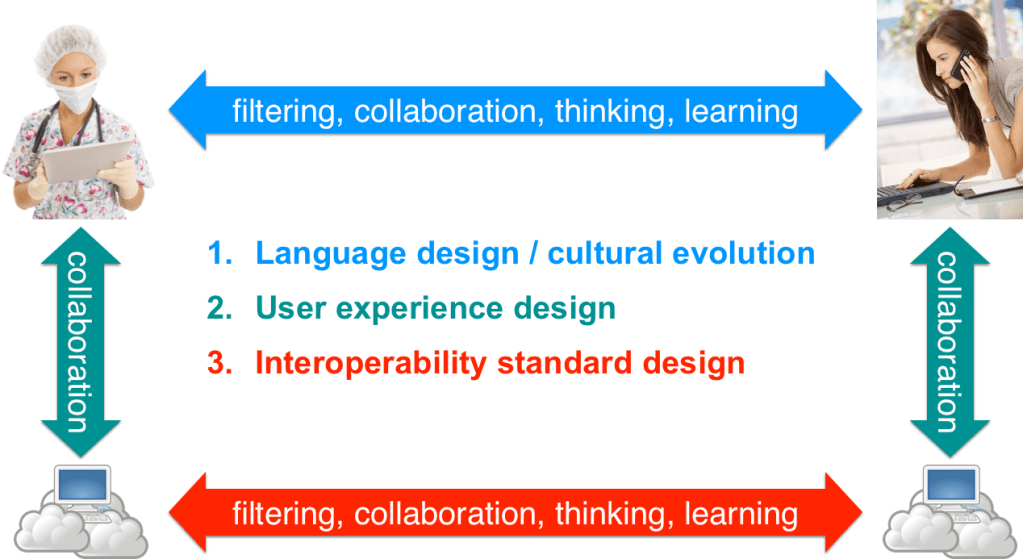
In the face of the multiple existential threats created by industrialised civilisation, we are well advised to adopt less life denying filtering, collaboration, thinking, and learning tools for the next 200 years, a topic that I have been been working on since 2006.

A couple of months ago Douglas Rushkoff publicly connected similar concerns from his perspective. He starts off with his usual story of the NZ bunkers of the tech billionaires, and then does a great job of painting the bigger picture in accessible terms, concluding with an appeal to reconnect technology and abstract metrics to the beautiful diversity of the living world and to the limits of human scale.

I would add that the cult of busyness has not only infected billionaires, but has been force fed to a broader class of professionals who find themselves trapped as employees and investors in super human scale corporate and government bureaucracies. Some of these people have become as addicted to the drug of social power as the billionaires. Their decisions, some of which affect many millions of people, need to be understood as decisions made by power drunk addicts.

Nate Hagens recently facilitated an an excellent panel discussion on natural resource accounting, exposing the extent of wishful thinking and denial of material constraints in the cult of busyness. The barrier to the urgently needed transition to degrowth is ideological inertia, an artefact of WEIRD psychology. The sooner the life destroying cancer of economic growth collapses under its own weight, the less the overall level of suffering. Locally, my friend Deirdre Kent illustrates the effects of the invisible hand in the context of “emissions trading”, and points to the conceptual tools and metrics needed for coordinating economic activity on a path of degrowth.

The longer the established power structures prevail, the greater the overall amount of suffering. From here on onwards, it’s materially downhill across all potential scenarios. The open question is how far down we’ll take the entire planet. The current monocultural and energy intensive way of life has no future. The kinds of technology that humans will be able to maintain and operate sustainably over the next 100 or 200 years, will be much simpler and less energy intensive – much more economising. Manual human labour and in-depth understanding of local ecosystems will be back in demand, and will be appreciated. We can start with that today.

Whilst all paths into the future involve a radical decrease in material consumption, how the transition will be experienced is very much a question of cultural evolution and adjustments in expectations. No matter how various local cultures evolve, the unavoidable suffering will be greater the longer the inertia of established institutions prevails, as it only deepens the level of destruction of the biosphere and the remaining human habitat. Pedal to the metal, running on the neoliberal engine for another decade, as far as that is even possible, will lead to delayed but ultimately greater suffering.

Joseph Tainter’s timeless conclusion (1988) about collapse from his analysis of collapsed civilisations applies and provides useful guidance:

The notion that collapse is uniformly a catastrophe is contradicted, moreover, by the present theory. To the extent that collapse is due to declining marginal returns on investment in complexity, it is an economizing process. It occurs when it becomes necessary to restore the marginal return on organizational investment to a more favorable level. To a population that is receiving little return on the cost of supporting complexity, the loss of that complexity brings economic, and perhaps administrative, gains.What may be a catastrophe to administrators (and later observers) need not be to the bulk of the population (as discussed, for example, by Pfeiffer [1977: 469-71]). It may only be among those members of a society who have neither the opportunity nor the ability to produce primary food resources that the collapse of administrative hierarchies is a clear disaster. Among those less specialized, severing the ties that link local groups to a regional entity is often attractive. Collapse then is not intrinsically a catastrophe. It is a rational, economizing process that may well benefit much of the population.

Meanwhile, there is no shortage of examples of good human scale initiatives on the margins. Our friends from Local Futures have just run an online knowledge sharing workshop with participants from a range of countries: part 1, part 2. As the old system is dying, new systems are being birthed as part of the big cycle of life.

We can learn a lot from the Congolese forest people. Humour is the ultimate weapon. It is time to have a good laugh, and to show power addicted capitalists the immediate exit – without any further returns. At the same time, we can offer education that guides those who feel trapped towards safe exit paths into emergent alternative human scale realities

Onwards!

Further reading

Meadows, D. et al. 1972. The Limits to Growth. Club of Rome.

Schumacher, E. F. 1973. Small Is Beautiful: Economics as if People Mattered. Harper Perennial.

Tainter, J. A. 1988. Collapse of Complex Societies. Cambridge University Press.

Babiak, P. and Hare, R. 2006. Snakes in suits: When Psychopaths go to Work. Harper Business.

Graeber, D. 2006. “Beyond Power/Knowledge: an exploration of the relation of power, ignorance and stupidity.” London School of Economics. May 2006. http://libcom.org/files/20060525-Graeber.pdf.

Owen, H. 2008. Open Space Technology: A User’s Guide. Berrett-Koehler Publishers.

Tomasello, M. 2009. Why We Cooperate. Boston Review Books.

Weinberger, D. 2012. Too Big To Know: Rethinking Knowledge now that the Facts aren’t the Facts, Experts are Everywhere, and the Smartest Person in the Room is the Room. Basic Books.

Low-Tech Magazine. 2012. “Electric Velomobiles: as Fast and Comfortable as Automobiles, but 80 times more Efficient.” Low-Tech Magazine. October 2012. https://www.lowtechmagazine.com/2012/10/electric-velomobiles.html.

Ostrom E., 2015. Governing the Commons: The Evolution of Institutions for Collective Action. Cambridge University Press.

Bowles, S. 2016. The Moral Economy: Why Good Incentives are no Substitute for Good Citizens. Yale University Press.

Sale, K. 2017. Human Scale Revisited: A New Look at the Classic Case for a Decentralist Future. Chelsea Green Publishing Company.

Sloman, S. and Fernbach, P. 2017. The Knowledge Illusion: Why We Never Think Alone. Macmillan.

Manevich, D. and Chwe, H. 2017. “Globally, more people see U.S. power and influence as a major threat.” Pew Research Center. August 2017. https://www.pewresearch.org/fact-tank/2014/10/10/chinas-government-may-be-communist-but-its-people-embrace-capitalism/ .

Dell, K. et al. 2018. “Economy of Mana.” MAI Journal 7, 1 (2018). University of Auckland Business School. DOI: 10.20507/MAIJournal.2018.7.1.5.

Levine, B. E. 2018. Resisting Illegitimate Authority: A Thinking Person’s Guide to Being an Anti-Authoritarian – Strategies, Tools, and Models. AK Press.

Aldred, J. 2019. Licence to be Bad: How Economics Corrupted Us. Allen Lane.

Bauwens, M. et al. 2019. Peer to Peer : The Commons Manifesto. University of Westminster Press.

Ramos, J. 2019. “Cosmo-Localism.” P2P Foundation. October 2019. https://wiki.p2pfoundation.net/Cosmo-Localism.

Eisler, R. et al. 2019. Nurturing Our Humanity : How Domination and Partnership Shape Our Brains, Lives, and Future. Oxford University Press.

Hickel, J. 2020. Less is More: How Degrowth Will Save the World. William Heinemann.

Saijo, T. et al. 2020. Future Design: Incorporating Preferences of Future Generations for Sustainability. Springer.

Bettin, J. 2021. The Beauty of Collaboration at Human Scale: Timeless Patterns of Human Limitations. S23M.

Townsend, C., Ferraro, J. V., Habecker, H., Flinn, M. V. 2023. ‘Human cooperation and evolutionary transitions in individuality’. Philosophical Transactions of the Royal Society B: Biological Sciences 378(1872). doi.org/10.1098/rstb.2021.0414

De-powering human societies

Replacing monologues and monocultures with dialogues and biodiversity at all levels of scale

  1. Cultural inertia
  2. Attempting to apply the scientific method in complex domains and transdisciplinary contexts
    1. Visualising conceptual causal models as an antidote to sloppy reasoning and invalid statistics
  3. Modularising complex domains
    1. A practical example
    2. The limits of understandability of linear languages
  4. Linear language – the ultimate learning disability
  5. Recovering diversity
    1. Open Space
    2. Multi-solving in Open Space
  6. The tomb stone of powered-up civilisations : Consistently Too Little Too Late
    1. The planetary reboot sequence

10,000 years ago, homo sapiens began farming a grain surplus. This surplus led to the creation of societal and cultural hierarchies which divorced our species from our long relationship with the natural world.

The biggest lie in our culture is the normal language of WEIRD success, finance, legalese, economics and technology.

The current human predicament is a result of the cultural disease of super-human scale powered-up civilisation building endeavours, the origins of which can be traced back to the beginnings of “modern” human history and the social power dynamics resulting from the invention of interest bearing debt around 5,000 years ago.

Maybe now is the time to write a new book: “Debt – The Last 20 Years”. Towards a more honest language to navigate the path ahead:

Cultural inertia

The following presentation to investors contains some interesting numbers, and along the way, it reveals the short-term thinking of those who are caught up in the cult of busyness.

Skagen is a Norwegian investment fund.

On the one hand, for the general public, given growing concerns about the climate and the environment, politicians and clean tech companies enjoy pointing to Norway as green and clean, as a poster child for the energy transition.

On the other hand, for investors, Norwegian fund management companies advertise the bullet proof investment opportunities in the energy sector – across the board, for further oil and gas exploration, and for mining.

I have not independently verified the numbers, but irrespective of the accuracy of the absolute numbers, even if some numbers are off by a factor of two or more, there is one true message:

The so-called energy transition is a feel-good exercise for the general public, and at the same time, it is [marketed as] a rock solid investment opportunity to investors. Norway is one of the biggest oil and gas exporters as well as a poster child for the dream of “clean” energy, propping up the other great investment opportunity, related to mining, globally – and therefore also again for the Norwegian oil and gas that is needed to meet the energy demand resulting from the anticipated extreme increase in mining activities. A win-win-win scenario, with a double win for Norwegian oil and gas.

The presenter correctly points out that mining won’t be able to scale 50-fold and more, to meet the theoretical demand of an “energy transition”, but given the current cultural inertia, this does not diminish the investment opportunities.

The cultural inertia and the optimism of investors is based on the following assumptions, none of which are mentioned anywhere in this presentation:

  1. Societies will continue to rely on GDP as a measure of progress
  2. The amount of greenhouse gases in the atmosphere is going to rise indefinitely, because oil and gas will be consumed indefinitely,without any disruption to the growth in GDP (so-called “wealth”)
  3. Industrialised countries (the WEIRD ones and China) will continue to rely heavily on the convenience of fossil energy powered technology hyper busy ways of life (the equivalent of several hundred energy slaves per person)
  4. The state of the biosphere and the planetary ecosystem is an irrelevant externality on the road of GDP growth and technological “progress”

Investors are obviously having a good time traveling on the “pedal to the metal” bus: No matter what lies ahead, capitalism is the best religion that has ever been invented.

You don’t need to be a genius to see that over the next 10 to 20 years at least two of the above assumptions will blow up in our face, and of course also in the face of investors. It does not matter which assumptions blow up first, the downstream effects will be massive, putting an end to energy intensive, i.e. to industrialised ways of life. Globally fungible money issued as interest bearing debt won’t survive.

In fact, the sooner the bizarre techno optimistic assumptions start to blow up, the more of the planetary ecosystem will still be around, to assist humans in the forced transition to [very] low energy ways of life and in rediscovering that we are part of nature.

Attempting to apply the scientific method in complex domains and transdisciplinary contexts

Visualising conceptual causal models as an antidote to sloppy reasoning and invalid statistics

Modularising complex domains

Modularisation of complex domains and creative collaboration across a diversity of domain boundaries maximises collective intelligence at human scale.

A practical example

The limits of understandability of linear languages

Unfortunately, so far most software has been written in linear languages, resulting in systems that are nearly as opaque, incomprehensible, and subject to surprising and unknown modes of failure as are state-of-the-art artificially intelligent systems. Over the last 50 years, in the busyness of frantic attempts to digitise and automate the tools of civilisation, we have un-learned the art of de-powered dialogue and the art of modularisation – the signature traits of the human species.

Ending the curse of software maintenance

Once we rediscover and appreciate the limits of human scale, we are equipped to replace the busyness of muddling with human dialogue and human comprehensible explanatory models.

Agent based semantic modelling and validation via instantiation is an urgently needed form of grassroots theory building and theory integration (knowledge archaeology) beyond academia. Wherever there is deep human domain knowledge, wherever people still trust each other and are not corrupted by social power dynamics, many experiments in the social sciences and in engineering can be improved and sometimes entirely replaced by semantic / causal modelling and instantiation. 

The semantic approach can be understood as a rapid iterative cycle of theory building and experimentation that surfaces and validates structural and causal mental models. It involves validating a theory, i.e. a formal semantic model, against the collective mental models of all available domain experts, resulting in explicit representations of the domain specific nonlinear multivariate mental models that participants use on a daily basis, usually without even being conscious of it. As an added bonus, instantiation catalyses shared understanding amongst all participants. 

Side note: The Cell Platform is designed to track the number of times categories are instantiated in the context of a particular model artefact, including the reasons for non-instantiation, i.e. unknown information or category is not-applicable in the context at hand. That’s exactly the meta data that turns a semantic model and a corresponding set of instances into a human scale, i.e. an understandable Bayesian model.

A big part of the journey of de-powering human societies involves taking an honest look at the relevance and quality of the digital data that we have been busy collecting – treating it as “the new oil”.

The antidote to misuse of mathematics and junk data

Linear language – the ultimate learning disability

How did we get caught up in a cult of busyness? Humans are curious creatures, we are easily distracted by shiny new toys. At human scale, in a de-powered social environment, our curiosity is a wonderful adaptive trait that generates cultural diversity. Beyond human scale, especially in powered-up environment, our curiosity degenerates into a maladaptive trait with the potential of causing untold harm.

Are you a model builder or a story teller?

Recovering diversity

Designing filtering, collaboration, thinking, and learning tools for the next 200 years

Open Space

Multi-solving in Open Space

Humans acquire knowledge or become aware of new information as individuals, and as part of groups of different sizes: households, teams, organisations, communities, societies, and with the help of ubiquitous global communication tools, even collectively as humanity. Creative collaboration in Open Space can help us break through the barriers of established disciplines and management structures, and power a continuous SECI (socialisation, externalisation, combination, internalisation) knowledge creation spiral at human scale.

Creativity = multisolving + neurodiversity + thinking tools

The tomb stone of powered-up civilisations : Consistently Too Little Too Late

Here is an excellent summary of the human predicament that may come in handy to shorten fruitless conversations with techno optimists and members of other anthropocentric faiths. I only have very few quibbles with the terminology used by Michael Dowd, and I love that he refers to industrialised civilisation as a religious cult, which I fully agree with.

One quibble refers to the use of the word “reality”, as it detracts from the vast diversity of lived human and non-human experiences. Instead I simply refer to the diversity of lived experiences and the commonalities and differences between lived experiences. One of the commonalities of lived experiences amongst sensitive Autistic people is that they tend to reach the doom and post-doom stages of understanding the hubris of anthropocentrism [much] earlier than others, many of whom remain their entire life in a state of cognitive dissonance and denial. Ted Nelson beautifully captured the toxicity of the modern technological human arrow of “progress” back in 1999, which is perhaps my favourite quote from the entire industrial era:

A frying-pan is technology.  All human artifacts are technology.  But beware of anybody who uses this term.  Like “maturity” and “reality” and “progress”, the word “technology” has an agenda for your behavior: usually what is being referred to as “technology” is something that somebody wants you to submit to.  “Technology” often implicitly refers to something you are expected to turn over to “the guys who understand it.”

This is actually almost always a political move.  Somebody wants you to give certain things to them to design and decide.  Perhaps you should, but perhaps not.

This applies especially to “media”.  I have always considered designing the media of tomorrow to be an art form (though an art form especially troubled by the politics of standardization).  Someone like Prof. Negroponte of MIT, with whom I have long had a good-natured feud, wants to position the design of digital media as “technology.  That would make it implicitly beyond the comprehension of citizens or ordinary corporation presidents, therefore to be left to the “technologists”– like you-know-who.

The other quibble I have with the terminology of Michael Dowd is his complete rejection of the word hope, as if the only hope we can have is related to the longevity of industrial civilisation. In the stage that Michael refers to as post-doom, he acknowledges hope for collective action in-the-small in terms of a focus on minimising suffering, being compassionate, de-powering relationships, practicing mutual aid, etc. without using the word hope. He even acknowledges the benefits of gallows humour in terms of catalysing mutual trust and social cohesion, but frames it all under the broad umbrella of “acceptance”, which in my mind only makes sense when qualified to acceptance of civilisational collapse, which is liberating us from a diseased life denying culture.

Without trust in our ability to appreciate local life at [small] human scale and the hope that we can minimise suffering, we fail to be part of life.

The planetary reboot sequence

Mosses seem to be a part of the planetary reboot sequence that gets initiated after evolutionary hiccups like the one triggered by industrial civilisation. The next 200 years will reveal whether humans can be part of the reboot sequence. This documentary contains some superb footage and good commentary – if you ignore the last segment about exporting life to Mars.

The open question is how humans will treat each other and our non-human contemporaries on the journey towards being composted and recycled. Experiences may vary depending on the human scale cultures we co-create on the margins.

Trauma and social dysfunction at scale

The Overton window of industrialised society

We live in a time of exponential changes in communication technology. Just a few decades ago humans only needed to learn one or two languages and perhaps the jargon of a particular profession to be equipped for a successful life. Today thousands of new apps (little languages) become available every month, far more than anyone can ever learn to use, appreciate, and trust. More and more people are realising that quantity does not equal quality when it comes to digital technologies.

The disciplines of design and engineering play increasingly important roles in a world where communication between people and all forms of economic activity are by default being mediated via digital technologies.

To understand the full implications of the new technologies that we are churning out every month, is it enough for designers to be familiar with the latest in pop-psychology and for engineers to be familiar with the latest economic fads and monetisation models? What if some important considerations about human limitations and delusions have fallen between the cracks?

Being able to design, build, and use technology does not equate to understanding all the implications.

Maladaptive evolution of corporations

Do technologies make us smarter?

Successful software products that are used by many thousands or millions of customers are best thought of as a domain specific language system that complements human cognitive abilities and that facilitates and mediates collaboration and/or social competition between humans. In a networked world with ubiquitous Internet connectivity and pervasive use of Internet enabled personal devices, software plays a significant role in guiding – or even forcing – human cultural evolution.

Software product design conducted in isolation, without giving customers and marginalised groups the ability to shape the design, is a form of social engineering, whether intentional or not. All users of the Internet are familiar with the social externalities.

The huge opportunities and dangers of mediating human communication and collaboration and/or social competition via software platforms can not be overstated. The language systems that we create with the help of software can either amplify the unique human capacity for compassion and creative collaboration or they can amplify social competition and the brutal power politics that characterise primate dominance hierarchies.

For a number of years Jaron Lanier has been warning that the Internet as it currently evolves might destroy our world [1]. Online social media platforms dictate the possible communication and collaboration patterns, and in doing so typically maximise the “return on investment” for the owners of the platform, in the metrics of success prescribed by the neoliberal cult of busyness. In developed countries, their arrival has corresponded to bizarre political dysfunction, while in the developing world, ethnic rivalries that had been waning have been re-ignited in the most grotesque fashion.

Our laws and social norms have been shaped by the metaphor of society as a factory and on the metaphor of people as machines. These metaphors have not only warped our relationship with the natural world and our conception of humanity. They have led to techno-cults in which technology corporations have taken on the role of sacred places of worship, and CEOs are the high priests, praising the divine qualities of artificially intelligent technologies [2]. In the emerging technoverse, biological life is perceived as becoming irrelevant.

Maladaptive evolution of governments

Can better regulation help?

Some of the most faithful disciples of the techno-cults are found within our government institutions and amongst our politicians. How come?

  1. When society is a factory, the only things that count in are things that can be measured. It is no coincidence that scientific management (Taylorism) was conceived in the wake of the invention of the steam engine and machine assisted manufacturing, to complement the the laws of physics that governed the mechanics and the productivity of the machines on the factory floor.
  2. The discipline of economics allowed the scientific approach to managing humans to be extended to the scale of nation states – another conceptual building block for organising human activities in industrialised societies. There are a number of parallels between the impact of the development of economic theories on human society and the social impact of the development of the Internet. Neither the Internet nor economics draw directly on an evidence based understanding of physics, biology, and human behaviour. Both the Internet and economic theories are best understood as prescriptive rather than as observational tools – as language systems that are based on specific European/North American cultural conventions that are assumed as “sensible” (common sense) or “obvious” (self-evident). With these language systems in place you can measure data flows and economic performance, but only in terms of the scope and the preconceived categories afforded by the formal protocols and languages.
  3. The introduction of a formal economic language system and the introduction of formal protocols for digital communication have shaped human culture around the social ideologies espoused by early industrialists and early information technology entrepreneurs. Over course of the last two centuries governments have become increasingly dependent on economists and information technology entrepreneurs in order to understand and engage with society [3], and also to understand what what technological options are on the horizon. In this process anything that lies beyond the scope of what is deemed relevant or acceptable is discounted as non-essential or unproductive. In multiple bottom line approaches the conveniently simplistic thinking becomes evident when metrics from the natural world are translated into monetary metrics – as if a monetary number can adequately represent the loss of biodiversity and the destruction of entire ecosystems in the name of economic “progress”.

In industrialised societies governments increasingly find themselves in the role of pretending to be “in control”. Technology corporations and management consultants gladly assist governments in the pretend game of “managing the economy”. Since the Cold War empires have increasingly shifted their focus from overt conventional war to economic warfare and psychological warfare.

Corporations and governments have shared interest in managing public perceptions [4] and in supporting each other [5]. Furthermore, the judiciary often lacks transparency. In Aotearoa New Zealand for example, you can complain if you’re unhappy with a judge’s behaviour, but the complaints system is secretive, ineffective and broken [6]. Since the Judicial Conduct Commissioner’s inception in 2005, 3201 complaints have been made, and 95 percent were either dismissed because they were not about a judge’s conduct, or no further action was taken because the commissioner concluded the conduct was not concerning. Just two complaints prompted the commissioner to recommend a panel, but neither panel ever went ahead.

Maladaptive evolution of our participation in the natural world

Can civilisation be saved?

All of the above would be funny if the consequences of the industrialised “way of life” for the living planet would be less profound.

Industrial development has only been possible by exploiting the energy stored in fossil fuels and due to extreme transformation of our environment, leading to severe environmental consequences that humanity is experiencing around the globe: shifting and unpredictable climate, extreme weather events, and biodiversity collapse [7]. Humanity is paying the consequences for so-called technical and technological “progress”. Fossil fuels allow every human alive today to consume as much energy (directly and indirectly via the goods we consume) as if we all had 200 human slaves working for us. In rich industrialised countries the number of “energy slaves” per capita is even greater, between 600 and 1,000.

The extreme levels of energy consumption of the industrialised way of life are largely hidden in our daily lives. Most of the energy is consumed by industrialised production processes, by industrialised agriculture, and by the global supply chains that deliver goods from all over the planet to our door step. We activate this chain of energy consumption via 1-Click® from our mobile phones and web browsers.

Minerals are mined at scale in places far from our major population centres. Industrialised production has been off-shored to China and “less developed” countries with cheap labour, but over the last decade climate related extreme weather events and disasters have started to remind us of the many externalities that are not accounted for in our economic models.

It is more important than ever to understand that no techno-cult will ever be capable of replacing our 1.6 trillion fossil fuel energy slaves with 1.6 trillion “renewable” energy slaves. Within the short span of 200 years we have released most of the carbon from several hundred million years worth of biological growth, irreversibly changing the atmosphere and the oceans for many thousand years to come.

There is no silver bullet. The envisaged goal of industrial scale transition away from fossil fuels into non-fossil fuel systems is a much larger task than current thinking allows for. To achieve this objective, among other things, an unprecedented demand for minerals would be required [8]. Most minerals required for the renewable energy transition have not been mined in bulk quantities before. Beyond the inevitable ecological damage, the amount of energy required to mine these minerals may well turn out to be prohibitive [9] once we run out of fossil fuels or commit to leaving fossil fuels in the ground.

So-called “green” technologies such as biofuel have a negative energy return on investment and are simply part of the feel-good green campaigns of some of our governments. The familiar fossil fuel companies are increasingly re-branding themselves as energy transition companies, but of course driven by the profit motive. The last thing any of these corporations wants to see is a significant drop and a consistent downward trend in overall global energy consumption. Green industrialised growth is an oxymoron. The only growth that can ever be green is biological growth of plants.

Beyond raw energy consumption the industrialised human resource footprint on the planet has accelerated the rate of extinctions to more than 1,000 times of the historical background rate [10]. Amphibians have estimated extinction rates up to 45,000 times their natural speed. Most of these extinctions are unrecorded, so we do not even know what species we are losing.

We have replaced biodiversity with vast monocultures of industrialised agriculture and horticulture that can only be maintained with significant inputs of fertiliser, which in turn is produced via fossil fuel intensive industrialised processes. Croplands and grazing lands cover more than one third of the Earth´s land surface [11]. Furthermore, intensified land-management systems often result in high levels of land degradation, including soil erosion, fertility loss, excessive ground and surface water extraction, salinization, and eutrophication of aquatic systems.

Maladaptive evolution of our participation in society

Should civilisation be saved?

The level of disillusion with busyness as usual is growing, and not only in rich industrialised countries. 80% of employees are disengaged at work. Many people feel stuck in bullshit jobs. It is getting harder for the techno-cults to get employees excited about “disrupting the market” with “the next big thing”.

The climate crisis provided a welcome busyness opportunity for corporations to present themselves wrapped in clean and green feel-good credentials. Bright Green Lies [12] is a timely book to remind people that a green energy “transition” is not going to prevent biodiversity collapse and is not even going to prevent catastrophic levels of temperature increases and ocean acidification due to the massive amounts of carbon that we have already released.

The collective intelligence of industrialised civilisation can be summed up in five words:

Consistently too little too late

The sooner we unplug from the collective delusion, the fewer people will die or suffer needlessly. A radical reduction in energy and resource consumption can play out over the next two generations, and it can be the most civilised project of mutual aid humans have ever undertaken. Along the way we can learn a lot from indigenous societies.

You may wonder which aspects of Western industrialised knowledge may be worthwhile to retain (and for how long), given that cultural evolution is a dynamic process that unfolds over multiple generations. A few sets of knowledge are good candidates for preserving and cultivating in a global knowledge commons. However, any tools and sets of knowledge that are incompatible with a path of radical energy decent are legacy technologies that are only relevant from a historic perspective – to warn future generations about technological approaches that have lead to existential risks.

Trauma

The power of language

Language systems have been used throughout human cultural evolution to transmit cultural knowledge and understanding. They not only record lived experience, they also shape lived experience. In the absence of written language language systems evolve through daily use, and everyone in a local community contributes to language evolution. Those with particular areas of expertise and skills pass on their knowledge and new levels of understanding to peers and curious children by inventing appropriate symbolic representations and metaphors that are accessible to others.

Language systems are the most powerful cultural tools at our disposal. When the power of language and access to communication is equally distributed throughout society, language evolves in tandem with local needs and reflects the human understanding of the web of relationships within the local ecosystem.

Written language developed and symbolic notations for tracking who owes what to whom emerged when humans invented agriculture and when access to land became increasingly important. Written language allowed social power relationships to be codified and conveyed across space and time. This was the first significant step that allowed some people – those with access to written language, i.e. those who made the rules – to wield power over other people. Written language was the tool that very quickly gave rise to organised religions and to religious texts, some of which are still used to this day.

The language systems of economics and the protocols of the Internet are the main linguistic inventions of the industrialised era and the digital era. Over the last two decades digital data has frequently been described as the new oil. The intent was very obvious – systematic exploration and economic exploitation. In whatever domain data reservoirs were not yet available, social media and systematic gamification of social interactions offered the prospect of creating new valuable data reservoirs on-demand.

From one angle the critique of Jaron Lanier is only skin deep, not questioning the underlying project of civilisation and anthropocentrism. From another angle he drills right into the very foundations of our social operating system. If we can learn anything from the last 200 years, it is that the power of language needs to be distributed equally. The force of life is distributed and decentralised, and it might be a good idea to organise and collaborate accordingly, respecting the limits of human scale.

Those who examine human collective behaviour in terms of energy consumption and ecological impact in terms of biodiversity loss are broadening the sphere of discourse. We can no longer understand and make sense of the dynamics in our rapidly changing environment by attempting to shift the Overton window of industrialised civilisation. The notion of a tiny window is yet another convenient linguistic metaphor that allows corporations to translate incremental shifts in public perception into further profits and consolidated power within the carcass of a dying planet.

The planetary ecosystem is dying a death of a thousand cuts. Humans are simply one of the many externalities on the entrepreneurial exit path that involves liquidation of all biological life.

Collective trauma in 2021

The discipline of psychology is just as much a product of the ideology of industrialised civilisation as the discipline of economics – they are two sides of the same coin. In particular the pseudoscience of behaviourism is still with us today, and is used to justify and perpetuate untold harm.

In a desperate attempt to squash the sphere of discourse, and in the face of unprecedented climate disasters, the neurological makeup of 1 out of 6 people is pathologised, targeting especially those who refuse to participate in the pretend game of “normality”. The trauma caused by industrialised civilisation is ignored, and entire populations are encouraged to believe that getting back to busyness as usual should be our top priority.

What’s happening right now around the world fits both definitions of the word “trauma”: Climate change is a deeply distressing and disturbing experience. It’s also a physical injury. An injury, after more than 30 years of ignored warnings and broken promises, that can now be considered intentional.

Climate change isn’t something that’s just happening to us. It’s being done to us.

Climate change isn’t a natural occurrence that we need to be ‘resilient’ to. It’s a trauma that’s being inflicted on us against our will. It’s exhausting.

The consensus is clear: The vast majority of the world’s population now views climate change as an “emergency”, according to nearly two-thirds of the 1.2 million respondents in 50 countries in the largest poll ever taken on climate change, earlier this year. A recent survey of young people found 56% of respondents think that humanity is ‘doomed’. Children around the world are experiencing climate anxiety — something that no generation of humans before us have ever had to deal with.

Yet world leaders are acting at anything but an emergency pace. In fact, rather than “building back better”, 2021 has seen skyrocketing emissions growth around the world as factories, travel, and farms switch back into business as usual mode even as the Covid pandemic continues to rage on. At this growth rate, 2022 will have the highest emissions of any year in human history — a horrifically shocking fact that should provoke outrage on every street of every city in the world.

– Eric Holthaus, meteorologist, [13]

References

[1] Jaron Lanier. 2018. How the Internet Failed and How to Recreate It.

[2] Jaron Lanier. 2018. Who is Civilization for?

[3] Mariana Mazzucato. 2018. The Value of Everything: Making and Taking in the Global Economy. Public Affairs.

[4] Philip Martin Patterson. 2020. Virtue and the Three Monkey Defence: Regulating Ethical Conduct in the Australian Public Service.

[5] Richie Merzian. 2021. BS climate solutions: Carbon Capture & “Clean” Hydrogen. Juice Media.

[6] Anusha Bradley. 2021. Judges, bullying and a ‘broken’ complaints system. RNZ.

[7] Jean-Marc Jancovici. 2021. Will Technology Save Us From Climate Change? MIT Media Lab.

[8] Simon P. Michaux. 2021. Geological Survey of Finland The Mining of Minerals and the Limits to Growth.

[9] Bridget Burdett and Mike Joy. 2021. Transportation Group Chairs Conversation: 2. Engineering New Zealand.

[10] Elizabeth Boakes and David Redding. 2018. Extinction is a Natural Process, But it’s Happening at 1,000 Times the Normal Speed. The conversation.

[11] IPBES. 20218. The assessment report on LAND DEGRADATION AND RESTORATION.

[12] Derrick Jensen, Lierre Keith, & Max Wilbert. 2021. Bright Green Lies.

[13] Eric Holthaus. 2021. Let’s stop talking about climate ‘resilience’ and start talking about climate trauma.

Beyond hypernormal zombified life for all

Photo by Markus Spiske on Unsplash

The many faces of busyness as usual

From a European or American perspective the stereotype of the Japanese salaryman [1] is easily recognised as a product of a social norms that are no longer compatible with universal biological and mental human needs. Perceived normality is a social construct, but from within a given culture it is often impossible to draw a clear line between universal biological and mental human needs and culture specific norms and practices.

Only outsiders and members of marginalised groups are well equipped to identify and articulate unspoken social norms. An understanding of universal biological and mental human needs can only be developed from a transdisciplinary and intersectional perspective, based on a commonality and variability analysis across many cultures and across the entire history of human evolution.

In terms of energy and resource consumption, the social customs in Europe and North America are even further removed from ecological sustainability than the culture in Japan. This insight is nothing new.

Growth economics were clearly identified as unsustainable in the Limits to Growth report [2] in 1973, and the latest data shows we are blissfully tracking along the busyness as usual scenario. Similarly the limitations our social institutions and the limits of digital technologies [3] were well understood in the 1970s. These two examples illustrate the reality and the power of paradigmatic inertia. Humans are the uncontested local champions of cognitive dissonance [4] on this planet.

Paradigmatic inertia is never beneficial. It constitutes an institutional collective learning disability, and it can only broken be broken by events that are beyond the control of the institutions within the system.

At this particular point in time, paradigmatic inertia still fuels our governments and corporations, driving them to strive for towards a seemingly reassuring state of “normality”. From within the established institutional framework it is impossible to understand or predict when the paradigm of normality has been shattered beyond repair.

The level of cognitive dissonance within hierarchically organised societies can build up over decades and sometimes centuries [5] before it is resolved via external forces. The industrialised paradigm of technological progress and economic growth has now been operational for more than 250 years.

Hypernormality

The paradigmatic inertia that paralyses our industrialised monoculture plays out in terms of Zombie-like levels of cognitive dissonance – what some people during the Soviet era referred to as hypernormality.

In his 2016 documentary “HyperNormalisation” [6] Adam Curtis shows how the concept maps to our era, where critical thinking and individual agency is increasingly replaced by magical thinking, including absurd beliefs in the powers of artificially intelligent systems [7].

Hypernormality can also be understood through the lens of institutionalised and sanctified bullshit. André Spicer’s detailed sociological analysis of bullshit (2020) explains how organisations get completely lost in competitive social games. The key ingredients of the analysis:

The origins of bullshit

During World War I ‘bullshit’ entered informal British, North American and Australasian English speech. The lexicographer Eric Partridge claimed that during World War I, British commanding officers emphasized ‘bull’. This meant paying significant attention to soldiers’ appearances by ensuring they were perfectly dressed and their shoes were shined, even when this focus on appearance hindered the daily tasks of waging war.

Australian and New Zealand troops mocked British officers by calling it ‘bullshit’. Partridge suggests the term became common in military life during World War II. Throughout this period, it was used to refer to excessive regimentalism and attention to appearances. For instance, if soldiers prepared their quarters for inspection by a commanding officer, they engaged in ‘bullshit’.  Partridge gives the following example: ‘We’ve got to get this place bullshitted up—the Commanding Officer is coming around tomorrow morning.’ The troops used the term ‘bullshat’ to refer to something which has been polished up for display purposes. For instance, ‘Don’t touch that, it’s just been bullshat!’ ‘Bullshit’ was also closely connected with high-level administration.

For instance, during World War II, New Zealand airmen referred to the air-force headquarters as the ‘bullshit castle’. The term bullshit entered into print during World War II. The first instance of the word recorded by the Oxford English Dictionary is in a dictionary of North American slang published in 1942.

Defining bullshit – and differentiating it from lying

While lying is an attempt to conceal the truth, bullshit is to talk without reference to the truth. ‘It is just this lack of connection to a concern with truth – this indifference to how things really are – that I regard as the essence of bullshit’. Underpinning this is a ‘motive guiding and controlling’ the bullshitter meaning they are ‘unconcerned with how the things about which he speaks truly are’. Recent psychological research considers the targets of bullshit by examining how some people with an ‘uncritical open mind’ are particularly receptive to bullshit. More sociologically oriented research has pointed out that in some social settings ‘bullshit’ is expected, enthusiastically embraced or silently tolerated.

Bullshit is a form of linguistic interaction. It involves characteristic patterns of communication such as evasiveness or not being held to account for one’s claims. Bringing these three aspects together, I define bullshit as empty and misleading communication. A more substantive definition of bullshit is that it consists of evasive and/or persuasive communication involving an indifference to the truth or attempts to pursue the truth which are driven by epistemically maligned intentions.

The bullshitter falls short of lying because they make use of insincere and misleading statements rather than outright falsehoods. Recent psychological work has found that established measures of everyday lying are sufficiently distinct from bullshitting.

The purpose of bullshit

The most intuitive explanation for why bullshit exists is the individual bullshitter. Many philosophical accounts assume that particular individuals have questionable motives or moral flaws which predispose them to bullshitting. For instance, Frankfurt points towards questionable motives of bullshitters such as intention to mislead their audience for personal gain. Others point out that bullshitters are driven by Machiavellian motives like deceiving their audience to gain power and resources. More recently, Cassam has argued that bullshitters are plagued by ‘epistemological vices’ such as carelessness, negligence, dogmatism and prejudice. Perhaps the most important of these is ‘epistemic insouciance’. This entails ‘a casual lack of concern about the facts or an indifference to whether their political statements have any basis in reality’. Some have argued that bullshitters suffer from cognitive failures. Finally, a recent study of school children found that bullshitters shared demographic characteristics; they were more likely to be males from better-off socioeconomic background.

Mats Alvesson argued that wider socio-cultural concerns with ‘imagology’ (looks and appearance) has encouraged organizations and individuals to generate clichés and bullshit. In my own book on the topic, I explored how the changing nature of bureaucracy created ideal conditions for bullshit. The rise of ‘neocracies’ which are obsessed with constant change and novelty has led organizations as well as people working within them to produce a large stream of bullshit.

Bullshitting as a culture

Bullshitting is not about hiding a secret from specific people at specific points in time, it is about pursuit of a hidden agenda, often associated with long-term goals. In this context a smooth blend of half-truths, falsehoods, and common sense (culturally endorsed myths) is much more potent than a set of lies.

One of the rare examples of an analysis of bullshitting as a social practice is Joshua Wakeham’s (2017) theoretical account. Drawing on studies of social epistemology, he argues that we gain most of our knowledge second hand. This means that we do not do epistemic due diligence ourselves. We are usually not cognitively equipped to do such due diligence, and even when we are, it is exhausting for us and alienating for others.

Furthermore, in most social settings there is not one obvious correct answer waiting to be found. So instead of relying on common standards of epistemology, we rely upon social cues to sort out which knowledge claims are true and which are false. These include the characteristics of the person speaking, the background knowledge that people draw on, and the interactional dynamics between parties. Often our reliance upon social cues means we systematically relax our epistemic norms to deal with ‘the social pragmatic need to get along’. This makes us ‘accustomed to faking it and going along with social fictions when necessary’.

The cult of busyness

Jackall’s (1986) study of a large American corporation found that bullshitting was systematically expected of middle managers in the company. One informant told Jackall that his job involved ‘characterizing the reality of a situation with any description that is necessary to make that situation more palatable to some group that matters. Everyone knows that it’s bullshit, but it’s accepted. This is the game’. A crucial aspect was not using too much or too little bullshit, and also being able to judge the appropriate moment to bullshit. Competent bullshitters also needed to become competent audience members for performances of bullshit.

When ignorance is noisy, uninformed actors do not simply stay silent about what they don’t know. Rather, they are compelled to speak about an issue of which they have little knowledge or understanding. A recent experimental study found that this compulsion to speak (coupled with a lack of accountability created by a ‘social pass’) was an important factor in explaining bullshitting. For instance, middle managers are often relatively ignorant about the work their subordinates are engaged with, but are under pressure to act as the leader by doing or say something. They fall back upon generic management speak rather than engage with the people they manage in language they find meaningful. A second example is British government ministers who find themselves with a new policy portfolio. Often these politicians have little or no knowledge of the new policy area, but they are under pressure to say and do something. To address this tricky situation, politicians rely on empty and often misleading language.

The cult of leadership and entrepreneurship

Many conceptual entrepreneurs operate in the management ideas industry. This is a sector made up of consultants, gurus, thought leaders, publishers and some academics. The quality of actors operating in this industry tends to be extremely variable. A consequence is that some of the conceptual entrepreneurs seeking to peddle their wares in the management ideas industry are bullshit merchants. There are some sub-sectors of the management ideas industry where bullshit merchants are particularly concentrated. One is the ‘leadership industries’.

This sub-sector includes many consultants, speakers, experts and advisors who create and distribute pseudo-scientific ideas about leadership. A second sub-sector with a significant concentration of bullshit merchants is the ‘entrepreneurship industry’. This is the cluster of mentors, (pseudo-)entrepreneurs and thought leaders who push poorly evidenced, misleading and seductive ideas about entrepreneurship. Often their target is so-called ‘wantrepreneurs’. In some cases, these ideas have been found to encourage vulnerable young people to adopt what are seductive but empty and misleading ideas about entrepreneurial success.

Institutionalisation and sanctification of bullshit

Successful bullshitting enhances the image of bullshitters. This happens when bullshitters are able to more or less convincingly present themselves as more grandiose than they actually are. External audiences are more likely to make positive judgements about them and be more willing to invest resources in them. Organizations often use trendy but misleading names to attract resources (particularly from the uninformed). In recent years, firms have gained a boost in valuation by adopting a name invoking blockchain technology.

As well as enhancing one’s image, bullshitting can also help to enhance self-identity. This is because bullshit can enable bullshitters to conjure a kind of ‘self-confidence trick’. This happens when bullshitters mislead themselves into believing their own bullshit. Self-deception enables individuals to present themselves as much more self-confident than they would otherwise seem if they had to engage in cognitively taxing processes of dual processing (holding in one’s mind both the deceptive statement as well as the truth). The self-confidence which comes from self-deception can aid resource acquisition. For instance, entrepreneurs are encouraged to ignore their objective chances of failure so they can appear self-confident in their search for resources to support their venture.

When bullshit has become part of the formal organization for some time, it can slowly start to seem valuable in and of itself. When this happens, bullshit can be treated as sacred. Sanctification happens when an element of secular life (such as bullshitting) is elevated, a sense of higher meaning is projected into it, and deep existential significance is invested in it.

As long as life is framed as a competitive social game failure is guaranteed – because then the suffering of others is simply another great busyness opportunity [8].

In the rear view mirror, with a bit more historical distance, say from the vantage point of 2050, the commonalities between corporate capitalism (the “Western” model) and state capitalism (the “Chinese” model) may become more apparent, and the differences may be recognised as superficial.

Similarly, the changes following the collapse of the East German regime and the collapse of the Soviet Union in the late 1980s will be recognised as superficial in terms of cultural evolution – as processes of assimilation rather then as an evolutionary step change in social operating models. However, the changes in Eastern Europe do illustrate that assimilative changes are not predictable and are driven from the bottom up rather than from the top down within an established system. Changes from the top down tend to either amount to decorative window dressings or take on the form of violent conflict.

Wake up call

In aggregate, the COVID 19 pandemic, increasingly severe manifestations of the climate crisis, and growing levels of social inequities represent a powerful external force and an opportunity to cut through the façade of hypernormality.

While in earlier decades slower rates of ecological destruction and a lack of tangible climate related disasters have allowed baselines to shift with only few people paying attention, the rate ecological destruction and the frequency of climate related disasters has made it impossible for people to not notice the changes [9].

A growing number of people from all over the world are waking up to the fact that faith in leaders is what is likely to lead to the end of our species and countless other species. Any tools and sets of knowledge that are incompatible with a path of radical energy decent are likely to rapidly become legacy technologies that are only relevant from a historic perspective – to warn future generations about technological approaches that have lead to existential risks.

“Normal” busyness as usual is slowly killing all of us. The sooner we unplug from the collective delusion, the fewer people will die or suffer needlessly. De-growth (a genuine reduction in unsustainable energy and resource consumption) can play out over generations, and it can be the most civilised project of mutual aid humans have ever undertaken.

Cultural evolution vs cultural revolution

Revolutions can be understood as phase shifts that occur when the level of cognitive dissonance that a population experiences between daily life and the fictions that are perpetuated by rulers and elites can no longer be maintained. In a revolution a large part of the population openly dismisses established institutions as dysfunctional and establishes new institutions based on ideas that often have been “fermenting” within the population for decades. Only some revolutions constitute a genuine shift in the paradigm of governance. The typical result tends to be a new set of institutions, a revised composition of the elites, and a new set of rules for maintaining an oppressive primate dominance hierarchy.

In contrast, the language system of evolutionary design provides us with a collaborative framing and terminology for evolutionary processes that allows bottom-up social movements to participate in the evolution of a living system, and to integrate their knowledge into a living system that includes humans, non-humans, and human designed systems.

Where to from here? We live in a highly dynamic world, and our capability to understand the world we have stumbled into is quite limited. Our destination is beyond human comprehension, but ways of life that are in tune with our biological needs and cognitive limits are always within reach, even when we find ourselves in a self-created life destroying environment. All it takes is a shift in perspective, and corresponding shifts in the aspects of our lives that we value.

In a world of global heating and ecological collapse, the direction of cultural evolution will determine how much suffering human societies will experience over the coming decades, and what kind of world will be available as the starting point for ecological regeneration.

David Graeber had a refreshingly down to earth and entrepreneurial approach to activism, which consisted of embarking on actions that seem appropriate to create a new reality (rather than simply engaging in civil disobedience) – and ignoring the established status-quo as needed to overcome crippling paradigmatic inertia. He conceptualised the revolt of the caring classes [10] and encouraged the activation of bureaucratically suppressed knowledge, i.e. the things that people are not allowed to talk about, into a power that can transform society.

I have a very similar philosophy. Our team at S23M is actively involved in catalysing cultural evolution in the healthcare sector. If you are stuck in a place where busyness as usual is getting in the way of cultural evolution, just follow the money to know where to start building new models from the bottom up. As long as governments operate healthcare like a busyness, from the top down, rather than from the bottom up, based on the needs of local communities, whānau, and patients, healthcare organisations remain paralysed by paradigmatic inertia.

Related documentaries

[1] Studio Kronikeur. 2020. I Work, Therefore I Am (Life as a Salaryman).

[2] ABC. 1973. Computer predicts the end of civilisation.

[3] PBS. 1979. The Information Society.

[4] Double Down News. 2021. Why Jeff Bezos’ Space Dream is Humanity’s Nightmare by George Monbiot.

[5] No Future. 2016. Chapo Trap House Episode #65 with Adam Curtis.

[6] BBC. 2016. HyperNormalisation by Adam Curtis.

[7] Minhaaj Rehman. 2021. Natural Language Understanding with Walid Saba.

[8] WSJ. 2021. Theranos Founder Elizabeth Holmes on Trial: What to Expect.

[9] A Natty Nook. 2021. The Role of Literature in a Climate Crisis.

[10] Nika Dubrovsky. 2020. David Graeber Revolt of the Caring Class and Visual Assembly.

Life beyond economics

Photo by Dan Meyers on Unsplash

People talk about a global ecological crisis, a climate crisis, an economic crisis, an institutional crisis, a pandemic, and a mental health crisis. These crises are highly interconnected.

Gaining a comprehensive understanding of human potential and limitations is not possible from within any single discipline. Not only is each discipline focused on specific aspects of human behaviour, but the different disciplines that examine human behaviour rest on mutually contradictory assumptions about human nature.

Understanding the co-creation of values

Economist Mariana Mazzucato points out that the activities that societies consider “productive” or “valuable” are subject to significant shifts over the decades and centuries. She observes that GDP is a hodge-podge that invites lobbying rather than reasoning about value and that the continuously evolving values within society need to become part of economic reasoning for the discipline of economics to remain relevant.

Mariana Mazzucato also explains why we shouldn’t try to go back to “normal” after the pandemic, but should instead rethink how governments can work together with businesses in partnership to solve big problems. She advocates making use of multi-dimensional metrics to track progress towards desirable goals. Trained in contemporary economics, she does however rely on the implicit assumption that markets are essential tools for coordinating human activities at scale.

It requires a transdisciplinary understanding of human collective behaviour to realise that fungibility of abstract metrics (the currencies that are used to coordinate activities within markets) is a major problem, especially as long as individuals have radically different levels of access to fungible currencies.

The mathematics that optimise markets are blind to externalities, and as long as market based incentives are used, people will look for ways to circumnavigate or co-opt any regulatory constraints to invent new competitive games, thereby shifting or obfuscating rather than reducing externalities.

Understanding humans

Michael Tomasello has spent many years working with children and with chimpanzees to understand the evolution of collaborative behaviour, and to explore how human behaviour differs from the behaviour of other primates. From a recent interview on the foundations of human cultural capability:

“When children produce sweets collaboratively they feel they should share them equally… So if you look at all the things you think are most amazing about humans – we’re building skyscrapers, we have social institutions like governments, we have linguistic symbols, we have math symbols, we have all these things – not one of them is the product of a single mind. These are things that were invented collaboratively…”

A range of simple experiments show that in contrast to chimpanzees, human babies and young human children are highly collaborative, which may come as a surprise to many economists.

However, to understand human creativity and collective intelligence beyond the most basic forms of collaboration, we must look beyond the experiments conducted by Michael Tomasello and his colleagues. To appreciate the full range of human collaborative ability we need to consider the influence of individual neurological variability on sensory processing and social motivations. Unfortunately on this topic Michael Tomasello’s understanding of autistic people is limited to literature references and “autism research” conducted under the pathology paradigm.

In this article I dive into the cultural evolutionary pressures that allowed autistic traits to proliferate and persist, and I rely on personal experiences to illustrate (a) why autists collaborate in ways that differ from “normal” expectations and (b) why we are uniquely equipped to act as catalysts and translators between different cultures and groups.

The innate collaborative human tendency demonstrated by Michael Tomasello is also supported by anthropological research.

Samuel Bowles is an economist that has spent his career researching the origins of economic inequality over the last 100,000 years, and he comes to very interesting conclusions that are consistent with my own understanding of human cultural evolution and my observations on the new forms of collaboration and communication that have become possible in a digitally networked world.

Designing complex collaborations and flows

Our future depends on the adoption of new forms of creative collaboration. The kind of mathematics that can assist us in reasoning about dynamically evolving value systems and the coordination of non-trivial circular resource flows involve groups and graphs rather than numerical calculations.

The ecological lens is a modelling language for evolving ecosystems. It connects the human lens and the evolutionary lens via the activity of play and a critical perspective/motivation. The ecological lens catalyses diversity within the living world from an ecological perspective.

The evolutionary lens is a modelling language for collaborative niche construction. It consists of five categories that correspond to core elements of modern evolutionary theory (selection, variation, replication, understanding, and sustaining). The evolutionary lens allows organisations and people to participate in the evolution of a living system and to integrate their knowledge into the living system that includes humans, non-humans, and human designed systems.

The human lens is modelling language for human social behaviour that allows us to understand living systems and to reason about such systems. It consists of thirteen categories that are invariant across cultures, space, and time. The human lens provides a visual language and reasoning framework for transdisciplinary collaboration. The human lens allows us to make sense of the world from a human perspective, to evolve our value systems, and to structure and adapt human endeavours accordingly.

Within the human lens the logistic lens provides five categories for describing value creating activities: grow (referring to the production of food and energy), make (referring to the engineering, and construction of systems), care (referring to the maintenance of production and system quality attributes), move (referring to the transportation of resources and flows of information and knowledge), and play (referring to creative experimentation and other social activities). The logistic lens can be used to model and understand feedback loops across levels of scale (from individuals, to teams, organisations, and economic ecosystems) and between agents (companies, regulatory bodies, local communities, research institutions, educational institutions, citizens, and governance institutions).

From wealth to good health

The categories of the logistic lens assist in the identification of suitable quantitative metrics for evaluating performance against a multi-dimensional value system articulated via a configuration of the semantic lens (the five categories of social, designed, symbolic, organic, and critical).

In the transition from a paradigm of economics based on competition to a to an ecology of care based on collaboration we will incrementally discover valuable metrics of health, well being, and waste flows, and we will become less and less concerned about abstract and potentially misleading metrics of wealth accumulation.

In an ecology of care the focus shifts from speculative investments for profit (where the people actively involved in a venture are viewed as tools towards a profitable “exit”) to investments in the health of ecosystems and people (where the people actively involved in a venture are co-investing in each other, resulting in a network of trusted relationships that connects the venture into an ecosystem of multi-dimensional resource flows between suppliers, customers, and partners).

Our society faces the unprecedented challenge of making a transition towards significantly different values within a single generation. This is the real challenge, rather than finding our way back to a state of “normal” that only ever worked for a very small minority.

From an ecological perspective waste flows are destined to emerge as the most critical flows that need to be tracked and quantified meticulously. It will also make sense to quantify selected biological health metrics, but it may not make much sense to attempt to quantify all aspects of well being.

Reading list

Beyond the articles and talks referenced in the article, below is a list of related books and background articles:

Atkins P. W. B. et al., Prosocial: Using Evolutionary Science to Build Productive, Equitable, and Collaborative Groups, Context Press, 2019

Babák D., Management of People: Weird and Feared, Da Vinci Institute, 2013

Bauwens M. et al., Peer to Peer : The Commons Manifesto, University of Westminster Press, 2019

Benyus J., Biomimicry: Innovation Inspired by Nature, William Morrow Paperbacks, 1997

Bowles S. and Gintis H., A Cooperative Species : Human Reciprocity and its Evolution, Princeton University Press, 2013

Bowles S., The New Economics of Inequality and Redistribution, Cambridge University Press, 2012

Costanza-Chock S, Design Justice : Community-Led Practices to Build the Worlds We Need, MIT Press, 2020

Eisler R. et al., Nurturing Our Humanity : How Domination and Partnership Shape Our Brains, Lives, and Future, Oxford University Press, 2019

Everard M., The Ecosystems Revolution, Palgrave Macmillan, 2016

Graeber D., Debt: The First 5,000 Years, Melville House Publishing, 2011

Kropotkin P., Mutual Aid : A Factor of Evolution, 1902

Mazzucato M., The Value of Everything: Making and Taking in the Global Economy, Public Affairs, 2018

Milton, D., On the ontological status of autism: The “double empathy problem.”, Disability & Society, 27(6), 883–887, 2012

Milton, D., Embodied sociality and the conditioned relativism of dispositional diversity, Autonomy, the Critical Journal of Interdisciplinary Autism Studies, 1(3), 1–7, 2014

Milton, D., Autistic expertise: A critical reflection on the production of knowledge in autism studies, Autism, 18(7), 794–802, 2014

Paul R. A., Mixed Messages : Cultural and Genetic Inheritance in the Constitution of Society, University of Chicago Press, 2015

Pluchino A., Biondoy A. E., Rapisardaz A., Talent vs Luck: the role of randomness in success and failure, [physics.soc-ph], 2018

Reinhartz-Berger, I. et al., Domain Engineering : Product Lines, Languages, and Conceptual Models, Springer, 2013

Saijo T. et al., Future Design: Incorporating Preferences of Future Generations for Sustainability, Springer, 2020

Schumacher E. F., Small Is Beautiful: Economics as if People Mattered, Harper Perennial, 1973

Stanish C., The Evolution of Human Co-operation : Ritual and Social Complexity in Stateless Societies, Cambridge University Press, 2017

Tomasello M., Why We Cooperate, Boston Review Books, 2009

Tomasello M., Becoming Human : A Theory of Ontogeny, Harvard University Press, 2019

Wahl D.C., Designing Regenerative Cultures, Triarchy Press, 2016

Wilson D. S., Does Altruism Exist?, Yale University Press, 2015

Wilson D.S., This View of Life: Completing the Darwinian Revolution, Pantheon Books, 2019

Yergeau, M., Authoring autism: On rhetoric and neurological queerness, Duke University Press, 2017

Nurturing ecologies of care

The growing cracks in the thin veneer of our “civilised” economic and social operating model are impossible to ignore, to the extent that serious discussions of degrowth are increasingly finding their way into mainstream media.

No day goes by without further examples of how the logic of capital, whether privatised or in the hands of the state, gets in the way of meeting essential human needs, or actively undermines any attempt to address the needs of the non-human inhabitants of planet Earth.

“Civilised” humans are so self-absorbed that they conceptualise Earth as “their” planet without blinking an eye. It is impossible to paddle back from this extreme position without acknowledging the collective delusion induced by our “civilised” way of life.

How do we go about to construct ecological niches that contribute to the thriving of life on Earth rather than taking away from it? We have triggered the sixth mass extinction, and biodiversity is declining at unprecedented rates.

What ecological role do we want to play going forward? Note that we have successfully disqualified ourselves from the absurdly anthropocentric role of “owner”.

Are we still capable of relearning of how to engage with other species at eye level? We might be able to learn quite a bit from other less self-absorbed species.

Industrialised “civilisation” has not only triggered the loss of biodiversity, it has even compelled us to pathologise humans that don’t seem to be able to cope with the demands of “civilisation”, such that increasingly children are labelled with “developmental disorders”.

“Civilised” neuronormative humans are so dependent on the security blanket of culture, that their attempt to maintain a culturally defined sense of “normality” results in a tiny Overton window that is so narrow that every sixth person is excluded, pathologised, and ideally subjected to normalisation therapies, to better fit into so-called “normality”.

Apparently humans are not only bent on reducing biodiversity via pesticides, insecticides, destruction of habitats, and green house gas emissions, we also seem to be bent on reducing the neurodiversity that is inherent in our own species. The industrial paradigm of “civilisation” critically depends on a reliable source of compliant culturally “well adjusted” conformists.

Sadly David Graeber died few weeks ago. The world could have benefited more from his line of inquiry into industrialised bureaucracy. Here is an extract from his brilliant first lecture at LSE in 2006:

Bureaucracies public and private appear—for whatever historical reasons—to be organized in such a way as to guarantee that a significant proportion of actors will not be able to perform their tasks as expected. It also exemplifies what I have come to think of the defining feature of a utopian form of practice, in that, on discovering this, those maintaining the system conclude that the problem is not with the system itself but with the inadequacy of the human beings involved…

What I would like to argue is that situations created by violence—particularly structural violence, by which I mean forms of pervasive social inequality that are ultimately backed up by the threat of physical harm—invariably tend to create the kinds of willful blindness we normally associate with bureaucratic procedures. To put it crudely: it is not so much that bureaucratic procedures are inherently stupid, or even that they tend to produce behavior that they themselves define as stupid, but rather, that are invariably ways of managing social situations that are already stupid because they are founded on structural violence…

Bureaucratic knowledge is all about schematization. In practice, bureaucratic procedure invariably means ignoring all the subtleties of real social existence and reducing everything to preconceived mechanical or statistical formulae. Whether it’s a matter of forms, rules, statistics, or questionnaires, it is always a matter of simplification.

Usually it’s not so different than the boss who walks into the kitchen to make arbitrary snap decisions as to what went wrong: in either case it is a matter of applying very simple pre-existing templates to complex and often ambiguous situations. The result often leaves those forced to deal with bureaucratic administration with the impression that they are dealing with people who have for some arbitrary reason decided to put on a set of glasses that only allows them to see only 2% of what’s in front of them…

It only makes sense then that bureaucratic violence should consist first and foremost of attacks on those who insist on alternative schemas or interpretations. At the same time, if one accepts Piaget’s famous definition of mature intelligence as the ability to coordinate between multiple perspectives (or possible perspectives) one can see, here, precisely how bureaucratic power, at the moment it turns to violence, becomes literally a form of infantile stupidity…

The question for me is whether our theoretical work is ultimately directed at undoing, dismantling, some of the effects of these lopsided structures of imagination, or whether—as can so easily happen when even our best ideas come to be backed up by bureaucratically administered violence—we end up reinforcing them.

Beyond Power/Knowledge : an exploration of the relation of power, ignorance and stupidity

David Graeber had a refreshingly down to earth and entrepreneurial approach to activism, which consisted of embarking on actions that seem appropriate to create a new reality (rather than simply engaging in civil disobedience) – and ignoring the established status-quo as needed to overcome crippling cultural inertia. He conceptualised the revolt of the caring classes and encouraged the activation of bureaucratically suppressed knowledge, i.e. the things that people are not allowed to talk about, into a power that can transform society.

I have a very similar philosophy. What I write about may at times seem abstract, but it always relates to concrete initiatives and services that I am involved with. This article connects some of the topics that I have written about in recent years with related services provided by S23M or the Autistic Collaboration Trust.

Paddling back from lethal forms of monoculture

Where to from here?

We live in a highly dynamic world, and our capability to understand the world we have stumbled into is quite limited. However, once we acknowledge our limitations, it is possible to learn from our mistakes, and also from the ways of life and the survival skills we cultivated in our pre-civilised past, which served us well for several hundred thousand years.

Our destination is beyond human comprehension, but ways of life that are in tune with our biological needs and cognitive limits are always within reach, even when we find ourselves in a self-created life destroying environment. All it takes is a shift in perspective, and corresponding shifts in the aspects of our lives that we value.

I have written about the various shifts in values that are currently in progress. The following sections contain extracts and link to articles with further details and background.

Shifting from independence to interdependence

Appreciation of humility

The notion of disability in our society is underscored by a bizarre conception of “independence”.

Humans have evolved to live in highly collaborative groups, with strong interdependencies between individuals and in many cases between groups. In our pre-civilised past all human groups were small, and interdependence and the need for mutual assistance was obvious to all members of a group.

The tools of civilisation, including money, have undermined our appreciation of interdependence, and within the Western world have culminated in a toxic cult of competitive individualism, which amongst the non-autistic population ironically leads to extreme levels of groupthink.

Celebration of interdependence

If you consider any potential outcomes beyond a ten year time horizon the current path of industrialised “civilisation” must be described as a form of collective delusion.

COVID-19 punched a big hole into the progress myth of of our “civilisation” and has exposed cultural practices that have substantially increased the risks of pandemics over the last 50 years.

At this stage our societies are still in the early stages of (re)learning essential knowledge about pandemics. The growing risks of much deadlier pandemics emanating from industrial animal agriculture practices, natural ecosystem destruction, and accelerating climate change (also leading to increasingly extreme weather events, crop failures, and resource conflicts) are not yet part of the public discourse.

To what extent human societies will experience famines, wars, and violent revolutions in the coming decades depends on two factors:

1. How many governments pro-actively and systematically discount the interests of capitalised busyness in favour of the immediate and the long-term (200+ year horizon) needs of human communities and ecosystems.

2. The extent to which human communities deploy easily (re)configurable digital technologies that are co-designed to meet local and bioregional collaboration needs, to serve as the backbone for non-violent “revolutions” in shared values, shared knowledge commons, and new (much less energy intensive and more collaborative and diverse) ways of living.

From collective delusion to creative collaboration

Shifting from transactions to trusted relationships

Appreciation of mutual trust

Autists are acutely aware that culture is constructed one trusted relationship at a time – this is the essence of fully appreciating diversity.

Society must start to move beyond awareness and acceptance towards appreciation of cognitive diversity. The topic of culture is a double edged sword. On the one hand a shared culture can streamline collaboration, but on the other hand, the more open and diverse a culture, the more friendly it is towards minorities and outsiders.

It is very easy for groups of people and institutions to become preoccupied with specific cultural rituals and so-called cultural fit, whereas what matters most for collaboration and deep innovation is the appreciation of diversity and the development of mutual trust. This is obvious to many autistic people, but only very recently has cognitive diversity started to become recognised as genuinely valuable beyond the autistic community.

What society can learn from autistic culture

Shifting from hoarding information to sharing of knowledge

Appreciation of mutual understanding

By definition, we don’t understand all the people that we “don’t relate to”. In our busy civilised and hyper-social lives we come across far more than 150 people (Dunbar’s number). We interact within them on a transactional anonymous basis, and we may read about their lives, but it is impossible for us to fully understand their context, as we have not walked in their shoes from the first day in their lives, and thus lack the experience, the insights, and the tacit knowledge that shapes their unique world-views.

Thus, making decisions that potentially affect the lives of many hundred to several billion people without explicit consent of all those potentially affected, must be considered the pinnacle of human ignorance and is a strong indicator of a lack of compassion.

Prior to the information age, for several hundred thousand years humans lived in much smaller groups without written language, money, and cities. The archaeological evidence available and also the evidence from “uncivilised” indigenous cultures that have survived until recently in a few remote places point towards an interesting commonality in the social norms of such societies:

The strongest social norms in pre-civilised societies were norms that prevented individuals from gaining power over others.

“Civilisation” can be thought of as a social operating system that is afflicted by a collective learning disability induced by primate dominance hierarchies, which dampen feedback loops and flows of valuable knowledge. The result is a cultural inertia that perpetuates social power gradients and that discriminates against the discoverers of new knowledge that might undermine established social structures.

The exciting aspect about the human capacity for culture is that via a series of accidental discoveries and inventions, we have created a global network for sharing valuable knowledge, as well as opinions and misinformation. It apparently takes a virus like SARS-CoV-2 to put this network to good use, and to shift “civilised” cultural norms away from profit maximisation and back towards sharing knowledge for collective benefit.

The dawn of the second knowledge age

The 10,000 year project of human civilisation or empire building is coming to an end. Human life as we knew it – shaped by the anthropocentric myths of meritocracy, technological progress, and growth – is less and less compatible with our daily experiences and with the needs of all the people and other living creatures that we care about.

Since the Cold War empires have increasingly shifted their focus from overt conventional war to economic warfare and psychological warfare. The growing economic power imbalance between the empires of the “developed” world and “less developed” nation states has significantly reduced the need for large scale direct military interventions to maintain imperial power structures.

The mainstream narrative of conventional, economic, and psychological warfare of course prefers framing of the same activities using the language of defending national interests, economic development, disruptive innovation, and achieving economies of scale.

Framing is the key tool for detracting from the many millions of human and non-human casualties.

The underlying common theme across all imperial cultures is the concept of cultural superiority, which results in a sense of entitlement and a perpetual drive to out-compete and over-power groups with different and “inferior” cultures.

Even though Western science likes to think of itself as ideology neutral it is not immune to ideological influence. The Western scientific worldview continues to be plagued by artificial discipline boundaries that significantly slow down the process of transdisciplinary knowledge transfer and the discovery of new insights that remain hidden in the deep chasms between established disciplines.

We need a language to reason about the cultural superiority complex of imperial societies and potential therapies and cures. Such a language is not only useful in biology, but also in all contexts that relate to human social behaviour and human activity within the context of biological ecosystems at all levels of scale.

The Human Lens provides thirteen categories that are invariant across cultures, space, and time – it provides an economic ideology independent reasoning framework for transdisciplinary collaboration.

The Human Lens concepts are recognisable in all historic human cultures, and they will continue to be relevant in another 1,000 years – this is what is meant by “economic ideology independent”.

A language for catalysing cultural evolution

Shifting from scarcity of resources to abundance of mutual aid

Appreciation of creativity

If neurodiversity is the natural variation of cognition, motivations, and patterns of behaviour within the human species, then what role do autistic traits in particular play within human cultures and what cultural evolutionary pressures have allowed autistic traits to persist over hundreds of thousands of years?

The benefits of autistic traits such as autistic levels of hypersensitivity, hyperfocus, perseverance, lack of interest in social status, and inability to maintain hidden agendas mostly do not materialise at an individual level but at the level of the local social environment that an autistic person is embedded in.

Within the bigger picture of cultural evolution autistic traits have obvious mid and long-term benefits to society, but these benefits are associated with short-term costs for social status seeking individuals within the local social environments of autistic people.

Many autistic people intuitively avoid copying the behaviours of non-autistic people. Life teaches autistic people that culturally expected behaviour often leads to sensory overload, and furthermore, that cultural practices often contain spurious complexity that have nothing to do with the stated goal of the various practices, such that a little independent exploration and experimentation usually reveals a simpler, faster, or less energy intensive way of achieving comparable results.

The unique human ability to adapt to new contexts, powered by neurodivergent creativity and the development of new tools, enabled humans to minimise conflicts and establish a presence in virtually all ecosystems on the planet. This level of adaptability is the signature trait of the human species.

Within “civilisation” autistic people tend to be highly concerned about social justice and tend to be the ones who point out toxic in-group competitive behaviours.

Autistic people are best understood as the agents of a well functioning cultural immune system within human society. This would have been obvious in pre-civilised societies, but it has become non-obvious in “civilised” societies.

Autism – The cultural immune system of human societies

Shifting from death by standardisation to celebration of diversity

Appreciation of uniqueness

In some geographies the prevalence of autism within the population is now estimated to be 1 in 35. Overall, in the US, according to CDC data, 1 in 6 children has a “developmental disability”, and in the UK, according to the Department of Education, 15% (roughly 1 in 7) of students  have a “learning difference”.

I don’t have any issue with these numbers. In fact I am delighted that the extent to which people differ from one another is finally being recognised. But I do have an issue with the continuing pathologisation of people that don’t fit a standardised idealised (and hence fictional) human template. Even if we are seeing the first cracks in the pathology paradigm in relation to variances in neurocognitive functioning in the form of a partial shift from the language of disorder to condition and to difference, many of the traits associated with differences are still described in the pathologising language of diagnostic criteria.

The desire to categorise and standardise human behaviours is the underlying force of civilised societies, which reached new heights over the last 250 years, first with the mechanistic factory model of the world that defined the early industrial era, and then more recently, with the development of networked computers and with the emergence of automated information flows that currently shape significant parts of our lives and our interactions with people and with abstract technological agents.

Just because the majority of people, once they are fully programmed by our culture, perceives a growing minority of people (1 in 6) as not fully conforming to cultural expectations, does not mean that there is anything biologically or mentally wrong with these non-conformists. From a sociological and biological perspective the rising numbers of cultural non-conformists may just as well be seen as an indicator of an increasingly sick society characterised by cultural norms that are incompatible with human biological and social needs.

In our globally networked world individual inventors or small teams currently don’t have much if any control over the use of the technologies they create. Anthropocentrism and ignorance of human scale are the social diseases of our civilisation.

These diseases are obvious to most autistic people but they are only just beginning to be recognised by a growing number of people in wider society. Many signs are pointing towards a major cultural transformation based on a significant shift in values of younger generations that have grown up in an environment of continuous exploitation by technological monopolies.

Beyond peak human standardisation

Shifting from exponential growth to thriving life at human scale

Appreciation of collective intelligence

My working definition of intelligence: “finding a niche and thriving in the living world by creating good company, i.e. nurturing trusted relationships.”

In our world there is a silver lining to anything that reduces global – energy and resource hungry – busyness, like the COVID-19 pandemic.

Governments now have a unique chance to switch to a new understanding of economics, i.e regenerative management of resources and waste, that is compatible with human life on this planet – or otherwise to ignore the opportunity and lapse back into suicidal busyness as usual.

Our society could benefit a lot from a permanent cultural shift towards reduced commutes into city centres, from reduced global travel, and from increased levels of remote knowledge work. A pandemic might turn out to be an effective catalyst.

Ideas that are genuinely beneficial for society and the planet are best propagated by the slow and valuable process of knowledge sharing at eye level in Open Space, allowing for critical enquiry, independent validation, refinement where needed, and transmission of essential locally relevant context.

Using tools of persuasion beyond peer-to-peer learning may well become a taboo in the not-too-distant future. Capitalists are starting to trip over their own competitive games, desperate for new ways of remaining relevant in a post-capitalist world. The level of fear is illustrated by this headline: “Data is not the new oil – it’s the new plutonium”.

The vast majority of online social communication tools have been designed to support and promote the propagation of beliefs via the rapid process of influence rather than via the much slower process of evidence based learning and education. We live in a society driven by fear. Always ask who benefits from the fear. Fear can induce panic but it can also catalyse courage.

The cycle of fear can only be broken by the creation and replication of islands of psychological safety. Encouragingly the number of such islands is growing.

If we want to avoid repeating the mistakes of human “civilisations”, the rules for coordinating at super-human scale will have to allow for and encourage a rich diversity of human scale organisations. In a human scale social world, apart from the self-imposed constraint of human scale, there is no universally dominant organisational paradigm.

The resulting web of interdependencies can simply be thought of as “the web of life” rather than “civilisation 2.0”. We must not to again make the anthropocentric mistake of putting humans at the centre of the universe.

Organisations are best thought of as cultural organisms. Groups of organisations with compatible operating models can be thought of as a cultural species. The human genus is the genus that includes all cultural species.

Rediscovering human scale

In a transactional world, collective intelligence literally goes down the drain. In my experience, organisations with several thousand staff tend to act less intelligent than a single individual, and as group size grows further, intelligence tends towards zero.

The graph above assumes that as group size increases, people attempt to maintain more and more relationships – which end up deteriorating into transactional contacts with very limited shared understanding. The decline in collective intelligence can be avoided by consciously limiting the number of relationships of individuals, and by investing in trusted relationships between groups.

Hierarchical structures are inherently incompatible with the construction of trusted relationships within and between groups. Anyone who attempts to establish trusted relationships outside the hierarchical tree structure implicitly questions the effectiveness of the hierarchy, and thereby undermines one or more authorities within the structure.

The summary of existential risks in the following video is a good illustration of the full intelligence-destroying effect of hierarchical structures. Note that I don’t agree with the portrayal of the AI risks as being due to “superintelligence” – but I do see big risks. In the video the notion of “intelligence” remains undefined, and comparing different kinds of intelligence is like comparing apples and oranges, there is no linear scale.

If autistic people can’t always see the depth of the “bigger picture” of the office politics  around us it does not in any way mean that we don’t see the big picture. In fact we are aware of the big picture and often we zoom in from the biggest picture right down to our immediate context and then back out again, stopping at various levels in between that are potentially relevant to our context at hand. Office politics only distract from the genuinely bigger context. Accusing autistic people of not seeing the bigger picture perhaps illustrates the social disease that afflicts our society better than anything else.

Neurodiversity friendly forms of collaboration hold the potential to transform pathologically competitive and toxic teams and cultures into highly collaborative teams and larger cultural units that work together more like an organism rather than like a group of fighters in an arena.

Time and trusted collaboration are our scarcest resources. The former is a hard constraint and the latter is the critical cultural variable on which our future depends.

We have reached a point where human societies can choose between a “collapse of human ecological footprint” based on a conscious and significant reduction of cultural and technological complexity or an “ecological collapse, including human population collapse” resulting from a perpetuation of the behaviours that are slowly but surely killing us all. Realistically both kinds of collapse will occur in parallel, and some communities may be able to avoid the latter form of collapse to a larger extent than others.

Regardless of what route we choose, on this planet no one is in control. The force of life is distributed and decentralised, and it might be a good idea to organise accordingly.

Learning how to create collaborative environments for small “human scale” groups (good companies) creates a collaborative edge over other companies as no effort is wasted on in-group competition. This in turn significantly reduces the need to spend time on “winning” direct competitions with other companies. What happens instead is that other companies are increasingly intrigued by the company’s capability.

Education is essential. When beliefs that represent evidence based facts are propagated via a critical self-reflective process of education that is at least one order of magnitude slower than the process of social transmission (imitation/copying without any deeper understanding),  recipients – to a certain degree – are immunised against influence from those with opinions that contradict evidence based understanding.

Organising for neurodivergent collaboration

Shifting from quarterly results to 200+ year time horizons

Appreciation of endeavours that only deliver results for future generations

The catastrophic bush fires in Australia offer a good illustration of how people collaborate when confronted with the kinds of disasters that global heating will increasingly inflict on our societies.

The contrast between the mutual support that emerges within local communities and the behaviour of the most powerful person in the country is not surprising, but representative of a phenomenon that has been described as “elite panic”.

People are waking up to the fact that faith in leaders is what is likely to lead to the end of our species and countless other species. In the emerging social environment of disillusioned communities and citizens, you can neither buy trust nor investments that deliver a “return on capital”. Those who attempt it actually undermine their credibility and tie themselves to a sinking ship.

We are already much closer to a world without capital than capitalists would like us to believe. In many ways such a new world is much more desirable for most of us than the delusional world of infinite “growth” that we are still being sold.

From burning fossil fuels to burning capital

Human perception and human thought processes are strongly biased towards the time scales that matter to humans on a daily basis to the time scale of a human lifetime. Humans are largely blind to events and processes that occur in sub-second intervals and processes that are sufficiently slow. Similarly human perception is biased strongly towards living and physical entities that are comparable to the physical size of humans plus minus two orders of magnitude.

As a result of their cognitive limitations and biases, humans are challenged to understand non-human intelligences that operate in the natural world at different scales of time and different scales of size, such as ant colonies and the behaviour of networks of plants and microorganisms. Humans need to take several steps back in order to appreciate that intelligence may not only exist at human scales of size and time.

The extreme loss of biodiversity that characterises the anthropocene should be a warning, as it highlights the extent of human ignorance regarding the knowledge and intelligence that evolution has produced over a period of several billion years.

It is completely misleading to attempt to attach a price tag to the loss of biodiversity. Whole ecosystems are being lost – each such loss is the loss of a dynamic and resilient living system of accumulated local biological knowledge and wisdom.

It is delusional to think that humans are in control of what they are creating. The planet is in the process of teaching humans about their role in its development, and some humans are starting to respond to the feedback. Feedback loops across different levels of scale and time are hard for humans to identify and understand, but that does not mean that they do not exist.

A new form of global thinking is required that is not confined to the limited perspective of financial economics. The notions of fungibility and capital gains need to be replaced with the notions of collaborative economics and zero-waste cyles of economic flows.

Human capabilities and limitations are under the spot light. How long will it take for human minds to shift gears, away from the power politics and hierarchically organised societies that still reflect the cultural norms of our primate cousins, and from myopic human-centric economics, towards planetary economics that recognise the interconnectedness of life across space and time?

The big human battle of this century

Shifting from profitable busyness to good company

Rediscovering human potential and finding purpose in life

W.E.I.R.D. stands for Western, Educated, Industrialised, Rich, and Democratic. As long as society confuses homo economicus with homo sapiens we are more than “a bit off course”.

The exploitative nature of our “civilised” cultures is top of mind for many neurodivergent people. In contrast, many neuronormative people seem to deal with the trauma via denial, resulting in profound levels of cognitive dissonance.

Earlier this year I attended an online course on collective trauma, and once the trauma inflicted by the structural constraints imposed by our civilisation was mentioned, many participants had the courage to acknowledge this source of trauma.

The evolution of W.E.I.R.D. cultures can be easily understood from an anthropological perspective or via the social model of disability.

To move forward, we need to align our social operating systems with a more optimistic – and less ideologically constrained – perspective on human potential.

As human interactions are increasingly mediated by digital technologies, this entails acknowledging the ideological inertia of our current technologies. The bias that is baked into many of our technologies transforms all human interactions into a bizarre competitive game of likes, followers, and views.

W.E.I.R.D. societies face a choice between:

(A) Co-designing and embracing a less W.E.I.R.D. digital technosphere that catalyses new forms of collaboration and that actively discourages toxic competitive games.

(B) Officially renaming our species to homo economicus, and relying on W.E.I.R.D. technologies to squash any ideologically inconvenient collaborative or altruistic human tendencies.

In terms of developing a more collaborative social operating system it turns out we don’t have to start from scratch.

Pathologisation of life and neurodiversity in W.E.I.R.D. monocultures

Cultural evolution allows human society to evolve much faster than the speed of genetic evolution, which is constrained by the interval between generations. However, within any given society, the vast majority of people only experience a very limited sense of individual agency. Gene-culture co-evolution has led to a mix of capabilities in a group where:

1. The beliefs and behaviours of the vast majority of people are shaped by cultural transmission from the people around them – the majority of people primarily learn by imitation.

2. A minority of atypical people is much less influenced by cultural transmission – this minority learns by consciously observing the human and non-human environment, and then drawing inferences that form the basis of beliefs and behaviours.

The extremely important role that culture has played and still plays in human evolution represents a transformational change in the mechanisms available to evolution – it is a major step in the evolution of evolution, comparable to less than two handful of other major steps such as the emergence of the first cells, the emergence of multi-celled life forms, the emergence of sexual reproduction, etc.

Cultural evolution allows the behaviour of human societies to evolve much faster than the behaviour of other complex life forms, to the point that our collective knowledge and medical technologies allow us to engage in an evolutionary arms race with various strains of microbes that used to represent a serious threat to human health.

Whilst in some domains humans have been able to harness our capacity for culture for the benefit of all humans, in other domains our capacity for culture has been used to establish and operate highly oppressive and stratified societies.

Autistic culture is minimalistic, able to accommodate profound differences in individual cognitive lenses, and it is the source of deep innovation.

Mental health statistics tell us that mainstream culture has diverged too far from autistic culture. In many organisations bullying has reached toxic levels. Trends in mental health statistics in the wider population hint at a problem far beyond the autistic community. Large parts of society are already paralysed by irrational fear of change, i.e. “the system is bad but at least it’s familiar”.

To move forward we need a system of language tools and interaction patterns that allow the people within small groups to increase their level of shared understanding.

The evolution of evolution

The objectives of the autism and neurodiversity civil rights movements overlap significantly with the interests of those who advocate for greater levels of psychological safety in the workplace and in society in general.

In the workplace the topic of psychological safety is relevant to all industries and sectors. Creating and maintaining a psychologically safe environment is fundamental for the flourishing of all staff, yet in most organisations psychological safety is the exception rather than the norm.

Given our first hand experience with innovation in these sectors and our involvement in autistic self advocacy and neurodiversity activism, the S23M team has decided to conduct a global survey on psychological safety in the workplace. The resulting data will be of particular interest for autistic and otherwise neurodivergent people who are experiencing bullying and more or less subtle forms of discrimination at work.

You can assist our effort by participating in the survey, and by encouraging your friends to participate in the survey.

In search of psychological safety

Tools for catalysing change

For our journey into the future we need appropriate tools for addressing challenges and needs over different time horizons.

Below is an overview of tools that I have been involved in developing. Many of these tools are available in the public domain and can be accessed free of charge by individuals and small companies. Please get in touch in case you have questions regarding any of these resources.

Short-range tools for survival

  1. Bullying alert service for employees
  2. Employer psychological safety rating service

Mid-range tools for healthier lives

  1. UnConference on Interdisciplinary Innovation and Collaboration
  2. Trans Tasman Knowledge Exchange for the healthcare sector
  3. Community oriented and patient centric health service co-design
  4. Software services for catalysing collaboration across the healthcare sector

Long-range tools for multi-generational cultural evolution

  1. The Neurodiventure operating model for worker cooperatives

A language for catalysing cultural evolution

The 10,000 year project of human civilisation or empire building is coming to an end. Human life as we knew it – shaped by the anthropocentric myths of “meritocracy”, technological “progress”, and “growth” – is less and less compatible with our daily experiences and with the needs of all the people and other living creatures that we care about.

A brief history of the end of the era of human empires

The discovery of Antarctica by Fabian Gottlieb von Bellingshausen and Mikhail Lazarev in 1820 can serve as a useful working definition for the beginning of the end of the “civilised” human “conquest” of the planet. From that point onwards no significant territories remained to be discovered and claimed, and the competition between “civilised” empires increasingly focused on dominating the biggest chunks of the known finite planetary pie of territories, people, and “resources”.

The industrial revolution and the systematic discovery and exploitation of coal and oil reserves provided human societies with new and seemingly endless sources of energy for machine assisted human busyness and material infrastructure development and artefact creation. Like teenagers discovering the growing physical powers of their bodies, entire societies were enthralled by their new found physical powers, and started probing the limits of what is possible, often at the expense of neighbours who had not yet caught the bug of industrialised “progress”, which could very conveniently be quantified in terms of material “productivity” and “efficiency”.

The increasing reliance on energy hungry machines for maintaining and advancing material progress had a major influence on human cultural evolution, leading to the celebration of feats of human engineering and a growing belief in a causal link between mechanisation and “progress”, and an association of machines with “progress”.

The invention of the voltaic cell in 1800 by Alessandro Volta paved the path for the development of electric telegraphy in the 1830s, the telephone a few decades later, and wireless telegraphy and radio in the period of 1890 to 1920. These developments enabled new forms of communication and facilitated further cultural evolution via the quasi-instantaneous propagation of (mis)information to large numbers of people across arbitrary distances.

Enabled by machine power, radio technology, and the hierarchically organised cultural institutions of empires, the human “leaders” of the 20th century triggered the most deadly wars in human history, culminating in the development and deployment of nuclear weapons.

Most people don’t voluntarily sign up for a war with their neighbours, but the rise of mass communication and manipulation technologies proved to be highly effective for propagating superiority myths, and for dehumanising the people of “less advanced” cultures and those who don’t conform to the culturally prescribed template of “normality”.

Since the Cold War empires have increasingly shifted their focus from overt conventional war to economic warfare and psychological warfare. The growing economic power imbalance between the empires of the “developed” world and “less developed” nation states has significantly reduced the need for large scale direct military interventions to maintain imperial power structures. “Civilised” warfare in the 21st century consists of the following components:

  1. Global economic institutions are equipped with the ability to dictate the terms on which nation states with limited financial power are able to engage with the rest of the world (economic warfare).
  2. The reserve banks of states with significant financial power use the dial of interest rates and their ability to issue credit to shape the global economic “climate” (economic warfare).
  3. The financial power of largest transnational corporations exceeds the financial powers of the majority of nation states, and incrementally, the balance of power shifts further from governments towards transnational corporations (economic warfare).
  4. Individuals with significant financial wealth are empowered to wield significant influence over the transnational corporations that they have invested in, and as a result they also wield significant influence over the economic “climate” in many nation states (economic warfare).
  5. Transnational corporations use their financial power (often in combination with local or domain specific monopolistic powers) to bathe entire populations in a never ending stream of PR and marketing messages, assisted by profit oriented media organisations that depend on corporate advertising revenue (economic warfare and psychological warfare).
  6. Whilst the governments of financially powerful nation states are strongly influenced by the financial powers of transnational corporations, they remain the official operators of military power, and use these powers for “surgical” strikes as needed to prevent smaller nation states from ever ignoring the established imperial “rules of the game” (conventional warfare and psychological warfare).

The effects of economic warfare are conveniently indirect but very effective and brutal.

Around one in ten children are born with a low birth weight, and in South Asia, it is one in four, and approximately 45% of deaths among children under five are linked to undernutrition. These deaths often occur in low- and middle-income countries where childhood obesity levels are rising at the same time. Nutrition is the main cause of death and disease in the world. The developmental, economic, social and medical impacts of malnutrition are serious and lasting.

World Health Organisation, 2019

Nine out of ten people breathe polluted air every day. In 2019, air pollution is considered by WHO as the greatest environmental risk to health. Microscopic pollutants in the air can penetrate respiratory and circulatory systems, damaging the lungs, heart and brain, killing 7 million people prematurely every year from diseases such as cancer, stroke, heart and lung disease. Around 90% of these deaths are in low- and middle-income countries, with high volumes of emissions from industry, transport and agriculture, as well as dirty cookstoves and fuels in homes.

Noncommunicable diseases, such as diabetes, cancer and heart disease, are collectively responsible for over 70% of all deaths worldwide, or 41 million people. This includes 15 million people dying prematurely, aged between 30 and 69. Over 85% of these premature deaths are in low- and middle-income countries.

More than 1.6 billion people (22% of the global population) live in places where protracted crises (through a combination of challenges such as drought, famine, conflict, and population displacement) and weak health services leave them without access to basic care.

World Health Organisation, 2019

The effects of psychological warfare can be seen in the dissonance between the narratives that transnational corporations tell about themselves and:

  1. their low contribution to the tax revenues and in some cases their ability to influence tax policies,
  2. the ecological externalities that they create,
  3. the extent to which their activities amount to amplification of economic inequalities via financial speculation that is disconnected from the production and recycling of life sustaining necessities,
  4. their ability to undercut local companies that offer superior services (with less ecological and economic externalities).

Economists estimate that financial speculation amounts to at least 50% of global economic activity.

Tax policies that provide favourable economic conditions for transnational corporations and financial investors have had the following effect:

Between 1990 and 2020, U.S. billionaire wealth soared 1,130 percent in 2020 dollars, an increase more than 200 times greater than the 5.37 percent growth of U.S. median wealth over this same period. Between 1980 and 2018, the tax obligations of America’s billionaires, measured as a percentage of their wealth, decreased 79 percent.

Institute for Policy Studies, 2020

The very concept of economic value creation has been hijacked by the beneficiaries of increasing levels of financialisation in developed economies:

What we value and how we value it is one of the most contested, misunderstood and important ideas in economics. Economist Mariana Mazzucato’s comprehensive “The Value of Everything” explores how ideas about what value is, where it comes from and how it should be distributed have changed in the past 400 years, and why value matters now more than ever. Mazzucato emphasizes the need to reopen debate to make economies more productive, equitable and sustainable. The 2008 financial crisis was just a taste of looming problems — climate disruption, massive biodiversity and ecosystem-services decline, even the possible collapse of Western civilization — unless we learn to value what really matters.

The international System of National Accounts and gross domestic product (GDP) both value economic activity on the basis of market transactions — only goods and services sold in markets are counted. Much of that activity is beneficial, but some is best seen as a cost to be avoided. GDP conflates the two. For instance, growth of crime demands more police and security devices; these add to GDP, but more crime is not desirable. Increases in air and water pollution, serious illness and divorce are all counted as positive in GDP, whereas the distribution of income is ignored, as are the value of household and volunteer work, ecosystem services and community support. As economist and statistician Simon Kuznets, GDP’s main architect, warned, a country’s welfare cannot be inferred from GDP: “Goals for more growth should specify more growth of what and for what.”

Mazzucato argues persuasively that GDP is a “hodge-podge” that “invites lobbying rather than reasoning about value”. She notes that it “justifies excessive inequalities of income and wealth and turns value extraction into value creation”.

How to retool our concept of value, Nature, 2018

The mainstream narrative of conventional, economic, and psychological warfare of course prefers framing of the same activities using the language of defending national interests, economic development, disruptive innovation, and achieving economies of scale.

Framing is the key tool for detracting from the many millions of human and non-human casualties.

The underlying common theme across all imperial cultures is the concept of cultural superiority, which results in a sense of entitlement and a perpetual drive to out-compete and over-power groups with different and “inferior” cultures.

The limits of the Western scientific worldview

The notion of life as a competitive game found its way into the science of biology by interpreting Darwin’s theory of evolution through the cultural lens of capitalism. The complementary perspective of life and evolution as a cooperative game as described by Pyotr Alexeyevich Kropotkin in Mutual Aid: A Factor of Evolution in 1902 was largely ignored in “developed” capitalist societies throughout most of the 20th century.

In the capitalist narrative the collapse of the Soviet Union and the economic success of China following Mao’s death are interpreted as evidence for the superiority of capitalism and market based competition over other forms of organising economic activity. In the Western “developed” world, capitalist ideology developed a symbiotic relationship with the science of evolutionary biology, culminating in books such as “The Selfish Gene” by Richard Dawkins in 1975 and in the hyper-competitive interpretations of human nature that are baked into Neoliberal ideology.

For many years evolutionary biologists such as E.O Wilson (sometimes referred to as “the father of sociobiology” and “the father of biodiversity”), Elisabet Sahtouris, and David Sloan Wilson, who where exploring alternative framings and complementary aspects of biological evolution (cooperation in the evolution of social species, multi-level selection theory, and gene-culture co-evolution), did not receive much attention.

Only in the last 20 years have the cooperative aspect of evolution and multi-level selection theory been more widely recognised as a valid theoretical framework for evolution in general, including in the context of gene-culture co-evolution.

In parallel with the growing awareness of the role of cooperation in evolution, critical views of capitalism have become part of the allowable sphere of academic and political discourse in Western “developed” societies, whilst in the “real” world of corporate business the competitive view of economic life still dominates.

Even though Western science likes to think of itself as ideology neutral it is not immune to ideological influence. The Western scientific worldview continues to be plagued by artificial discipline boundaries that significantly slow down the process of transdisciplinary knowledge transfer and the discovery of new insights that remain hidden in the deep chasms between established disciplines.

The ideological influence in Western science is visible in metrics of academic success such as the number of publications in journals and various journal ranking schemes. Academics have to conform to predetermined criteria of success and “productivity” if they want to climb the career ladder in universities and research institutions that are run as profit generating businesses, especially in countries that have fully embraced the Neoliberal ideology.

This (short) talk from 2011 and (longer) interview from 2020 with Elisabet Sahtouris provide a good introduction to a broader and more inclusive framing of evolutionary theory that also acknowledges the value of insights that are part of alternative non-Western frameworks of knowledge and reasoning.

There is a lot to be learned from traditions outside the Western monoculture of busyness. In New Zealand for example, Māori researchers are working towards an Economy of Mana that aims to better provide for Māori aspirations in all realms of life.

In this article I relate gene-culture co-evolution to the role of neurodiversity in human societies from an anthropological perspective, including references to relevant academic literature. Over the last 20 years Western societies have increasingly pathologised neurodiversity and in particular autistic people who do not readily and subconsciously absorb cultural norms from their social environment. I have severe concerns about the pathologisation of people that don’t fit a standardised (and hence fictional) human template. The notion of disability in Western societies is underscored by a bizarre conception of “independence”.

Understanding the superiority complex of empires

It is time to consider the possibility of a social disease and that manifests in sick cultural norms and sick institutions rather than in individual “inmates”. Pretending that there is nothing wrong with our cultural norms and institutions only generates disastrous mental health statistics that deflect from the deeper problems that need to be addressed.

At the level of small (human scale) groups, the NeurodiVenture model provides a set of first principles for creative collaboration that can be implemented in appropriate ways to accommodate local needs. The prosocial principles that are part of the NeurodiVenture model not only provide guidance for collaboration within the group, but also for collaboration with other groups, and thereby they pave the path for the development of collaborative bioregional networks of NeurodiVentures and other human scale groups.

Many scientists are blind to the limits of quantitative techniques. 30 years of working in the capacity of a “knowledge archaeologist” (surfacing tacit knowledge from domain expertise in all kinds of disciplines and making it explicit and validating/refining it in transdisciplinary groups in a form that catalyses shared understanding) have taught me to appreciate the value of visual conceptual models of human knowledge and motivations.

Biologists like David Sloan Wilson and Daniel Christian Wahl have recognised the need for a common language for reasoning about multi-level complex collaborative systems that are subject to evolutionary forces. We need a language to reason about the cultural superiority complex of imperial societies and potential therapies and cures.

Such a language is not only useful in biology, but also in all contexts that relate to human social behaviour and human activity within the context of biological ecosystems at all levels of scale. The formal visual conceptual languages of the MODA + MODE human lens and the ecological lens have been designed specifically for this purpose.

Visual diagrams in the notation of the human lens and the ecological lens

(including less formal concept diagrams that people intuitively produce when collaborating around a whiteboard) for reasoning about multi-level complex collaborative systems work so well because they map directly to the networked and metaphor based structure of our mental models – much more so than the linear language which we speak and write.

The human lens provides thirteen categories that are invariant across cultures, space, and time – it provides an economic ideology independent reasoning framework for transdisciplinary collaboration.

The human lens allows us to make sense of the world and the natural environment from a human perspective, to evolve our value systems, and to structure and adapt human endeavours accordingly.

All 13 human lens concepts reflect foundational aspects of human cognition and the human capacity for symbolic thought within an ecological context, and are found in all cultures under various labels.

The human lens concepts are recognisable in all historic human cultures, and they will continue to be relevant in another 1,000 years – this is what is meant by “economic ideology independent”.

This is important because language is always a contentious topic in a transdisciplinary context, since each discipline uses a different language. The human lens can be used to model all aspects of the relationships between economic agents and all aspects of collaboration within economic agents. Expressed in the human lens, human life at human scale can be described in terms of feedback across levels of scale as follows:

Adding the fiction of homo economicus into the picture yields:

The textual labels I chose reflect my personal bias, but the depicted agents and the links between them simply represent undeniable resource and information flows. Enforcing the ideology of homo economicus has the following effects:

Colour coding the stressed agents and the primary and secondary economic “externalities” produces the following picture:

Using the same colour coding, zooming into capitalised busyness, the actors in the global economic theatre and their roles can be visualised as follows:

Zooming back out to the summary of life at human scale, and visualising the core symptoms of our sick cultures yields:

Humans have been aware of the growing ecological crisis triggered by industrialised societies for more than 60 years. We know and feel what is wrong, but without an adequate language we are not able to pinpoint the most promising leverage points for interventions at a systemic level.

Knowledge distillation, conservation, and transfer

The visual languages of the human lens and the living agent lens are useful for distilling and refining knowledge in a small group environment. Knowledge conservation over long time horizons and effective knowledge transfer to outsiders can be catalysed by the ongoing maintenance of five complementary representations of knowledge:

  1. Collective tacit domain knowledge within a group about a specific domain.
  2. Explicit visual models of tacit knowledge that reflect the results of a SECI knowledge creation spiral in the language of the human lens.
  3. Software tool support for data structures that correspond 1-to-1 to the formal visual models.
  4. Model validation via instantiation in terms of sample information model instances that are easily recognisable by those who contributed their tacit knowledge to the modelling effort.
  5. A document that contains one or more narratives that walks readers who may not have been involved in the modelling effort through the sample model instances. The number of narratives needed depend on the diversity of the sample model instances and the complexity of the domain.

This level of attention to knowledge validation and transfer is rarely achieved in industrialised societies that confuse busyness with productivity, persuasiveness with the “key to personal success”, and consumption with a “high standard of living”. The resulting over-emphasis on persuasive storytelling and the corresponding loss of appreciation of tacit knowledge and models with explanatory power is a major cause for concern.

A few years ago Alan Kay, a pioneer of object-oriented programming and windowing graphical user interface design observed:

It used to be the case that people were admonished to “not re-invent the wheel”. We now live in an age that spends a lot of time “reinventing the flat tire!”

The flat tires come from the reinventors often not being in the same league as the original inventors. This is a symptom of a “pop culture” where identity and participation are much more important than progress. … In the US we are now embedded in a pop culture that has progressed far enough to seriously hurt places that hold “developed cultures”.

My measure of success for S23M, our employee owned company, is tied to a 200+ year time horizon. We strive to create good company for all our team members. If all the pairwise relationships between team members and the relationships with our customers and partners are in good health, then the company is in good health. The company was founded in 2002 and will be successful if it is still healthy and alive in 200 years according to the same criteria.

A few statistics (Wikipedia list of oldest companies) that should provide food for thought for the disciples of Neoliberalism and “sustainable economic growth”:

  • According to a report published by the Bank of Korea in 2008 that looked at 41 countries, there were 5,586 companies older than 200 years. Of these, 3,146 (56%) are in Japan.
  • Of the companies with more than 100 years of history, most of them (89%) employ fewer than 300 people.
  • A nationwide Japanese survey counted more than 21,000 companies older than 100 years as of September 30, 2009.

Last week I was thrilled to read about a company that operates on a 500 year time horizon:

While most companies might plan five years ahead at most, Māori company Kono is looking 500 years into the future. The company wants to be a good kaitiaki (caretaker) of the more than 1000 hectares of land and sea it farms at the top of the South Island. Kono chief executive Rachel Taulelei says the company works intergenerationally and has a “clear responsibility” to ensure its assets and resources will still be here in 500 years. Kono is the food and beverage arm of Wakatū Incorporation, a Nelson company that represents around 4000 owner families, all affiliated to at least one of four iwi at the top of the South Island – Ngāti Rārua, Ngāti Koata, Te Ātiawa and Ngāti Tama.

Kono embraces regenerative agriculture as part of 500 year vision

Intentional bottom-up cultural innovation at human scale

Fast paced cultural innovation at human scale is the home turf of small software technology companies.

The core components in context of software companies have a one to one correspondence to the core components in biological systems:

  1. human organisations ➜ biological organisms
  2. platforms ➜ bioregions
  3. products ➜ species
  4. services/functions ➜ services/functions

The correspondence extends to core events and activities in software product line design and engineering and in evolutionary processes:

The above streams of activities and feedback loops map to:

The correspondence is no accident. Software companies that combine deep domain specific expertise with the capability to conduct experiments and a commitment to systematic commonality and variability analysis operate in a quality and productivity league that differs by one or more orders of magnitude from software companies that don’t apply a software product line approach (evolutionary principles) to their work.

What is the significance of the correspondence?

The practical significance of the correspondence is profound, as it provides us with a collaborative framing and terminology for evolutionary processes, including evolution guided by conscious human design, without any reference to the hyper-competitive cultural bias of Neoliberalism or the deeply misguided assumption that competitive markets are the best mechanism for “driving” cultural evolution.

Software product line engineering can be understood as a form of collaborative niche construction.

Human guided cultural evolution

No successful software company would ever organise in terms of competing teams to develop the best possible product. Quite the opposite is the case. Software companies that take a product line approach operate dedicated work-streams and teams for each of the four core activities within the evolutionary process:

  1. experimentation (with variations in implementation technology choices and operational environments to better meet customer needs),
  2. platform engineering (selection of common features that are useful for specific categories/species of customers that use the product line),
  3. product engineering (replication of best engineering practices in the assembly of concrete products for specific customers).
  4. product line operations (sustaining the provision of services to customers and processing feedback from customers).

The members within each team collaborate on a daily basis, whereas the collaboration between the four teams is based on weekly, monthly and quarterly feedback loops.

Open sharing of knowledge in precise notations, creative collaboration with customers, conscious experimental design, and parallel experiments replace information hoarding, deception, social competition, and the not-so-invisible hand of the market.

Successful software products that are used by many thousands or millions of customers are best thought of as a domain specific language system that complements human cognitive abilities and that facilitates and mediates collaboration and/or social competition between humans.

In a networked world with ubiquitous internet connectivity and pervasive use of Internet enabled personal devices software plays a significant role in guiding – or even forcing – human cultural evolution.

Externally, experienced software companies develop fast paced collaborative feedback loops with customers in order to minimise misunderstandings and to gain a deeper understanding of the commonalities and the variabilities of customer needs in specific niches and geographies, which is fed into the evolutionary process that shapes the future scope and functionality of the product line.

Software product design conducted in isolation, without giving customers the ability to shape the design, is a form of social engineering, whether intentional or not.

All users of the Internet are familiar with the social externalities: online social media platforms dictate the possible communication and collaboration patterns, and in doing so may decide to optimise for maximum

  • “engagement” with their platforms,
  • “advertising revenue”,
  • “information extraction” about user preferences,

not in order to serve the needs of users (who may want to collaborate with peers in other locations on topics and problems that matters to their life), but ultimately to maximise the “return on investment” for the owners of the platform in the metrics of success prescribed by the sick Neoliberal paradigm.

The huge opportunities and dangers of mediating human communication and collaboration and/or social competition via software platforms can not be overstated.

The language systems that we create with the help of software can either amplify the unique human capacity for compassion and creative collaboration or they can amplify social competition and the brutal power politics that characterise primate dominance hierarchies.

The COVID-19 pandemic is the latest reminder of how dependent our societies have become on software as an extension of the language system we use on a daily basis. The words we type into our screens may look familiar, but the ways in which they are processed, and who gets to see them and interpret them, are increasingly beyond our control. Similarly the words and images we are fed via our screens have been pre-processed, filtered, arranged, and decorated in ways that are largely beyond our control.

There are huge differences between the software platforms at our disposal. Whilst many software platforms encourage toxic competitive social games other software platforms are the most amazing tools for catalysing specific kinds of collaboration.

As a software platform co-designer (i.e. language system co-designer) I am acutely aware of how the work of specific organisations and teams can be greatly improved for all participants, by finding ways

  1. to reduce misunderstandings,
  2. to catalyse knowledge flows and a greater level of shared understanding,
  3. and to reduce cognitive load by giving users the tools to automate repeating patterns of coordination tasks according to their individual preferences and according to dynamically evolving needs.

There is a fundamental qualitative difference between (a) software platforms that serve the Neoliberal paradigm and (b) software platforms that are operated by employee owned companies and have been co-designed with the communities and organisations that use the software, to catalyse adherence to communally agreed patterns of collaboration, and to automate administrative chores.

Coordinating collaboration at super-human scale

Humans are the local world champions of self delusion on this planet. In particular we are prone to overestimating our ability to understand each other. However, once we appreciate that even our “educated” Western scientific worldview is not free from ideological bias, we can develop a better conceptual model of how individual and collective human belief systems and related bodies of knowledge evolve.

It is helpful to distinguish the following categories of beliefs and related knowledge:

  1. Beliefs based on scientific theories backed by empirical evidence that we are intimately familiar with. Such beliefs may be affected by paradigmatic bias and the quality or bias inherent in the supporting evidence. We need to be cognisant of corresponding blind spots in our understanding of the world when applying such beliefs in our reasoning.
    Only a small minority of our beliefs fall into this category.
  2. Beliefs based on scientific theories backed by empirical evidence that we are not intimately familiar with. Such beliefs may be affected by paradigmatic bias and the quality or bias inherent in the supporting evidence. We have no idea of the potential blind spots in our understanding of the world when applying such beliefs in our reasoning. In the few cases where the theories have been developed by trusted friends and colleagues within our personal competency network, we can decide to rely on their understanding of the limits of applicability and potential blind spots.
    If we are “educated”, a sizeable minority of our beliefs fall into this category.
  3. Beliefs based on personal experiences and observations. We know that no human can maintain more than 150 relationships with other people, and that all our assumptions about the lives and needs of humans are based on the very small set of people that we relate to.
    For those who identify as autistic, a significant number of beliefs held (possibly the majority) fall into this category.
    By definition, we don’t understand all the people that we “don’t relate to”. Thus, making any decisions that potentially affect the lives of many hundred to several billion people without explicit consent of all those potentially affected (a daily occurrence in government institutions and corporations), must be considered the pinnacle of human ignorance.
  4. Beliefs that represent explicit social agreements between specific people regarding communication and collaboration. Such agreements can be verbal or in writing. Some agreements, such as laws issued by regional or national governments, apply to large groups of people and have been developed with limited input from those who are affected.
    For those who identify as autistic, a significant number of beliefs held fall into this category, especially agreements with family members, friends, and colleagues.
  5. Beliefs based on what others have told us and what we have been encouraged to believe by parents, teachers, and friends, … and politicians and advertisers, including beliefs that we have absorbed from our social environment subconsciously, i.e. beliefs for which we can’t recall the origin.
    For those who do not identify as autistic, the majority of beliefs held fall into this category.

All categories of human beliefs are associated with some level of uncertainty regarding the validity and applicability to a specific context at hand. A belief in the universally competitive nature of homo economicus falls into the fifth category. When beliefs related to Neoliberal ideology are reflected in laws (category 4. above), they are internalised as cultural norms by large parts of the population, and when the externalities of hyper-competitive profit maximising behaviour hit with full force, homo economicus has become a self-fulfilling prophecy.

Autistic people can be considered as the cultural immune system of human societies. They are less influenced by socially transmitted and subconsciously absorbed beliefs (category 5). Laws and rules that depathologise autism and protect the rights of neurominorities could go a long way towards re-establishing a healthy cultural immune system within society that is capable of containing and stamping out social diseases such as Neoliberal ideology.

Towards wise societies

Once we concede human human cognitive limits (Dunbar’s number) and the lack of “scientific” evidence based justification for most of our cultural norms, we can begin to grasp the possibilities that open up when we commit to developing a more appropriate set of explicit agreements for communication and collaboration that:

  1. encourage trusted collaboration at human scale (consistent with our scientific understanding of human cognitive limits);
  2. position the prosocial principles as the foundation for all collaboration between different groups (consistent with the available evidence from societies that are effective at managing shared resources in sustainable ways);
  3. encourage the use of creative collaboration and in particular Open Space Technology for co-designing and evolving agreements for communication and collaboration between groups at super-human scale;
  4. encourage the development and evolution of locally, regionally, and globally appropriate Open Source software platforms that serve as a language system for communication and collaboration at all levels of scale, in accordance with locally, regionally, and globally agreed rules and laws.

The Internet allows all scientific knowledge, including related evidence and analytical tools, as well as all explicit social agreements to be shared globally, for mutual learning. The future of “globalisation” is not one of energy intensive global busyness (trade of physical goods and resources) but one of a global knowledge commons that is maintained in perpetuity for the benefit of all current and future human societies.

At (local) human scale, global or national statistical averages about humans and human behaviour become meaningless.

In local and regional systems of knowledge explicit social agreements regarding codes of conduct and personal experiences with specific individuals in the local context are as important as globally applicable evidence based scientific knowledge.

Conversely, at global and national scales, elaborate explicit social agreements for codes of conduct inevitably gloss over locally relevant environmental conditions, and can easily do more harm than good, and the same applies to assumptions that are based on the personal experiences of individuals.

Global agreements for collaboration need to be grounded in evidence based science that relates to our understanding of planetary limits and ecosystem health.

Local cultures that strive to be inclusive and committed to providing for the needs of their neurominorities and other vulnerable minorities will discover that they enjoy a collaborative and creative advantage that optimally equips them to adapt to rapidly changing environmental conditions.

Inclusive cultures catalyse trusted collaboration at a bioregional scale and contribute valuable insights to the global knowledge commons.

It is fitting to conclude this article with a few observations from evolutionary biologist Elisabet Sahtouris:

In 1800 only 3% of the human population lived in cities; their exponential rate of growth shows well over half of us are now in urban areas, and predictions for 2050 have 70% of us living in cities worldwide—a percentage that holds already, and is even higher, in some developed countries. The overall trend is clear and if nation states fail under the burden of our perfect storm of crises, cities will have to play ever more important roles in all aspects of human civilization.

The internal problems cities face now are the same glaring ones facing their nations and their world—joblessness, homelessness, health crises, unequal educational and other opportunities, racial tensions, environmental degradation, energy grid failures, traffic congestion, political corruption and so on. Thirteen of our twenty largest cities globally, as well as far more smaller ones, are coastal. Their sealevel airports, piers and sewage systems, as well as other infrastructure and populations, are directly threatened by climate change, as is already evident.

Our hope lies in the resilience of humanity itself—in the vast array of opportunities for engaging the citizenry of cities in peaceful means of solving their problems and developing resilience in the face of oncoming disasters. Inspiring and building internal cooperation through truly democratic citizen engagement, each city can solve problems and become a healthy partner and role model for other cities.….

A tale of cities and cells, Elisabet Sahtouris

To explain my intention for ‘ecosophy,’ let me go back a few decades to tell a personal story. During the first Clinton administration in the early ‘90s, I lived in Washington DC and attended the meetings of the President’s Commission on Sustainability with great interest and hope. At the end of one lengthy debate on whether the commission needed to include economics, when its mandate was only concern with environmental issues, I was fortunate to be given three minutes to address the commission.

As the debate had been heavily weighted against including economics and I had so very little time, I pointed out the etymology of the two words, economy and ecology. Both words come from the ancient Greek word for household: oikos (pronounced ee’ kos, at least in modern Greek). The word ‘economy’ (oikos + nomos = oikonomia) means the rule or governance of the household. The word ‘ecology’ (oikos + logos = oikologia) means the creative organization of the household.

I asked, “How can we talk about only one of the most important aspects of running our human household without the other? The problem is not whether to integrate economy with ecology, but that we have separated them.” I added my hope that they invite a child and a Native American grandmother to their future deliberations—the child to remind them for whom they were working; the grandmother to remind them of the need for wisdom, as well as consideration of future generations, preferably seven of them. That completed my three minutes.

It is in concert with these root meanings of ecology and economy that I give the word ‘ecosophy’ (oikos + sophia = oikosophia) the meaning it would have had in ancient Greece, had it come into use there:

Ecosophy: wisely run household of human affairs
or, even more simply:
Wise Society

The perfect storm of crises we now face may well prove to be the challenge that drives us into our greatest evolutionary leap. Economy must be made subservient to ecology if we want to continue our life on Earth as a healthy, embedded global human society. Economy based on principles of a conscious universe’s mature ecosystems, including that of our bodies, becomes Ecosophy. We know deep in our hearts and souls that this must be done; all we need is the courage to lead the way for all!

Ecosophy : Nature’s guide to a better world, Elisabet Sahtouris

The dawn of the second knowledge age

profit

The myth of progress

Capitalism, via the construction of abstract tokens as interest bearing debt, maximises the efficiency of the accumulation of abstract tokens, specifically it maximises the accumulation of abstract tokens in the hands of those institutions and individuals that claim to have the “authority” to issue debt and that design the social rules around the transfer, repackaging, and annulment of debt.

As long as access to capital affords individuals the “right” to make decisions that significantly impact on the lives of others, the distribution of debt and ownership rights related to land and means of production in society have a huge influence over the well-being of communities and families. This state of affairs is highly problematic, as all humans have limited cognitive capacity and limited ability to understand the lives and needs of other people.

The more capital an individual accumulates, the more their decisions start to impact the lives of hundreds, thousands, and in some cases millions and billions of people.

At the same time, we know that no human can maintain more than 150 relationships with other people, and that all our assumptions about the lives and needs of humans are based on the very small set of people that we relate to. By definition, we don’t understand all the people that we “don’t relate to”. In our busy civilised and hyper-social lives we come across far more than 150 people (Dunbar’s number). We interact within them on a transactional anonymous basis, and we may read about their lives, but it is impossible for us to fully understand their context, as we have not walked in their shoes from the first day in their lives, and thus lack the experience, the insights, and the tacit knowledge that shapes their unique world-views.

Thus, making decisions that potentially affect the lives of many hundred to several billion people without explicit consent of all those potentially affected, must be considered the pinnacle of human ignorance and is a strong indicator of a lack of compassion.

Of course many societies acknowledge the dangers associated with big social power gradients and like to present themselves as democratic, pointing to regular elections and legislation that is developed by democratically elected representatives, claiming that this allows all citizens to contribute to important decisions that shape the operating model of society. There are numerous problems with this naive claim:

  1. At national, regional, and even municipal level, each elected office holder represents a number of people that far exceeds the human cognitive limit of 150.
  2. In many societies citizens only have very limited ability and opportunity to contribute to discussions and important decisions that will affect their lives beyond the participation in elections every few years.
  3. In most societies immense amounts of decision making powers are concentrated at the national, regional, and municipal levels, and the decision making powers at the level of local communities are quite limited. Social power gradients manifest in pyramidal organisational designs within government institutions and corresponding communication structures.
  4. In a rapidly changing world that is affected by human induced climate change and ecological collapse, elections every few years represent a feedback loop that is far too slow for preventing further damage to the highly complex ecological systems that enable human existence on this planet.
  5. All modern “civilised” societies rely on the construction of abstract tokens as interest bearing debt and related tools (interest rates, government bonds, etc.) as a key means for influencing economic activity within their jurisdiction. This delegates significant decision making powers to small privileged elites who are granted preferential access to financial capital.
  6. Capitalised profit maximising corporations are not subject to democratic governance. Instead shareholders and their representatives have the ability to implement whatever organisational design they deem most appropriate for profit maximisation – usually a pyramidal management structure that treats employees and suppliers as resources to be exploited. Once a profit maximising corporation has acquired a monopoly position in a particular domain, it even treats customers as a resource to be exploited. In most jurisdictions the cost of penalties for ignoring or subverting antitrust legislation is negligible.
  7. Just like in many government organisations the number of employees in corporations often far exceeds the human cognitive limit of 150. As a result not only do shareholders, who are often not employed by the organisation, wield a huge influence, but the appointed top level managers regularly make decisions that affect many hundred or thousands of employees.
  8. The fixation on governance via abstract monetary metrics and controls (debt creation, budget allocation, interest rates, various forms of taxation, tax rates, etc.) leads to extremely over-simplified models of economic activity and contributes to an illusion of control, whilst creating huge blind spots for externalities that can’t be articulated in monetary metrics. Concepts such as the triple bottom line are well meaning but woefully inadequate attempts for shedding light on the blind spots created by the heavy reliance on monetary metrics. Ignorance is not a good foundation for decision making.
  9. An honest analysis of the measurable “achievements” of democratic governance as exemplified in current practices in the so-called “developed” world paints a dim picture of collective human intelligence: human activities have triggered the sixth mass extinction event on this planet, billions of humans are malnourished, our ecological footprint has been unsustainable for several decades, and the climate is changing at a rate that is orders of magnitudes faster than all earlier climatic changes in the history of the planet. And even in the light of all these results, monetary metrics are still used as the foundation for economic discussion and decision making.

The systematic analysis of earlier human “civilisations” (societies with cities, written language, and money) conducted by historian Joseph Tainter shows us that so far all “civilisations” have eventually “collapsed”, i.e. they have resulted in a much less centralised and less resource intensive organisation of human affairs.

For observations on the obsolescence of the current capitalist economic operating system in particular, I recommend listening to this very timely interview with anthropologist David Graeber, the author of Debt, The First 5,000 Years.

“Normal” is like standing on the railway tracks, looking at the coming train and asking how fast it is approaching. – David Graeber

The information age

info

The history of human civilisations to-date can be described as the information age, in which decisions within human societies are driven significantly by information encoded in written rules and in monetary metrics. The information age predates the invention of digital computers by several thousand years.

The physical manifestation of written language and abstract monetary tokens induces and reinforces an illusion of:

  • permanence (written words can survive many generations),
  • universal applicability (written words can be transported across large distances without distortion),
  • precision (written numbers allow quantification to quasi arbitrary levels of precision), and even an illusion of
  • shared understanding (via our associative memory familiar written words from unfamiliar people remind us of our personal experiences, and it is easy to forget that others may associate different experiences with the same words).

Written conventions and the fungibility of money equipped “civilised” societies not only with a tool for trade and complex transactions, but also with a tool for storing “value”. The act of quantification of value relies on a tacit consensus amongst the users of an abstract currency. A civilised society allows selfish and unscrupulous people to accumulate money by negotiating hard when selling to strangers and when buying from other strangers. The invention of interest bearing debt offered further “leverage”.

Money can be described as the abstract tool that has allowed humans to extend and scale the dominance hierarchies found in other primate societies to groups of many thousands and millions of people.

Via the reliance on money “civilised” societies actively encourage hoarding of information and resources. In “civilised” societies three types of human behaviour can be observed in the context of economic interactions:

  1. Altruism
  2. Reciprocal altruism
  3. Profit maximisation

Most people rely on one of these three strategies as their default mode of operation when dealing with friends and family, and with a potentially different default mode of operation when dealing with strangers. “Civilised” societies systematically disadvantage altruistic and compassionate people in favour of profit maximisers who are superficially charming and who can get away with creative interpretation of social rules.

Economics can be described as the discipline that attempts to legitimise the behaviour of profit maximisation alongside reciprocal altruism.

It should not really be surprising that to-date all “civilised” societies have eventually ended in collapse. Hoarding of information is not conducive to collective intelligence, and hoarding of resources leads to increasingly resource intensive cultural practices and to a growing ecological footprint.

In our times the close link between information hoarding and resource intensive cultural practices is exemplified by phrases such as:

  • Web 2.0 is about controlling data
  • The user [information producer] is the product
  • Monetisation of data
  • Data is the new oil

In the heat of civilised busyness it is easy to overlook that fact that money itself is simply abstract data, and that an objective such as “monetisation of data” encourages companies to develop absurd services that don’t serve any human need beyond the aggregation of capital on behalf of those who are obsessed with hoarding money.

Digital computers have accelerated the production of economic inequalities and have led to entire “industries” that attempt to monetise data, and which, in the pursuit of this objective, further increase resource and energy consumption. Bitcoin and similar cryptocurrencies epitomise this trend.

The global Bitcoin network is consuming more than seven gigawatts of electricity. Over the course of a year that’s equal to around 64 TWh or terawatt hours of energy consumption. That’s more than the country of Switzerland uses over the same time period (58 TWh per year).The Verge, 4 July 2019

Across the board, all “civilisations”, past and present, consist of organised groups of people that are so large that many interactions are “transactions” between people that don’t know much if anything about each other.

Life in “civilised” societies routinely puts people in situations of cognitive overload. People are forced to get used to the stress of transacting with anonymous strangers and are subject to social pressures to conform to norms and demands that have been decided in far away places, by rulers and bureaucrats who have no understanding of the local context in specific parts of their “empire”.

The knowledge age

knowledge-soc

In contrast to the myths about “human nature” that power civilisations, human babies are naturally inclined to help strangers, without any need for coercion or external “incentives”:

…helping [unrelated] others with simple physical problems is a naturally emerging human behaviour …at fourteen to eighteen months of age, before most parents have seriously started to expect their children, much less train them, to behave pro-socially. …parental rewards and encouragement do not seem to increase infants’ helping behaviour.

Parents take heed: the parental encouragement did not affect the infant’s behaviour at all; they helped the same amount with or without it.

… the infants were so inclined to help in general that to keep the overall level of helping down – so that we could potentially see differences between conditions – we had to provide a distracter activity in which they were engaged when the opportunity to help arose. Nevertheless, in the vast majority of cases, they pulled themselves away from this fun activity – they paid a cost – in order to help the struggling adult.

– Michael Tomasello, Why We Cooperate, Boston Review Books, 2009

Prior to the information age, for several hundred thousand years humans lived in much smaller groups without written language, money, and cities. The archaeological evidence available and also the evidence from “uncivilised” indigenous cultures that have survived until recently in a few remote places point towards an interesting commonality in the social norms of such societies:

The strongest social norms in pre-civilised societies were norms that prevented individuals from gaining power over others.

The key to the social co-operation in complex stateless societies is that they must effectively deal with the “free-rider” problems inherent in groups made up of ego-directed people. Overcoming these collective action problems is essential to understanding the evolution of social complexity in our species. These more successful stateless societies create social organisations that allow individual members of the group to benefit in ways that they cannot in smaller population sizes.

The lack of coercion in complex stateless societies is a key feature of this social phenomenon… unlike leaders in state societies, those in stateless ones do not possess coercive power over others. This is an extremely important observation: the emergence of of complex stateless societies was not a costly process in which the vast bulk of people were forced to give up resources or labor to ego-directed aggrandizers… ad-hoc managerial leadership will emerge to deal with the free-rider problems, on the one hand, and the need to reward co-operators, on the other. This is a kind of leadership created by the group; it is not forced on the group either by aggrandizers or by environmental stresses.

Informal social coercion exists in all stateless societies, and is manifested in taboo, black magic, and so forth. However, stateless societies are notable for their absence of institutionalised elites with power to obligate others without a substantial consensus among the community… power in stateless societies by leaders is ad hoc and granted or withdrawn by the community at large.

…people in small groups create rules and norms to govern the production and exchange of resources, behaviors that makes sustained economic co-production possible. These norms and rules are structured through various kinds of ritual and taboo. These rituals schedule tasks, reward co-operators, and enhance pay-off for prosocial behaviour by all members of the group. They maintain fairness and punish non-co-operators.

…small groups provide a context in which most people know each other. The ability to create social histories of most people and to use these reputations in future interactions is possible in small-group contexts in ways not possible in large groups.

people in successful groups recognise both the individual and the collective advantage of co-operation, and some individuals in the group are willing to absorb some costs onto themselves to maintain norms of fairness in exchange for prestige,

– Charles Stanish, The Evolution of Human Co-operation : Ritual and Social Complexity in Stateless Societies, Cambridge University Press, 2017

Unfortunately the language used by social scientists, including anthropologists, is biased by our culture, and makes use of terms such as ‘leaders’ and ‘prestige’, which carry some semantics in “civilised” societies that do not apply in pre-civilised societies.

The notion of ‘leadership’ as described in the extract above refers refers to an appreciation for valuable domain specific tacit knowledge and skills, and to the trust that is extended to individuals with empirically validated valuable knowledge and skills.

Similarly the notion of ‘prestige’ described in the extract above refers to individuals who consistently act in altruistic ways and contribute their knowledge in ways that benefit the group, who as a result enjoy the trust of many members of the group.

To date the vast majority of anthropological research ignores the role of neurodiversity in shaping human societies. Social scientists routinely assume neurotypical social motivations when observing and interpreting human behaviours. Taking into account that neurodivergent and especially autistic people may not at all be interested in ‘prestige’ in the sense of social status, but are rather motivated by a strong sense of curiosity and individual agency, allows for a more nuanced interpretation.

Regardless of cultural context, the curiosity and unusual sensory abilities of autistic and otherwise neurodivergent individuals result in deep domain specific knowledge and related specialised skills. Some of the acquired knowledge and skills may turn out to be valuable to society and attract the attention of others. In pre-civilised societies neurodivergent individuals will likely have been recognised as trustworthy carriers of valuable knowledge and competencies, the easily transferable parts of which will then have been preserved and propagated to others via cultural transmission.

In pre-civilised societies valuable knowledge was shared and carefully transmitted to future generations. In the absence of written language the knowledge transmission process involved all senses and intensive interaction between recognised masters and motivated novices.

Great climbers and highly skilled hunters, as well as those that excel in other locally valued domains, are sought out, deferred to, and naturally emerge as influential across a wide range of domains. Such respected individuals are rarely ill-tempered or erratic, and instead they are often renowned for their generosity. This phenomenon occurs even in societies that are highly egalitarian, possessing no formal leadership roles or hierarchy.

… once humans became good cultural learners, they needed to locate and learn from the best models. The best models are those that who seem to possess the information most likely to be valuable to learners, now or later in their lives. To be effective, learners must hang around their chosen models for long periods and at crucial times. Learners also benefit if their models are willing to share nonobvious aspects of their practices, or at least not actively conceal the secrets of their success.

… humans reliably develop emotions and motivations to seek out particularly skilled, successful, and knowledgeable models and then are willing to pay deference to those models in order to gain their cooperation, or at least acquiescence, in cultural transmission. This deference can come in many forms, including giving assistance, gifts and favours, as well as speaking well of them in public.

– Joseph Henrich, The Secret of Our Success : How Culture is Driving Human Evolution, Princeton University Press, 2015

The extract above underscores that autistic individuals will likely have played a key role in knowledge transmission, as they tend to be the ones who are incapable of keeping hidden agendas and consistently ‘willing to share nonobvious aspects of their practices’ with others.

Literally hundreds of experiments in dozens of countries using a variety of experimental protocols suggest that, in addition to their own material payoffs, people have social preferences: subjects care about fairness and reciprocity, are willing to change the distribution of material outcomes among others at a personal cost to themselves, and reward those who act in a pro-social manner while punishing those who do not, even when these actions are costly.

Initial skepticism about the experimental evidence has waned as subsequent experiments with high stakes and with ample opportunity for learning failed to substantially modify the initial conclusions.

This shift in the view of human motives has generated a wave of new research. First, and perhaps most important, a number of authors have shown that people deviate from the selfishness axiom and that this can lead to radical changes in the kinds of social behavior that result. For example, Fehr and Gächter (2002) have shown that social preferences leading to altruistic punishment can have very important effects on the levels of social cooperation (Ostrom et al. 1992).

– Joseph Henrich et al., Foundations of Human Sociality, Oxford University Press, 2004

Given what we know about neurodiversity and autistic people, the above results are unsurprising, and entirely consistent with the level of attention that autistic people tend to pay to social justice and fairness, irrespective of whether these attributes are valued by the surrounding culture or not. Given the neurotypical human tendency for over-imitation, any fairness norms invented by trustworthy autistic carriers of valuable knowledge will easily be absorbed into the cultural repertoire of the group.

… once culture gets off the ground it enables adaptation to new niches, situations, climates, and ecologies in a vastly more efficient way than can be achieved by ordinary natural selection… Societies with culture… quickly adapt to circumstances of any kind, … without waiting for the cumbersome process of natural selection to do its work.

– Robert A. Paul, Mixed Messages : Cultural and Genetic Inheritance in the Constitution of Society, University of Chicago Press, 2015

The combination of neurodiversity and the human capacities for collaboration and cultural transmission that defined the knowledge age enabled humans to thrive for many hundred thousand years in a diverse range of circumstances – until humans invented the ingredients of “civilisation”, which, via the introduction of written language and money, shifted attention away from valuable knowledge to the accumulation of social power.

Whereas pre-civilised societies appreciated the talents of autistic and otherwise neurodivergent people, the tools of “civilised” societies provide irresistible opportunities for ego-directed aggrandizers, which I am tempted to describe as “human primates” who are only interested in the acquisition of social power and related status symbols.

The knowledge age 2.0

knowledge2.0

“Civilisation” can be thought of as a social operating system that is afflicted by a collective learning disability induced by primate dominance hierarchies, which dampen feedback loops and flows of valuable knowledge. The result is a cultural inertia that perpetuates social power gradients and that discriminates against the discoverers of new knowledge that might undermine established social structures.

The exciting aspect about the human capacity for culture is that via a series of accidental discoveries and inventions, we have created a global network for sharing valuable knowledge, as well as opinions and misinformation. It apparently takes a virus like SARS-CoV-2 to put this network to good use, and to shift “civilised” cultural norms away from profit maximisation and back towards sharing knowledge for collective benefit.

I’ll hand over to one of my autistic peers for a synopsis:

It is fascinating to notice that SARS-CoV-2 has very rapidly induced cultural changes that affect the foundations of “civilisation”:

  1. Cities – explicitly designed to facilitate rapid sequences of human interactions in anonymous contexts, have been forced to adopt and enforce rules for physical distancing and limiting social interaction.
  2. Written language – when used as a tool for propaganda and distortion, now contributes to the spread of the virus, and yet can play a critical role when used for sharing valuable knowledge.
  3. Money – when used as a tool to protect social power gradients and profits, now has become a negative indicator that signals a lack of trustworthiness.

It is clear that the future of human societies now critically depends on cultural evolution of these foundations. Concepts such as cities and written language as well as quantitative metrics may survive, but their scope of applicability and the operational rules and rituals associated with them may be transformed to such an extent that we will invent new words to clearly distinguish between the old semantics of the information economy and the new semantics of the emerging knowledge age.

In a world increasingly not only connected by trade in goods, but also by exchange of violence, information, viruses, emissions, the importance of social preferences in underwriting human cooperation, even survival, may now be greater even than it was amongst that small group of foragers that began the exodus from Africa 55,000 years ago to spread this particular cooperative species to the far corners of the world.

– Samuel Bowles and Herbert Gintis, A Cooperative Species : Human Reciprocity and its Evolution, Princeton University Press, 2013

Planetary intelligence is achieved by creating a feedback loop of mutual learning between the rapid learning cycles (mutations) of viruses and learning cycles at human scale, which are now amplified via a global digital network at super-human scale. Humans are learning the hard way that messing with that network for misinformation and attempts of hierarchical control works against humans and the entire planetary ecosystem.

Once ego-directed aggrandizers with “leadership aspirations” are again recognised as the biggest threat to society, our capacity for culture may again make us more intelligent than the other primates. We can reorient towards a kinder human scale world that nurtures a global knowledge commons and that celebrates mutual aid.

Rediscovering human scale

busy

In our world there is a silver lining to anything that reduces global – energy and resource hungry – busyness, like the COVID-19 pandemic.

The good news (via Carbonbrief.org):

As China battles one of the most serious virus epidemics of the century, the impacts on the country’s energy demand and emissions are only beginning to be felt. Electricity demand and industrial output remain far below their usual levels across a range of indicators, many of which are at their lowest two-week average in several years. These include:

  • Coal consumption at power plants was down 36%
  • Operating rates for main steel products were down by more than 15%, while crude steel production was almost unchanged
  • Coal throughput at the largest coal port fell 29%
  • Coking plant utilization fell 23%
  • Satellite-based NO2 levels were 37% lower
  • Utilization of oil refining capacity was lowered by 34%
  • At their peak, flight cancellations were reducing global passenger aviation volumes by 10%, but the sector appears to be recovering, with global capacity down 5% on year in February as a whole.

All told, the measures to contain coronavirus have resulted in reductions of 15% to 40% in output across key industrial sectors. This is likely to have wiped out a quarter or more of the country’s CO2 emissions over the past four weeks, the period when activity would normally have resumed after the Chinese new-year holiday. (See methodology below.) Over the same period in 2019, China released around 800m tonnes of CO2 (MtCO2), meaning the virus could have cut global emissions by 200MtCO2 to date.

The potentially bad news (also via Carbonbrief.org):

The key question is whether the impacts are sustained, or if they will be offset – or even reversed – by the government response to the crisis.

Initial analysis from the International Energy Agency (IEA) and Organization of the Petroleum Exporting Countries (OPEC) suggests the repercussions of the outbreak could shave up to half a percent off global oil demand in January-September this year.

However, the Chinese government’s coming stimulus measures in response to the disruption could outweigh these shorter-term impacts on energy and emissions, as it did after the global financial crisis and the 2015 domestic economic downturn.

Governments now have a unique chance to switch to a new understanding of economics, i.e regenerative management of resources and waste, that is compatible with human life on this planet – or otherwise to ignore the opportunity and lapse back into suicidal busyness as usual.

Our society could benefit a lot from a permanent cultural shift towards reduced commutes into city centres, from reduced global travel, and from increased levels of remote knowledge work. A pandemic might turn out to be an effective catalyst on multiple levels:

“Don’t try and predict, just think about preparation from your business side, I know we’re doing this at the Reserve Bank. Folks, liquidity is probably going to help, so talk to your bankers and make sure they don’t start sucking that away from you. And bankers, be long-term and be hard thinking about this sort of stuff. These events are always going to happen, it’s just this year’s activity and, who knows, it’s probably not the only one this year. So all businesses should always have that preparation. The Reserve Bank is also doing a lot of mahi in the background around what low or negative interest rates would mean for the New Zealand economy. Can banks do a negative number if it was a small negative interest rate? Now, all of this is preparation, it’s not a prediction.”

New Zealand Reserve Bank Governor Adrian Orr

Ideas that are genuinely beneficial for society and the planet are best propagated by the slow and valuable process of knowledge sharing at eye level in Open Space, allowing for critical enquiry, independent validation, refinement where needed, and transmission of essential locally relevant context.

We can’t engineer a society through memetics the way a biologist might hope to engineer an organism through genetics. To do so would bypass our higher faculties, our reasoning, and our collective autonomy. It is unethical, and, in the long run, ineffective. It’s also deliberately antihuman.

Sure, well-meaning and prosocial counterculture groups have attempted to spread their messages through the equivalents of viral media. They subvert the original meanings of corporate logos, leveraging the tremendous spending power of an institution against itself with a single clever twist. With the advent of a new, highly interactive media landscape, internet viruses seemed like a great way to get people talking about unresolved issues. If the meme provokes a response, this logic argues, then it’s something that has to be brought to the surface.

– From The ends never justify the memes by Douglas Rushkoff

Using tools of persuasion beyond peer-to-peer learning may well become a taboo in the not-too-distant future. Capitalists are starting to trip over their own competitive games, desperate for new ways of remaining relevant in a post-capitalist world. The level of fear is illustrated by this headline: Data is not the new oil – it’s the new plutonium.

The vast majority of online social communication tools have been designed to support and promote the propagation of beliefs via the rapid process of influence rather than via the much slower process of evidence based learning and education. We live in a society driven by fear. Always ask who benefits from the fear. Fear can induce panic but it can also catalyse courage.

The cycle of fear can only be broken by the creation and replication of islands of psychological safety. Encouragingly the number of such islands is growing.

Collaboration at human scale


openspace

Even though I mention the concept of human scale in many of my articles, I have my doubts about how many readers take the time to think through the full implications of living in super-human scale societies.

My hope is that the COVID-19 pandemic triggers a shift in awareness and sensitivity to the extreme risks generated by our attempts to operate super-human scale institutions and systems using organisational designs that provide a small minority of individuals with enormous social powers – often orders of magnitudes beyond individual human cognitive limits, severely constraining the individual agency of the vast majority of people – thereby reducing our collective intelligence correspondingly by orders of magnitude.

“Study after study confirms that most people have about five intimate friends, 15 close friends, 50 general friends and 150 acquaintances. This threshold is imposed by brain size and chemistry, as well as the time it takes to maintain meaningful relationships”, Robin Dunbar says. 
– Scientific American, September 2018

These numbers guide my thinking on human scale and have shaped the NeurodiVenture operating model that limits the size of good company to 50 people, which in the case of S23M is enforced by our company constitution. The NeurodiVenture model is closely aligned with observations made by E. F. Schumacher in his 1966 essay on Buddhist economics and his book Small is Beautiful.

Larger organisations that contain structures of command and control are not only learning disabled, they are also also detrimental to mental health and trusted collaboration.

Here are some of the advantages that emerge at human scale:

  1. The NeurodiVenture operating model not only raises neurodiversity as a top level concern for good company, but by imposing a hard limit on group size, it also ensures that every member of the team has spare cognitive capacity for building and maintaining trusted relationships with the outside world. It is a good idea for every member to maintain some of their 50 general friend relationships with people in other companies.
  2. Let’s assume on average every member has 10 general friend relationships with people in other companies. Then collectively a good company can maintain a very impressive number of strong trusted relationships with other good companies. For example a company of 40 people would have a mind-boggling capacity of up to 40 * 10 = 400 general friend relationships with other companies. The important observation here is that we are talking about genuine and trust based relationships between people and not about superficial and untrusted transactional interactions. Collaborating in good company, even across the organisational boundary, is genuinely enjoyable!
  3. In order for individuals to collaborate effectively and in order to effectively coordinate activities across the organisation it makes sense for emergent groups of regular (daily) collaborators to be given recognisable labels – the result is a structure of teams. A theoretical debate over whether teams should be allowed to overlap completely misses the point. What matters is that high performing collaborative teams tend to have 7 +/- 2 members.
  4. Within a good company (smaller than 50 people) and especially within a team, everyone is acutely aware of the competencies of all the other members. In a NeurodiVenture  all members expose (write down and share) these so-called individual competency networks for the benefit of everyone within the company. Transparency of all individual competency networks for the benefit of everyone within the company is perhaps the most radical idea within the NeurodiVenture model. Transparency of individual competency networks enables meta knowledge (who has which knowledge and who entrusts whom with questions or needs in relation to specific domains of knowledge) to flow freely within an organisation.

I could compile a much longer list of advantages of the NeurodiVenture operating model supported by 8 years (and counting) of operating experience, but many of these advantages are simply corollaries of the cognitive limits highlighted by Dunbar’s research.

Learning how to create collaborative environments for small human scale groups (good companies) creates a collaborative edge over other companies as no effort is wasted on in-group competition. This in turn significantly reduces the need to spend time on “winning” direct competitions with other companies. What happens instead is that other companies are increasingly intrigued by the company’s capability.

Collaboration at super-human scale


singapore

In a super-human scale social world that is increasingly toxic for individual mental and physical health, a diversity of human scale paradigms will eventually crowd out the super-human “global” / “national” / “mega-city” scale paradigm that dominates today.

Agency at super-human scale is an emergent phenomenon that can not be attributed to any specific individual. Living within “civilisation” we are surrounded by super-human scale structures and it is difficult for most people to imagine collaboration at human scale without being embedded in some bigger hierarchical system.

If we want to avoid repeating the mistakes of human “civilisations”, the rules for coordinating at super-human scale will have to allow for and encourage a rich diversity of human scale organisations. In a human scale social world, apart from the self-imposed constraint of human scale, there is no universally dominant organisational paradigm.

The resulting web of interdependencies can simply be thought of as the web of life rather than “civilisation 2.0”. We must not to again make the anthropocentric mistake of putting humans at the centre of the universe.

Organisations are best thought of as cultural organisms. Groups of organisations with compatible operating models can be thought of as a cultural species. The human genus is the genus that includes all cultural species. The NeurodiVenture operating model is the social DNA of an emergent cultural species that has developed an immune system that enables it to survive and even thrive in three complementary contexts:

  1. within super-human scale societies afflicted by terminal cancer
  2. within social environments that contain a growing number of NeurodiVentures
  3. within social environments that contain other human scale cultural species within the human genus

Each human scale cultural organism represents an aggregation of agency that manifests itself in individual relationships and interactions across the organisational boundary. In a non-hierarchical cultural organism there is no single individual that “leads”, instead external representation and decision making of the cultural organism is distributed across all the individual relationships between the cultural organism and other cultural organisms.

Shocks to human social systems like the COVID-19 pandemic are catalysing a transformation from extremely brittle super-human scale structures towards human scale structures that are understandable from within human cognitive limits. We will have to get used to the fact that super-human scale structures are the products of bio/cultural ecosystem evolution rather than the imagined products of individual human ingenuity or human “leadership”. Remember, on this planet no-one is in control.

The following two articles offer further observations on the co-ordination of activities at super-human scale:

  • Evolution of social ecosystems – This article illustrates that we are already much closer to a world without capital than capitalists would like us to believe. It introduces a visual non-linear language system for reasoning about collaboration beyond human scale. The article also examines the differences between human scale cultural species and super-human scale “civilised” societies in terms of collective intelligence, and the differences between modern emergent human scale cultural species (like NeurodiVentures) and prehistoric human scale cultural species in terms of language systems and communication technologies.
  • Autistic collaboration for life – This article dives deep into interactions between NeurodiVentures and other human scale organisations. Many details are described with the help of compact formal visual concept graphs. I intend to unpack the implications in less compact narrative form in future articles.

Catalysing cultural transformation


solidarity

Human capabilities and limitations are under the spot light. How long will it take for human minds to shift gears, away from the power politics and hierarchically organised societies that still reflect the cultural norms of our primate cousins, and from myopic human-centric economics, towards planetary economics that recognise the interconnectedness of life across space and time?

The future of democratic governance could be one where people vote for human understandable open source legislation that is directly executable by open source software systems. Corporate and government politicians will no longer be deemed as an essential part of human society. Instead, any concentration of power in human hands is likely to be recognised as an unacceptable risk to the welfare of society and the health of the planet.

Language frames people’s thoughts and emotional response. The best we can do is to consciously use language that broadens our perspective to include all living agents within the biosphere.

We can reorient towards a kinder world that celebrates interdependence by systematically replacing words that have accumulated toxic cultural baggage:

  1. Niche construction and symbiosis rather than competition 
– to create organisations and services that are fit for purpose and valued by the wider community
  2. Company rather than business – to focus on the people and things we care about rather than what is simply keeping us busy
  3. Values rather than value – to avoid continuously discounting what is priceless
  4. Physical waste rather than wealth – to focus us on the metrics that do matter
  5. Human scale and individual agency rather than large scale and growth – to create structures and systems that are understandable and relatable
  6. Competency networks and catalysts rather than leadership and leaders – to get things done and distribute decision making to where the knowledge resides
  7. Coordination rather than management – to address all the stuff that can increasingly be automated, management is often the biggest obstacle to automation
  8. Creativity and divergent thinking rather than best practices – when facing the need to innovate and improve