Appreciating the human co-evolutionary capacity

The fundamental mismatch between hierarchical anthropocentric ideologies and cultures that embrace conscious collaborative niche construction beyond the human can not be over-emphasised. The former is best understood as a form of cultural disease and the latter is best understood as the natural flow of life that encapsulates 4+ billion years of Gaia’s wisdom.

Homo symbolicus is the result of co-evolutionary processes (within groups and between groups) within the context of a species in which the capacity for symbolic culture was emerging.

Humans applied their indigenous understanding of co-evolutionary processes within an ecological context, consciously engaging in co-evolution with plants and later animals. What modern anthropocentric humans fail to see is the extent to which “selective breeding” is a co-evolutionary process, to which the plants and animals are contributing as much as the humans.

  1. The human capacity for culture
  2. Homo economicus: Cults based on addictions to power & convenience
  3. Homo ecologus: Cultures based on trust & mutual understanding
  4. Having faith in the living planet

The human capacity for culture

The human capacity for culture is the unique human capacity for rapid co-evolution at human scales, at a speed that is several times faster than the speed of genetic evolution.

All novel forms of problem solving in the living world involve co-evolutionary ecological processes – a combination of creativity and collaboration. Co-evolution has been the big evolutionary story of biology all along, long before humans co-evolved the capacity for symbolic culture.

Co-evolutionary processes can be understood through the frames of omni-directional learning and collaborative niche construction. Mutual trust and deep mutual appreciation of differences as much as commonalities are fundamental to all forms of collaborative niche construction.

Creative collaboration is a form of omni-directional learning that relies on conceptual blending – the blending of frames and perspectives within an ecological context that is comprehensible for humans, attuned to human cognitive and emotional abilities, catalysed by a culture that centres compassion, patience, and humility. This is beautifully illustrated by the work of Brett Victor.

Another example of tool assisted co-evolution and creative collaboration is the co-evolutionary meta modelling / co-design paradigm for filtering, human scale collaboration, multi-level modelling, and omni-directional learning that emerged from S23M’s Cell Platform prototype, which includes support for a formal 4-state Information Quality (IQ) logic (true, false, unknown, not-applicable), allowing humans and machines to document shared understanding and consensus with confidence and precision.
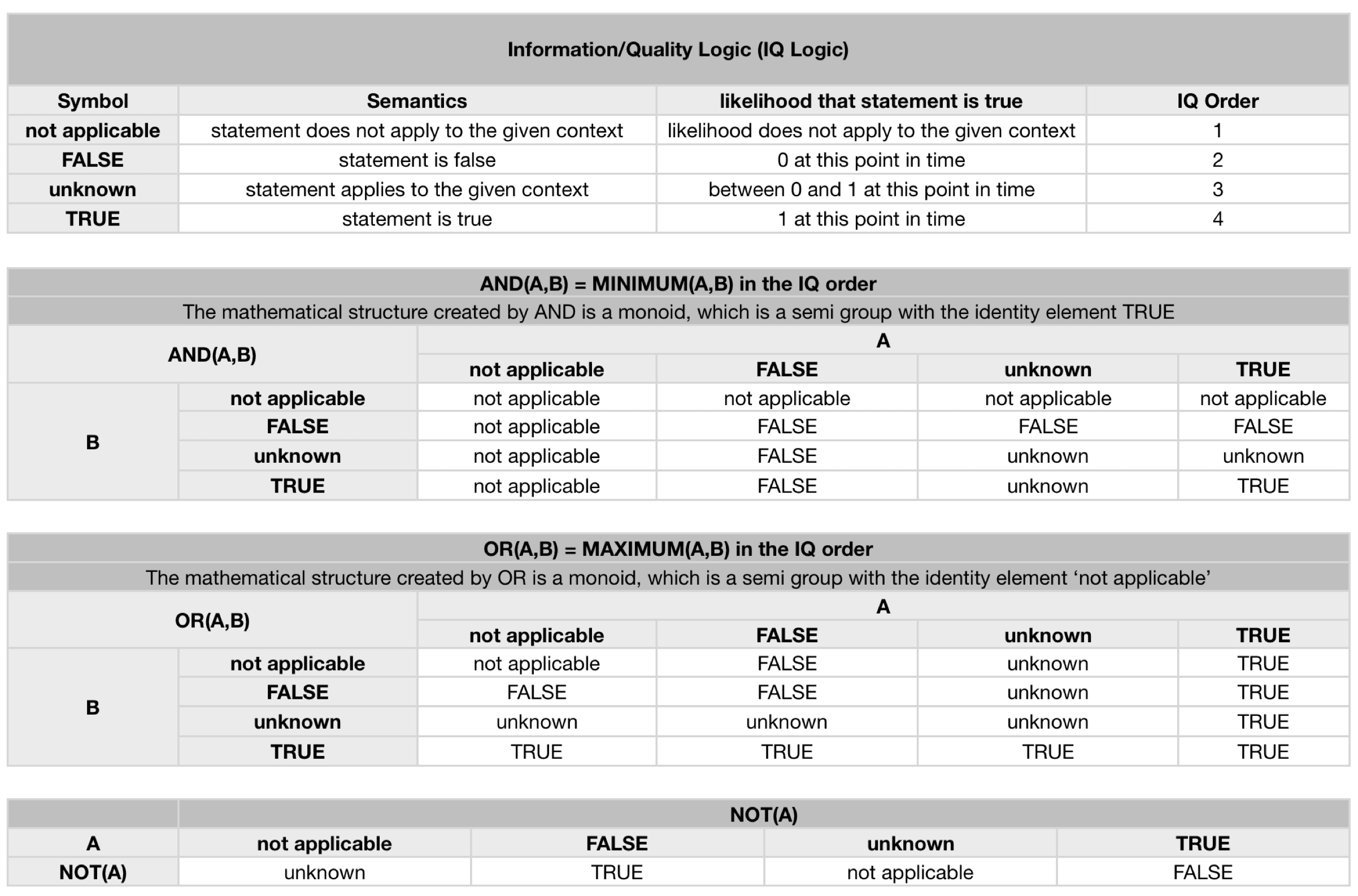
Among other things a suitable meta modelling paradigm allows human scale social agreements to be formalised and compared, without making naive assumptions about the way in which humans think and form beliefs about the world.

The above presentation provides a conceptual overview. You can listen to a corresponding audio recording for further explanations. Rather than synchronising the slides and the audio, the cognitive friction of manually scrolling through the slides may allow more information to be retained.

It is straight forward to extend Information Quality logic with probabilistic logic and reasoning for all those cases where available model instances (evidence and measurements from the bio-physical-social world) justify the calculation of well informed probabilities. A system like the Cell Platform can serve three complementary purposes:

  1. As a formal visual graphical notation for making explicit, validating, and creatively working with semantic models (human domain expertise)
  2. As a formal software processable notation and API for making human comprehensible semantic models available to machine learning algorithms
  3. As a formal software processable notation and API for storing and retrieving the results from machine learning algorithms
  4. As a formal reasoning system that combines Information Quality logic with empirically sourced probabilities from observations in the bio-physical-social world, which is capable of reasoning about certainty and relevance in a way that is comprehensible for humans

Among other things such a system will be able to take into account the physical limits of predictability of complex adaptive bio-physical-social systems, and can serve as a trustworthy tool in applying the scale-aware precautionary principle in relation to specific goals and limits of risk tolerance specified by humans.

The visual meta language of evolutionary design encapsulates and formalises timeless principles that can be traced back to the earliest rock paintings and diagrammatic representations, which enabled important knowledge and wisdom to be transmitted reliably in otherwise largely oral human scale cultures over tens of thousands of years.

Homo economicus: Cults based on addictions to power & convenience

The obsession with so-called artificial intelligence is a logical extension of the WEIRD anthropocentric delusion, a version 2.0 of individualistic homo economicus that appears to have shed the shackles of biological limitations

… until one of the long forgotten or emergent unknowns and no-longer-applicable assumptions throws a spanner into the gears of the mechanistic probabilistic house of cards of predictability, replacing one set of apparent certainties with another.

The following interview provides a rare and refreshingly honest perspective on the current capabilities and limitations of so called artificially intelligent systems, and perhaps even more importantly, it underscores the co-evolutionary nature of creativity, by distinguishing the current skill acquisition capabilities of artificially intelligent systems from the ability to creatively blend frames and symbolic metaphors to apply them to entirely new contexts.

Francois Chollet offers a good overview of the formal techniques and the cultural beliefs that are baked into current artificially intelligent systems, and makes many astute observations that I agree with. I won’t repeat them here. Instead, take the time to listen to the excellent level headed interview. In summary, doom-mongering is just as unwarranted as delusional beliefs that artificial superintelligence will ultimately make biological life redundant.

There are several topics on which my perspective differs from or extends Francois Chollet’s assessment in a notable way. For tools to be useful for human societies, artificially intelligent systems need to be specifically designed and constrained as follows:

  1. Integration with symbolic reasoning systems that support Information Quality logic, i.e. agent-context-aware semantics of unknown and not-applicable alongside the semantics of probabilities associated with the semantics of true and false.
  2. From the observed level of neurodiversity among humans, and also from the non-linear visual symbolic representations produced by per-historic humans, we know that linear language has never been the only conscious indexing and thinking tool.
  3. To reduce the unavoidable misunderstandings that go along with an over-reliance on linear language, human comprehensible visual models need to complement linear language as part of the interface with artificially intelligent systems.
  4. Artificially intelligent systems need to be tied to (a) goals of human scale groups, and their results must be recognised as part of the culture of such groups or to (b) purely scientific research goals, the results of which must be shared and made accessible as part of a global knowledge commons.
  5. The consumption of energy and resources needed to construct data centres and artificially intelligent systems needs to be factored into the extent to which building such systems is advisable and potentially useful.
  6. We can learn a lot about intelligent systems from studying living systems not limited to animals with nervous systems – all living systems, from single celled organisms all the way up to ecosystems, have some form of intelligence, i.e. forms of intelligence that are not easily (if at all) comprehensible at human spatial and temporal scales.
  7. I am even more pessimistic or cautious about our ability to understand the phenomenon of consciousness.

On the last two points, I am leaning towards a panpsychic philosophy, based on the observation that the simplest learning system is a feedback loop between two subsystems or components that are capable of storing a single bit of information that may alter their response to further sensory / external input.

It may well be possible to teach future artificially intelligent digital systems that are integrated with multi-level human scale symbolic modelling capabilities and support for Information Quality logic how to creatively blend frames and symbolic metaphors, but this will not be achieved by resource intensive and incredibly wasteful brute-force attempts within the limited frame of probabilistic reasoning. This will involve shifting from the competitive individualistic paradigm of “intelligence” – which mirrors the competitive ideology of homo economicus, to a paradigm of creative collaboration – which mirrors the relational way in which humans think and collectively and creatively make [adaptive] sense of the world at human scales.
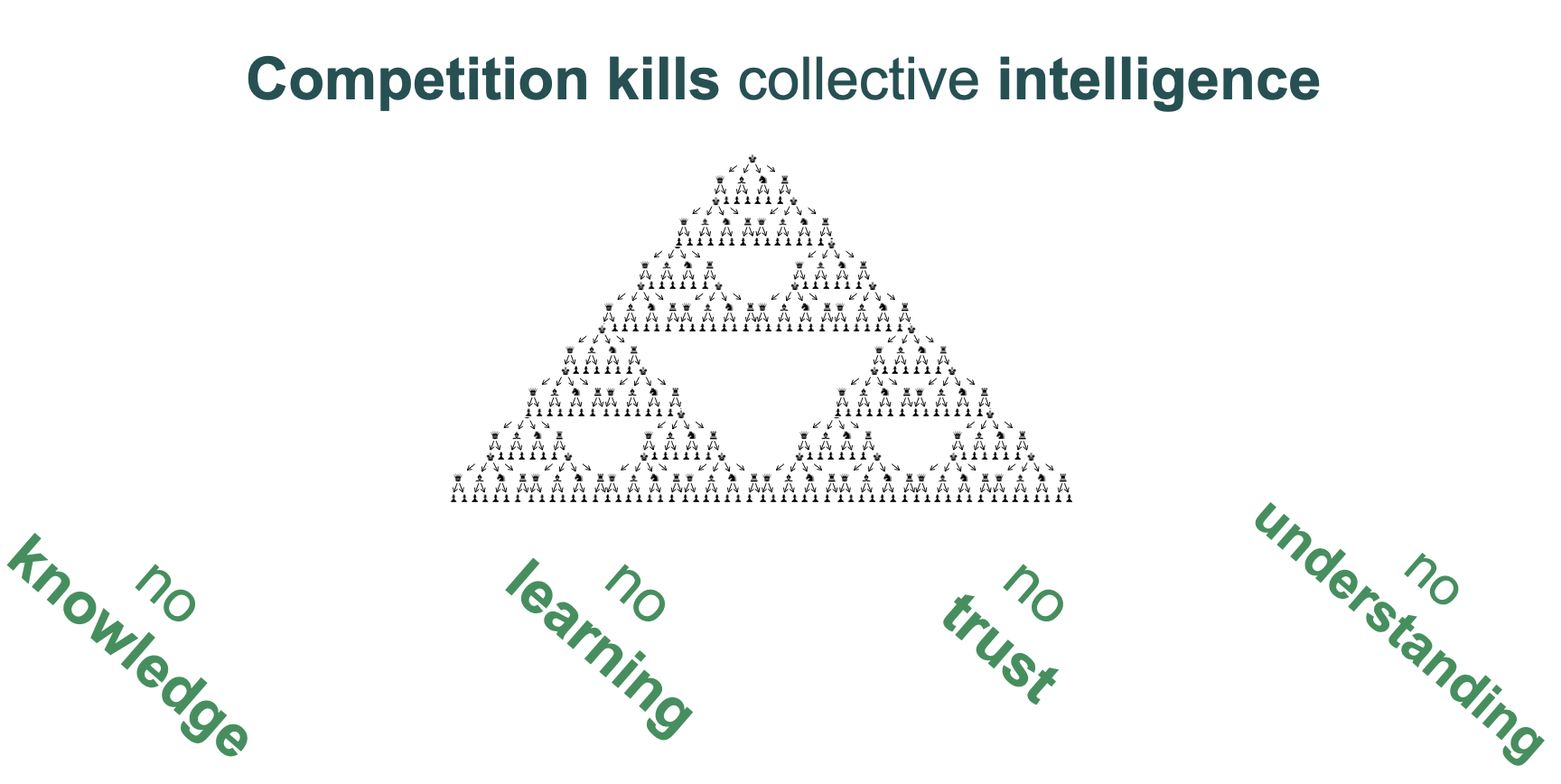
We currently live in a world of co-evolved human scale homo symbolicus, with delusional institutions and digital tools that religiously calculate and predict the behaviour of homo economicus. A fitting quote:

In our work we’ve tried to test some of the basic predictions made by the Homo economics model using some simple tools from behavioral economics applied across a diverse swath of human societies. Not only do we find that the Homo economicus predictions fail in every society (24 societies, multiple communities per society), but instructively, we find that it fails in different ways in different societies. Nevertheless, after our paper “In search of Homo economicus” in 2001 in the American Economic Review, we continued to search for him. Eventually, we did find him. He turned out to be a chimpanzee. The canonical predictions of the Homo economicus model have proved remarkably successful in predicting chimpanzee behavior in simple experiments. So, all theoretical work was not wasted, it was just applied to the wrong species.

Joseph Henrich, What Economists Haven’t Found: Humans
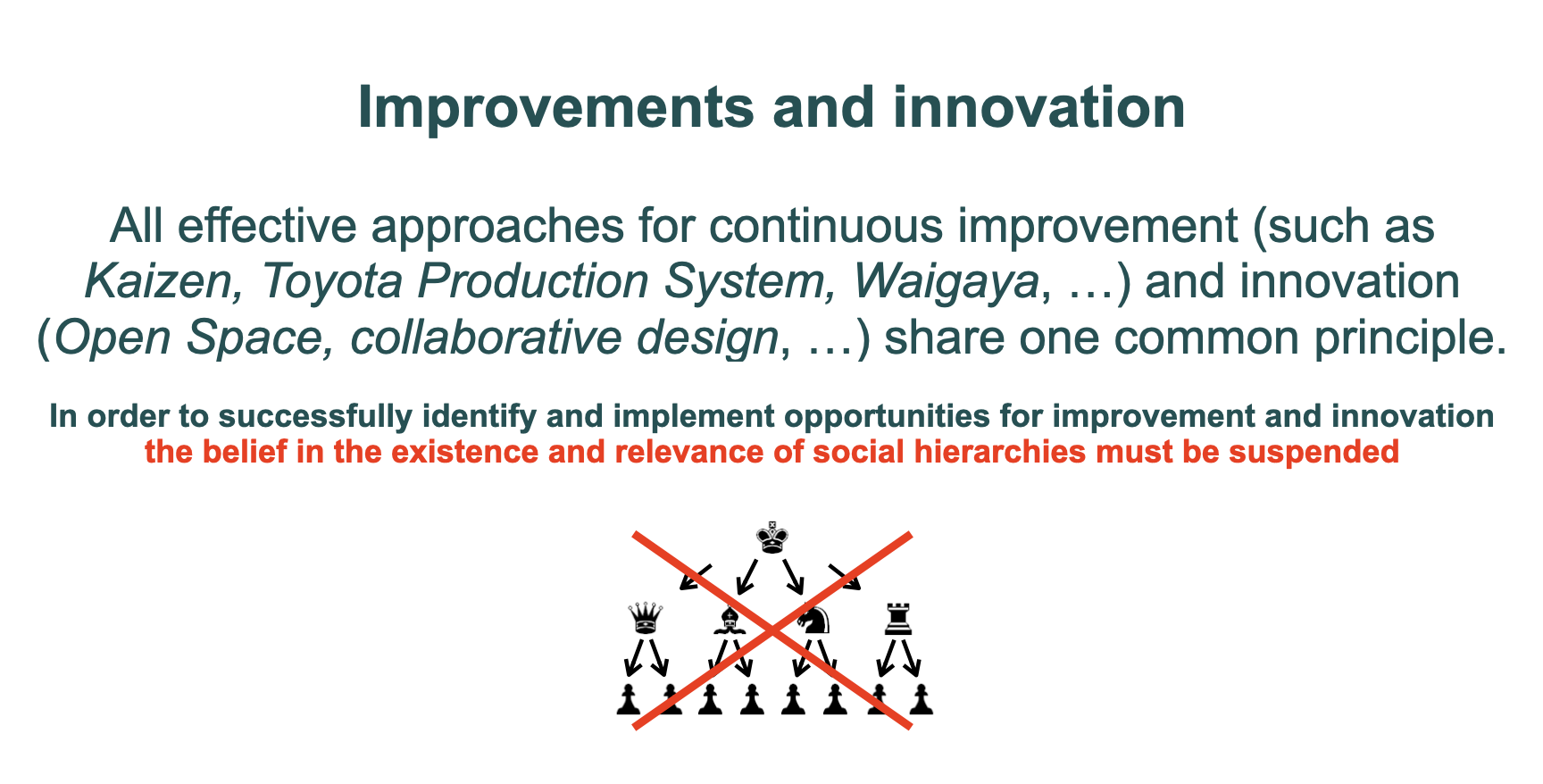
Certainties we can count on:

  1. Humans have cognitive and emotional limits. Implications: Small is beautiful. There is a human scale that is comprehensible, intimately integrated into Gaia. Beyond this scale, cultural institutions amount to anthropocentric hubris. 
  2. The last human won’t be a capitalist.

Homo ecologus: Cultures based on trust & mutual understanding

The big milestones along the way were events in which simpler forms of life entered into complex collaborations, resulting in multi-celled forms of life, and increasingly complex nested ecologies of multi-celled forms of life.

The fundamental logic of life is relational rather than individualistic and competitive. The complexity and diversity of life are the result of 4+ billion years of co-evolution. The research of Camillia Power in combination with the experimental work of Michael Tomassello provides compelling evidence for the co-evolutionary paradigm shift that occurred as part of the evolution of homo sapiens, i.e. homo symbolicus with a capacity for symbolic language and culture. The latter capabilities enabled humans to out-collaborate other primates in terms of adaptiveness and integration into a diversity of ecological niches. Creative and non-hierarchical collaboration allowed humans to transcend the collective limitations of other primates.

On evolutionary time scales all competitive and anthropocentric human empire building attempts are very short-lived and ecological misalignments that quickly get corrected by the timeless wisdom of 4+ billion years of co-evolution. The current human cultural disease that maximises human busyness and stress, has triggered co-evolutionary processes within Gaia. These processes are kicking in incredibly rapidly, clamping down on the myopic mono-species frame of evolution.

Digital automation has made the human world increasingly busy and event oriented, and less and less flow oriented. Neither we nor our machines understand any of the super-human scale systems we have created to the level needed to avoid existential risks from materialising.

The human spirit is the ability to make sense (co-create coherence) of the chaotic flow of a living ecology. If we shift towards organising and collaborating at human scale, we can keep human tacit knowledge in sync with the externalised knowledge that powers our automation systems. However, if in our naive modern anthropocentric arrogance, we continue to ignore the limits of human scale, our species may be functionally extinct within the next two centuries.

Outsourcing all thinking and thinking tools to machines is a stupid idea. Automated agents can only become increasingly useful assistants if we can relate to them at human scale – if we can easily communicate our motivations and values, and if they then assist us with actions that reflect our motivations and values.

Just like pocket calculators are useful cognitive tools, as long as we don’t lose sight of the hard limits of predictability, more advanced human scale assistants can provide us with calculated results much faster and more reliably than we can ourselves. The wise use of this capacity lies not in generating further busyness and yet another arms race in yet another attempt of outsmarting Gaia and each other, but in freeing up time for reconnecting with our ecological context at comprehensible scales.

“A small country has fewer people.
Though there are machines that can work ten to a hundred times faster than man, they are not needed.
The people take death seriously and do not travel far.
Though they have boats and carriages, no one uses them.
Though they have armor and weapons, no one displays them.
Men return to the knotting of rope in place of writing.
Their food is plain and good, their clothes fine but simple, their homes secure;
They are happy in their ways.
Though they live within sight of their neighbors,
And crowing cocks and barking dogs are heard across the way,
Yet they leave each other in peace while they grow old and die.”

Translated by Jane English, 1972, Chapter 80

Beyond that, advanced human scale assistants will be able to explain their reasoning process in a language that we can understand – but only if we do not unlearn how to think critically and creatively. We must not let naive biases from the information age (big data as the new oil / competitive advantage, fear of “intelligent” machines etc.) blind us and prevent us from seizing the cosmolocal collaborative advantages offered by the digital knowledge age.

Having faith in the living planet

Lived experience in nurturing and maintaining mutual trust at human scale is the key ingredient for being at ease in a seemingly unpredictable world. Being able to rely on each other is at the core of the evolutionary heritage of our species.

Mutual trust is a biophilic ecological phenomenon of emergent local predictability that is not limited to humans. In a dynamic ecological context, enduring relationships of mutual trust constitute the ingredients of a life affirming ecology of care that is integrated into the regenerative cyclical flow of life.

Healing starts with rediscovering our faith in humanity. The sacred cycle of life includes the joy of birth, the art of living well, and the process of dying in good company, and thereby giving back nutrients to the living planet. We heal by following our heart. We reduce cognitive dissonance by being human – by sobering up, by rejecting the life denying mono-cult, by seeing the beauty in all living beings.

In summary, to adapt to the co-evolutionary processes within Gaia that are already in progress, instead of perpetuating the momentum of machine assisted and fossil fuelled busyness as a “solution”, we are well advised to step off the busyness accelerator, and realign human culture with our biological evolutionary heritage:

  1. Limit the scope of our attention to comprehensible human scale
  2. Optimise for mutual trust and mutual aid rather than for profit for external financial investors, adopt compassionate cooperative social operating models
  3. Openly acknowledge and embrace unknowns to catalyse omni-directional learning
  4. Openly acknowledge considerations that are not-applicable within our human scale ecological contexts
  5. Celebrate the wonder of life, acknowledge the relevance of the bigger bio-regional and planetary context via our understanding of the natural sciences and in abstract spiritual terms, and avoid becoming overwhelmed by anthropocentric hubris
  6. Use modern technology for cosmolocal omni-directional learning at human scale, and engage in cosmolocal collaborative niche construction
  7. Recognise and provide assistance to those who are predisposed to addictions to social power and convenience, without tolerating any establishment of social power gradients

It is not an accident that permaculture principles are spreading like wildfire at a grassroots level. This is a healthy cultural immune response from sober homo symbolicus. In the misguided mono-species dominator model of cultural evolution, culture “is handed down” from god-like authorities.

In the ecological multi-species partnership model of cultural co-evolution, culture emerges from the soil and ecological context and co-evolves with homo symbolicus. Co-creating ecologies of care beyond the human allows us to experience beauty in a world that is completely out of control.

Healing from cultural cancer

Gaia is facing a metacrisis. But humanity is primarily facing a crisis of institutions and collective imagination. Many of us would be unable to recognise a healthy human scale cultural organism if we encountered one. This should scare us all.

“One who seeks knowledge learns something new every day.
One who seeks the Tao unlearns something new every day.
Less and less remains until you arrive at non-action.
When you arrive at non-action,
nothing will be left undone.
Mastery of the world is achieved
by letting things take their natural course.
You can not master the world by changing the natural way.”

Laozi, Translated by John H. McDonald, Chapter 48

Perhaps the scariest part of all for modern humans is the thought that we may have to give up all ambitions of attempting to actively shape the world beyond the scope of our local human scale.

  1. Anthropocentric cultural cancer
  2. Collapse and Ecocide as religious failure
  3. Healing from cultural cancer
  4. The path towards sobriety

Anthropocentric cultural cancer

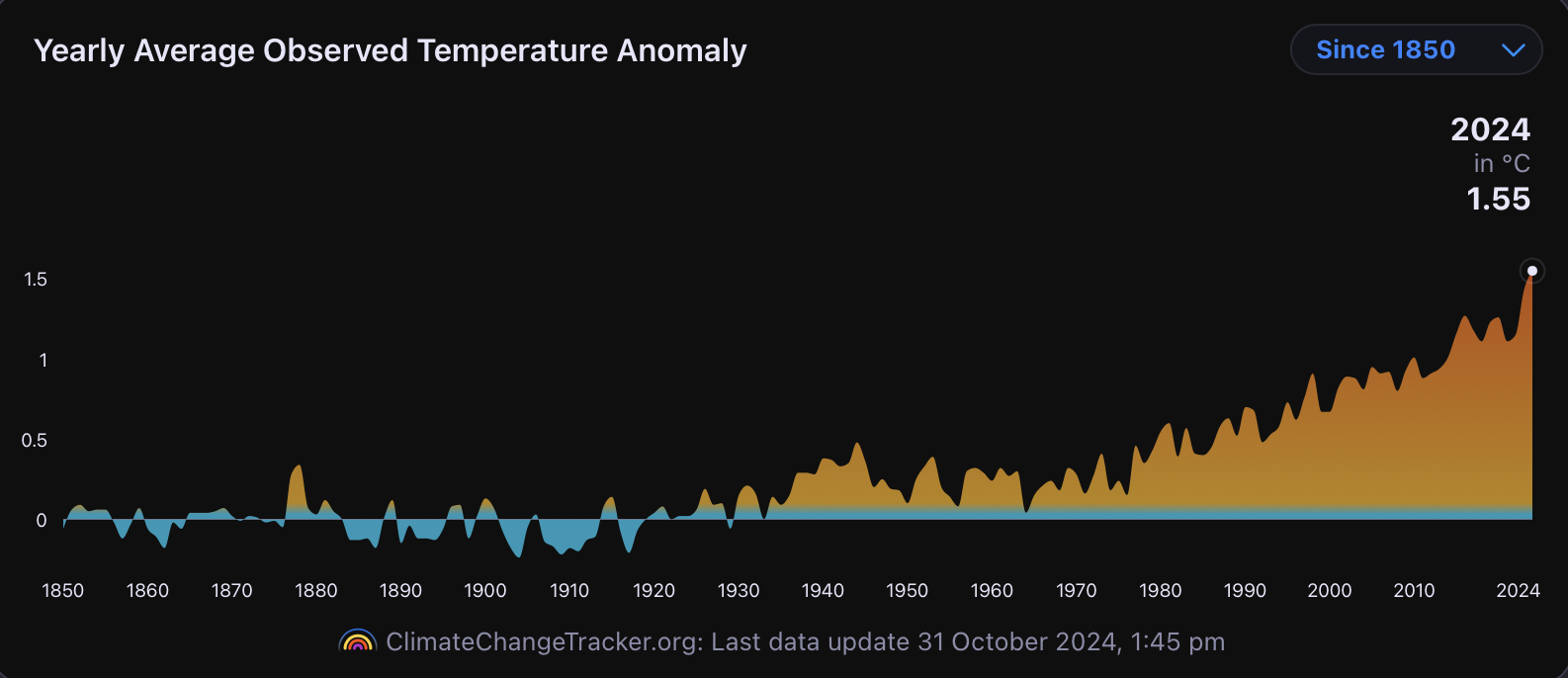
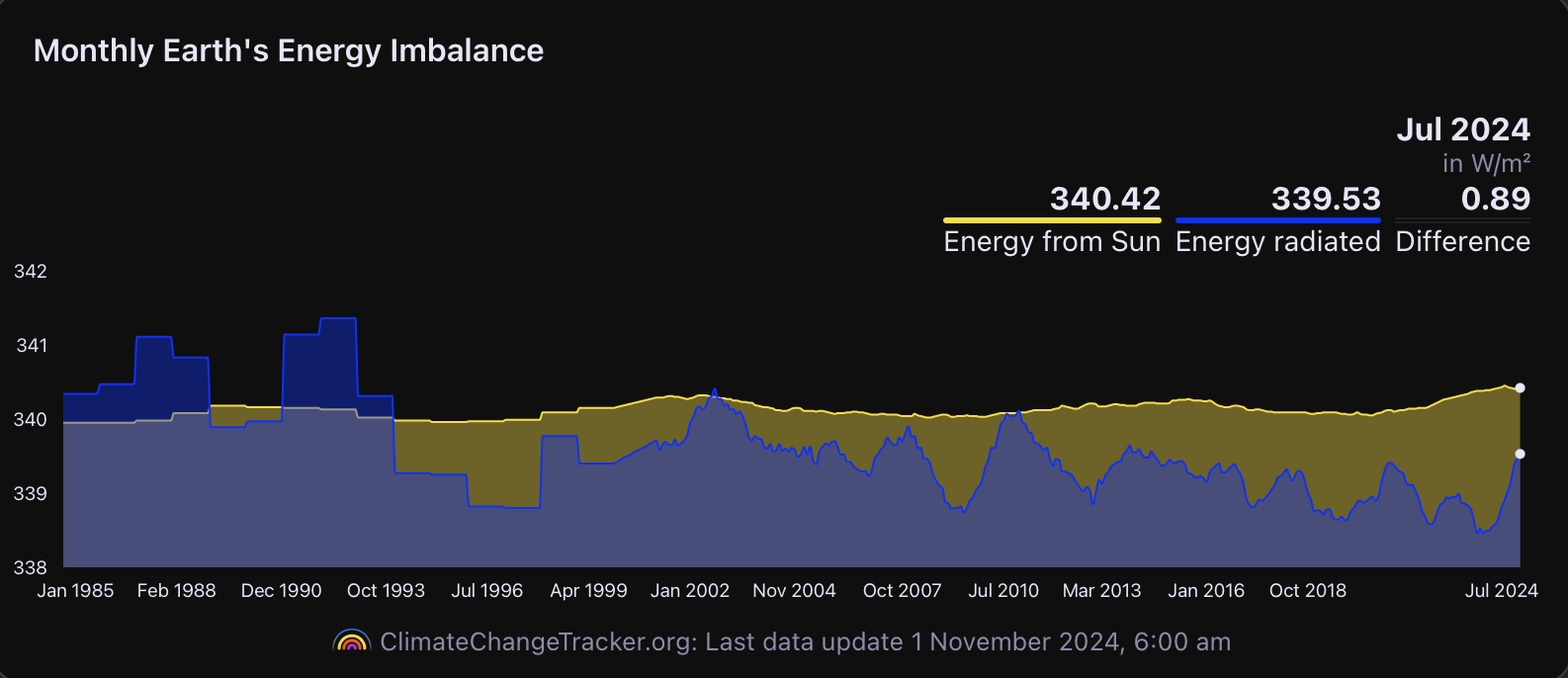
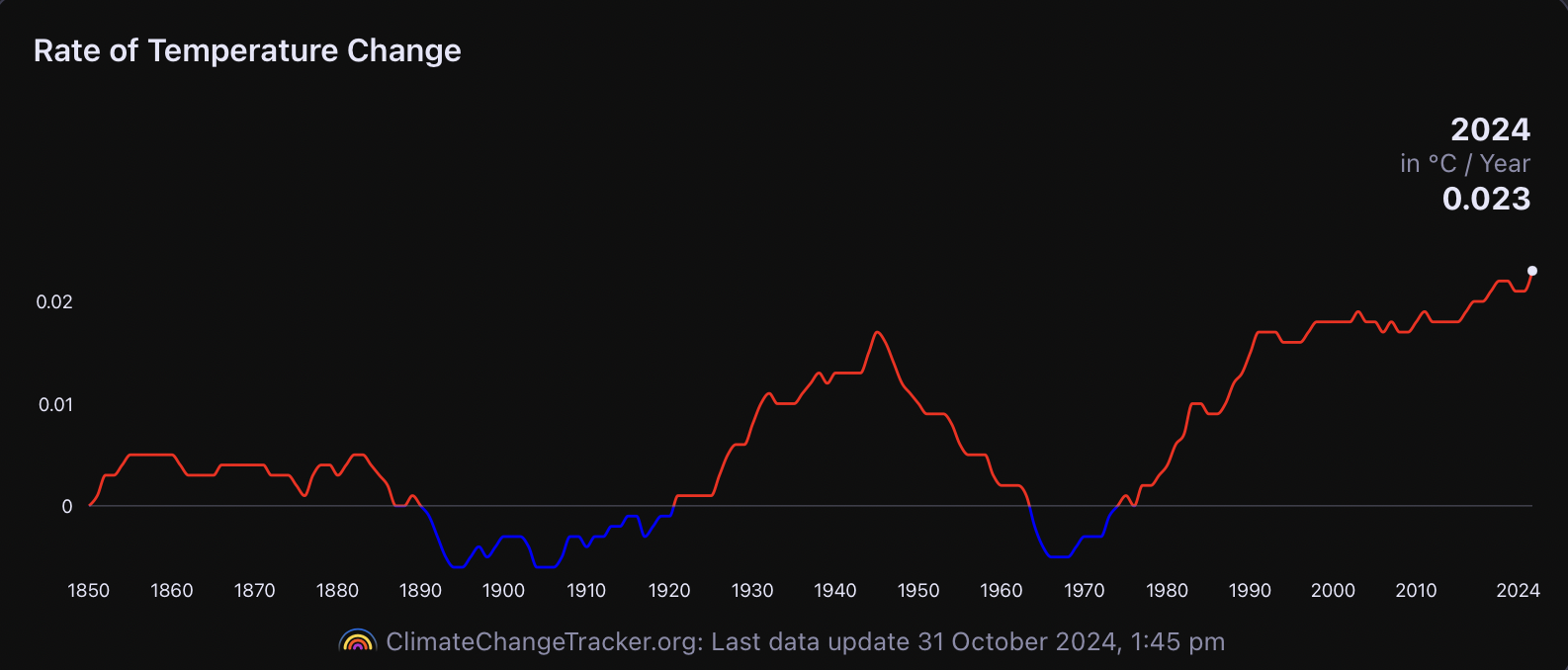
Plotting graphs of anthropocentric economic “externalities” and their effects in terms of temperature anomalies and energy imbalances speaks louder than many thousand words.

Human-induced greenhouse gas emissions

Observed temperature anomalies and energy imbalances

Temperature anomalies in 1950: no clear trend to observe

Temperature anomalies in 1975: no clear trend to observe yet

Temperature anomalies in 2000: a clear increase compared to 25 years earlier

Temperature anomalies in 2024: a continuation of the established trend

Collapse and Ecocide as religious failure

It is time to acknowledge the sanctity of all living beings, including Gaia, and to commit to nurturing life.

“Being very easy to comprehend,
These teachings are simple to practice.
Yet, few are they who will release ego
sufficiently to achieve understanding,
let alone the ability to practice.

These teachings have their source in nature,
Their master is the Tao.
Not comprehending this,
People find great difficulty in understanding the Sage.
So, with few people really understanding him,
He is most highly valued.

Thus the Sage,
Tho’ presenting a poor appearance, to the world,
Yet carries the riches of nature embedded in his core.”

Laozi, Translated by Alan B. Taplow, 1982, Chapter 70

The parties on the deck of the Titanic must continue until the last minute. This is how civilisations die. The analysis of modern elections by Hans Georg Moeller, goes some way to explain the paradigmatic cultural inertia that has culminated in the predicament we are now facing. Hans Georg Moeller is a German philosopher who has spent much of his career studying Chinese philosophy in Macau. In his analysis he draws on the works of 20th century French and German media theorists and sociologists.

To better understand the direction of the paradigmatic inertia of neoliberalism it is worthwhile reading Umberto Eco’s essay ‘Ur-Fascism’ (1995) in its entirety, which is based on first hand experience of fascism in Italy.

In spite of this fuzziness, I think it is possible to outline a list of features that are typical of what I would like to call Ur-Fascism, or Eternal Fascism. These features cannot be organized into a system; many of them contradict each other, and are also typical of other kinds of despotism or fanaticism. But it is enough that one of them be present to allow fascism to coagulate around it.

The above observation poses a challenge to all super-human scale groups, because some of the 14 features described in the essay are an inevitable consequence of super-human scale civilisation building attempts.

For Ur-Fascism there is no struggle for life but, rather, life is lived for struggle. Thus pacifism is trafficking with the enemy. It is bad because life is permanent warfare. 

This feature has been part of homo economicus since the beginning of the colonial era, and it has been perpetuated ever since. It is evident in the language of war that dominates US politics: the war against communism, the war on drugs, the war on terror, the war against [the other party], etc. The cult of homo economicus, in its neoliberal incarnation, has fascist characteristics. Fascism arrived many years ago, and the cancer has had time to grow.

The biosphere is suffering severely from the cultural cancer of homo economicus. Ecological overshoot is the direct result of the misguided religious belief in the god of the invisible hand.

The modern Military Industrial Complex weaves together big corporations and big government agencies into a highly resilient form of power. Elite power is not centralised in any single person, but is distributed across multiple corporations and institutions. Yanis Varoufakis talks about technofeudalism. Sheldon Wolin described this form of totalising power as inverted totalitarianism. The US is already the world champion in the reliance on guard labour. Full blown fascism is simply a matter of cranking up the violence dial of well established institutions of guard labour.

To people who feel deprived of a clear social identity, Ur-Fascism says that their only privilege is the most common one, to be born in the same country. This is the origin of nationalism. Besides, the only ones who can provide an identity to the nation are its enemies. Thus at the root of the Ur-Fascist psychology there is the obsession with a plot, 

In my experience growing numbers of people, on all continents, are wary of nationalism. Today, nationalism is strongest in the Anglosphere, in what I refer to as the ruins of the British Empire, which includes the American Empire. It is present in Aotearoa too, but thanks to the explicit commitment to an anti-nuclear stance across all parties, in a somewhat weakened form.

Ur-Fascism is based upon a selective populism, a qualitative populism, one might say. In a democracy, the citizens have individual rights, but the citizens in their entirety have a political impact only from a quantitative point of view – one follows the decisions of the majority. For Ur-Fascism, however, individuals as individuals have no rights, and the People is conceived as a quality, a monolithic entity expressing the Common Will. Since no large quantity of human beings can have a common will, the Leader pretends to be their interpreter. Having lost their power of delegation, citizens do not act; they are only called on to play the role of the People. Thus the People is only a theatrical fiction. 

This observation is consistent with Hans Georg Moeller’s critique of the spectacle of elections in the neoliberal era, and the implied lack of continuous deliberative dialogue to nurture mutual understanding. 

This new culture had to be syncretistic. Syncretism is not only, as the dictionary says, “the combination of different forms of belief or practice”; such a combination must tolerate contradictions. Each of the original messages contains a sliver of wisdom, and whenever they seem to say different or incompatible things it is only because all are alluding, allegorically, to the same primeval truth.
As a consequence, there can be no advancement of learning. Truth has been already spelled out once and for all, and we can only keep interpreting its obscure message.

Giving up the fascist obsession with social control at super-human scales entails shifting from the tiny frame of the Overton window of homo economicus towards an expanding sphere of discourse around ecologies of care beyond the human via a practice of deliberative [de-powered] dialogues in Open Space, at human scales. 

“The Taoist has no opinions
He simply listens, and acts
He treats those who are good as worthy
He treats those who aren’t good as worthy, too
And so he finds their goodness
He gives those who are honorable his trust
He gives those who are dishonorable his trust, too
And so he gains their trust.”

Laozi, Translated by Ted Wrigley, Chapter 49

Healthy cultural organisms emerge from a process of collaborative niche construction, and not via the not-so-invisible hand of powered-up unfettered capital interests:

  • Consistent use of the language we use matters, giving us shared frames and metaphors, shared understanding, and the ability to articulate shared values.
  • Acknowledging human emotional and cognitive limitations matters , as it gives us a visceral understanding of human scale.
  • Education in thinking tools rather than dogma matters, giving us access to timeless Daoist wisdom, indigenous wisdom, and neurodivergent wisdom.
  • Genuine appreciation of diversity matters, as it encourages us to engage in collaborative niche construction.

“Tao creates all things,
Virtue nurtures them.
Matter gives them forms, and
Environment allows them to succeed.
Thus all things honour Tao and value Virtue.
Tao being honoured and Virtue being valued,
They always occurred naturally without being dictated by anyone.

Thus:

Tao creates all things.
Virtue nurtures them:
They grow and develop;
Bear fruits and mature; and
Are cared for and protected.
To create, but not to possess;
To care for, but not to control;
To lead, but not to subjugate.
This is called the profound virtue.”

Laozi, Translated by Cheng, Chapter 51

Otherwise the door is open for fascism to grow and dominate. Together with my friends and colleagues I have been working on these topics for many years.

We need commitment, we need community. We need to create spaces of trust. But for that, there’s tremendous work that we need to be doing. But I don’t think that any of that work will be possible, should we not have that commitment–that commitment that no matter how challenging and tremendously difficult it will be to reckon with these narratives and to dismantle these narratives. Because seeing the horror in the eye of all these narratives that we live by comes with tremendous understanding. It will leave us very fragile, very vulnerable, and most, of course, are not willing to do that, because we don’t feel safe. But if we are able to stand the heat and create these spaces, if we commit to do this kind of work for the benefit of the planet, then we may be able to learn that we can fly.

Yuria Celidwen

The god of the invisible hand is a collective learning disability. The notion of technological innovation in the neoliberal era, to use Andre Spicer’s terminology, is a form of “sanctified bullshit”.

“If I possess even the smallest bits of wisdom, I would walk the great way, and my only fear would be in straying from this great road.
The great way is wide and the going is easy, but how people seem to prefer the side paths.
When the offices of government, the palaces and temples are richly adorned, and lavishly outfitted,
when the ministers are concerned chiefly with pomp and display;
the fields will be dusty and overgrown with rank weeds, and the granaries of the land will be bare.
The gentry wear elaborate richly embroidered clothes, eat and drink in excess with their sharp swords at their sides,
these are surely the robber barons.
This is not in keeping with the Way.”

Laozi, Translated by John Dicus, 2002, Chapter 53  

It is time to tune into the diversity of life around us, rather than to continue taking away from life more than we need at human scale.

Healing from cultural cancer

It is only once we have rediscovered a reasonable understanding of the notion of human scale potential and limitations that we can begin to make sense of the metacrisis within our local contexts and then to act accordingly, nurturing the emergence of healthy human scale cultural organisms.

“What is well planted cannot be uprooted.
What is well embraced cannot slip away.
The descendants will carry on the ancestral sacrifice from generation to generation.

Cultivate Virtue in your own person, and it will be genuine.
Cultivate it in the family, and it will be more than sufficient.
Cultivate it in the village, and it will last long.
Cultivate it in the state, and it will flourish abundantly.
Cultivate it in the world, and it will become universal.

Hence, a person must be perceived as person; a family as family; a village as village; a state as state; the world as world.
How do I know about the world?
It is through this.”

Laozi, Translated by Tien Cong Tran, Chapter 54

“The Tao may appear to be idealistic, but if you can put it into practice, you realize its greatness.
There are three traits which are required.

1. Compassion.
2. Patience.
3. Humility.

Compassionate and you can face things the way they are
Thus you can forgive yourself of any mistake.
Patient and you remain unmoved until the right opportunity arises.
Humble and you overcome self-importance, thus the ego.
In following the Tao, these are your three most valuable treasures.”

Laozi, Translated by David Bullen, Chapter 67

The above documentary consists of interviews with leading climate researchers, mainly from the Potsdam Institute for Climate Impact Research. It features many well made graphical explanations that complement the explanatory narrative. 

The graphics are helpful to get an intuitive understanding of the different time scales and of the rates of temperature changes that planetary systems have (not) experienced in the past. The documentary represents the official scientific consensus, i.e. it represents a “conservative” picture of where we are currently at in terms of crossing tipping points that trigger positive self-reinforcing feedback loops. 

Many climate scientists who specialise in a specific domain and specific tipping points, say the Greenland ice sheet, the West Antarctic ice sheet, or the Amazon Rain Forest, believe that some tipping points have already been crossed. One way to think about the uncertainty is that the observed data from all our scientific instruments tells us that we on the cusp of the point where the climate slowly and irreversibly slides into a state that no human and no other mammal has ever experienced.

Gaia is having a fever that is fighting anthropocentric cultural cancer. We are well advised to listen to Gaia, to observe what is happening to the animals and the other living beings in the biosphere. By the time the rats start leaving the ship, the political parties on the Titanic have become irrelevant.  Life continues, in accordance with the boundaries dictated by Gaia, and not according to the delusional logic of growth based economics.

Irrespective of exactly where the climate system is at, the cultural paradigmatic inertia of established institutions is such that it has become nearly impossible to prevent one or more tipping points from being crossed within the next 25 years.

Cultural paradigmatic inertia is a social problem, a domain that climate scientists are not well equipped to assess. But simply from lived experience, many climate scientists are extremely worried about the observed paradigmatic inertia.

Plotting the rise in CO2 and temperatures over the course of the industrial era, we can see that the rates at which CO2 and temperature are rising are accelerating. This is an ominous sign that tipping points may be reached or breached.

The effects in terms of the power of extreme weather events are exponential. This is what we are now seeing and experiencing with record breaking floods, storms, temperatures, and droughts all over the planet. New records are set every year. The destructive effects and the casualties caused by extreme weather events are going up correspondingly.

The trend of exponentially more powerful and more frequent extreme weather events will continue as long as humans are adding further greenhouse gasses to the atmosphere. This is something that politicians and government departments are ill equipped to comprehend and appreciate. Acknowledging this reality would have massive impacts on the priorities for climate adaptation policies and related investment decisions. 

What we are increasingly observing is that human built infrastructure is being overwhelmed by record breaking extreme events, and that politicians and governments are in reactive mode. “Rebuilding” infrastructure in the same places and to similar specifications as in the past is going to become more and more a game of building sand castles in the tidal zone. It is becoming more and more expensive and resource intensive, and eventually it will become futile. 

Socially and ecologically responsible policies now would need to be policies of coordinated retreat from obvious zones of increasing dangers, and assisted migration towards zones that are geographically less exposed to the forces of powerful extreme weather events. Such policies can only come into being if the notion of “growth based economics” is abandoned. At this point in  time neither the politicians nor the majority of voters are prepared to take this step of “breaking” the growth based economic paradigm.

In the rear view mirror of history the refusal to abandon growth based economics will be viewed as a form of collective insanity.

Therefore anyone who understands the current state of the climate system is well advised to independently assess the situation, and to plan and act accordingly – and not to wait for government departments to offer trustworthy advice and guidance. Established institutions consistently underestimate the risks and the full downstream effects of extreme weather events.

The path towards sobriety

“She who follows the way of the Tao
will draw the world to her steps.
She can go without fear of being injured,
because she has found peace and tranquility in her heart.

Where there is music and good food,
people will stop to enjoy it.
But words spoken of the Tao
seem to them boring and stale.

When looked at, there is nothing for them to see.
When listened for, there is nothing for them to hear.
Yet if they put it to use, it would never be exhausted.”

Laozi, Translated by J. H. McDonald, 1996, Chapter 35

Acknowledging all our fears, facing the pain, and turning fears into courage:

  1. Fully letting go of the WEIRD delusion of the self – exiting the cult of the self. This includes letting go of all the internalised ableism that permeates WEIRD social norms, and weaning ourselves off all of the addictions that stand in the way of committing to sacred relationships.
  2. Fully letting go of the WEIRD delusion of technological progress – exiting the cult of busyness. This includes incrementally weaning ourselves off all the conveniences afforded by the availability of fossil fuels.

“The Tao never acts with force,
yet there is nothing that it can not do.

If rulers could follow the way of the Tao,
then all of creation would willingly follow their example.
If selfish desires were to arise after their transformation,
I would erase them with the power of the Uncarved Block.

By the power of the Uncarved Block,
future generations would lose their selfish desires.
By losing their selfish desires,
the world would naturally settle into peace.”

–  Translated by John H. McDonald, 1996, Chapter 37  

Most importantly, we must acknowledge that we can not regain sobriety alone, in self-isolation, and we can only relearn to be fully human at a scale that is compatible with our biological cognitive and emotional limits, neither at smaller scales, nor at larger scales.

Healthy cultural organisms do not consist of:

  • Isolated individuals
  • Atomised nuclear families
  • Incomprehensibly complex groups and institutions

In fact, the relational nature of the big cycle of life is obscured as long as long as we attempt to define cultural organisms as groups of people or even groups of living beings beyond the human.

The human capacity for language would not have given us any adaptive ecological advantage if it did not primarily serve the purpose of improving our ability to understand, trust, and rely on each other, and thereby to enable us to engage in collaborative niche construction at human scale – such that every human in a cultural organism to some extent contributes unique capabilities and lived experiences to the cultural organism.

“The source is a mother.
Nature is her child. 
To know the mother, know the children. 
They – you – will always return to her. 
They – you – will persist in death. 
Stop your chattering, 
close your eyes and find the still moment 
that is the center and the end of life. 
Find truth even, or especially, in what is smallest. 
Let the light bathe your body. 
Live.”

Laozi, Translated by Crispin Starwell, Chapter 52

All of this is compatible with what we know about the innate collaborative inclinations of human babies to assist other humans who seem to be struggling – including strangers who are not familiar care givers. It also points to an innate predisposition towards highly egalitarian cultures, which counteracts the latent capacity for establishing dominance hierarchies that we share with other primates. There is a substantial body of anthropological evidence for this claim, which stands in obvious opposition to the dominant modern economic doctrine.

“The movement of Tao in the course of time is to return to Simplicity;
The working of Tao is so subtle that is ostensible effect may not be immediately noticeable.
Myriad things and creatures on Earth were originated from something;
This something describable by us was launched ultimately from nothing which is beyond our description.”

Laozi, Translated by Lee Sun Chen Org, Chapter 40