
The fundamental mismatch between hierarchical anthropocentric ideologies and cultures that embrace conscious collaborative niche construction beyond the human can not be over-emphasised. The former is best understood as a form of cultural disease and the latter is best understood as the natural flow of life that encapsulates 4+ billion years of Gaia’s wisdom.
Homo symbolicus is the result of co-evolutionary processes (within groups and between groups) within the context of a species in which the capacity for symbolic culture was emerging.
Humans applied their indigenous understanding of co-evolutionary processes within an ecological context, consciously engaging in co-evolution with plants and later animals. What modern anthropocentric humans fail to see is the extent to which “selective breeding” is a co-evolutionary process, to which the plants and animals are contributing as much as the humans.
- The human capacity for culture
- Homo economicus: Cults based on addictions to power & convenience
- Homo ecologus: Cultures based on trust & mutual understanding
- Having faith in the living planet
The human capacity for culture
The human capacity for culture is the unique human capacity for rapid co-evolution at human scales, at a speed that is several times faster than the speed of genetic evolution.
All novel forms of problem solving in the living world involve co-evolutionary ecological processes – a combination of creativity and collaboration. Co-evolution has been the big evolutionary story of biology all along, long before humans co-evolved the capacity for symbolic culture.

Co-evolutionary processes can be understood through the frames of omni-directional learning and collaborative niche construction. Mutual trust and deep mutual appreciation of differences as much as commonalities are fundamental to all forms of collaborative niche construction.
Creative collaboration is a form of omni-directional learning that relies on conceptual blending – the blending of frames and perspectives within an ecological context that is comprehensible for humans, attuned to human cognitive and emotional abilities, catalysed by a culture that centres compassion, patience, and humility. This is beautifully illustrated by the work of Brett Victor.
Another example of tool assisted co-evolution and creative collaboration is the co-evolutionary meta modelling / co-design paradigm for filtering, human scale collaboration, multi-level modelling, and omni-directional learning that emerged from S23M’s Cell Platform prototype, which includes support for a formal 4-state Information Quality (IQ) logic (true, false, unknown, not-applicable), allowing humans and machines to document shared understanding and consensus with confidence and precision.
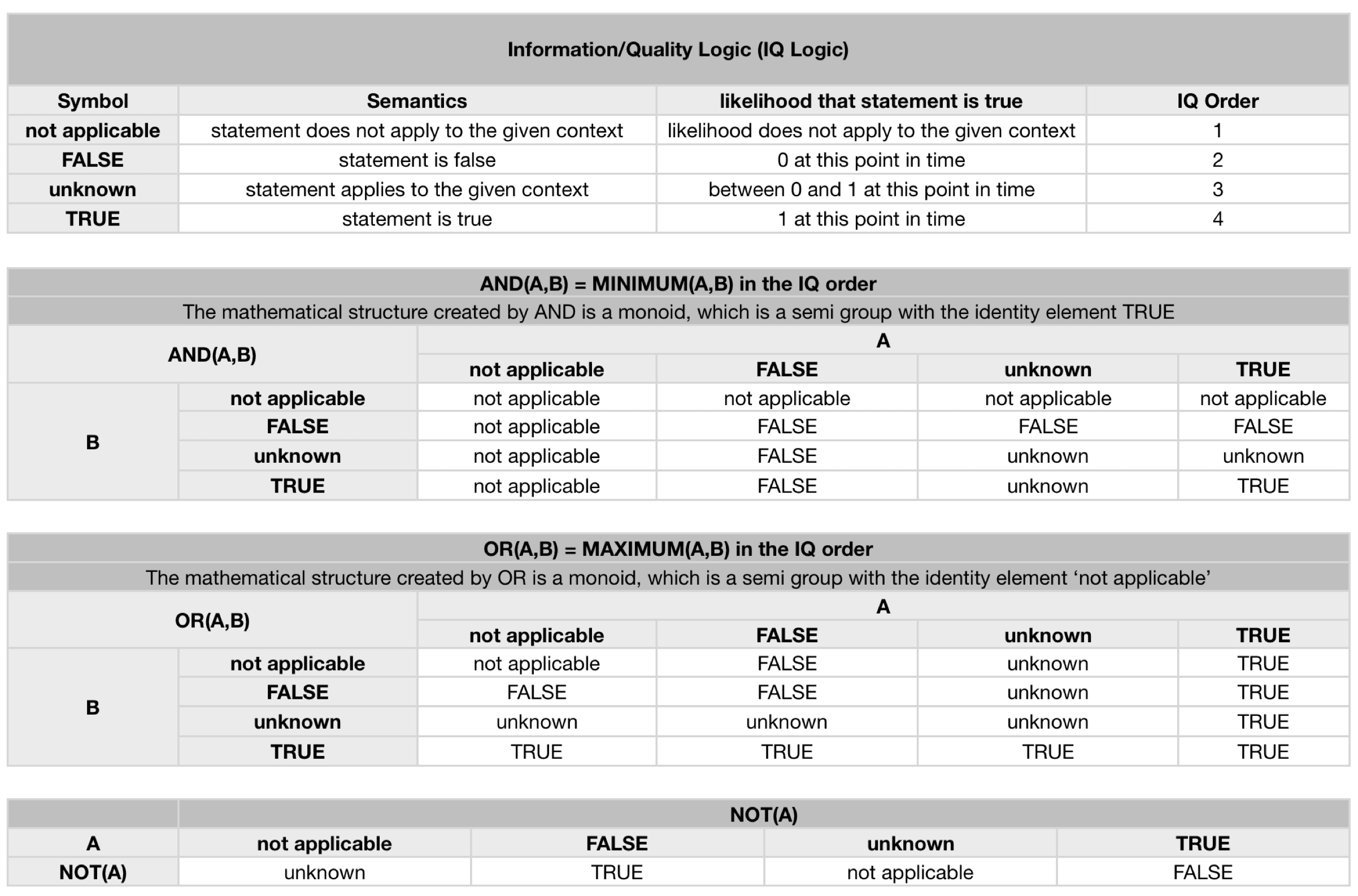
Among other things a suitable meta modelling paradigm allows human scale social agreements to be formalised and compared, without making naive assumptions about the way in which humans think and form beliefs about the world.
The above presentation provides a conceptual overview. You can listen to a corresponding audio recording for further explanations. Rather than synchronising the slides and the audio, the cognitive friction of manually scrolling through the slides may allow more information to be retained.
It is straight forward to extend Information Quality logic with probabilistic logic and reasoning for all those cases where available model instances (evidence and measurements from the bio-physical-social world) justify the calculation of well informed probabilities. A system like the Cell Platform can serve three complementary purposes:
- As a formal visual graphical notation for making explicit, validating, and creatively working with semantic models (human domain expertise)
- As a formal software processable notation and API for making human comprehensible semantic models available to machine learning algorithms
- As a formal software processable notation and API for storing and retrieving the results from machine learning algorithms
- As a formal reasoning system that combines Information Quality logic with empirically sourced probabilities from observations in the bio-physical-social world, which is capable of reasoning about certainty and relevance in a way that is comprehensible for humans
Among other things such a system will be able to take into account the physical limits of predictability of complex adaptive bio-physical-social systems, and can serve as a trustworthy tool in applying the scale-aware precautionary principle in relation to specific goals and limits of risk tolerance specified by humans.
The visual meta language of evolutionary design encapsulates and formalises timeless principles that can be traced back to the earliest rock paintings and diagrammatic representations, which enabled important knowledge and wisdom to be transmitted reliably in otherwise largely oral human scale cultures over tens of thousands of years.
Homo economicus: Cults based on addictions to power & convenience
The obsession with so-called artificial intelligence is a logical extension of the WEIRD anthropocentric delusion, a version 2.0 of individualistic homo economicus that appears to have shed the shackles of biological limitations
… until one of the long forgotten or emergent unknowns and no-longer-applicable assumptions throws a spanner into the gears of the mechanistic probabilistic house of cards of predictability, replacing one set of apparent certainties with another.
The following interview provides a rare and refreshingly honest perspective on the current capabilities and limitations of so called artificially intelligent systems, and perhaps even more importantly, it underscores the co-evolutionary nature of creativity, by distinguishing the current skill acquisition capabilities of artificially intelligent systems from the ability to creatively blend frames and symbolic metaphors to apply them to entirely new contexts.
Francois Chollet offers a good overview of the formal techniques and the cultural beliefs that are baked into current artificially intelligent systems, and makes many astute observations that I agree with. I won’t repeat them here. Instead, take the time to listen to the excellent level headed interview. In summary, doom-mongering is just as unwarranted as delusional beliefs that artificial superintelligence will ultimately make biological life redundant.
There are several topics on which my perspective differs from or extends Francois Chollet’s assessment in a notable way. For tools to be useful for human societies, artificially intelligent systems need to be specifically designed and constrained as follows:
- Integration with symbolic reasoning systems that support Information Quality logic, i.e. agent-context-aware semantics of unknown and not-applicable alongside the semantics of probabilities associated with the semantics of true and false.
- From the observed level of neurodiversity among humans, and also from the non-linear visual symbolic representations produced by per-historic humans, we know that linear language has never been the only conscious indexing and thinking tool.
- To reduce the unavoidable misunderstandings that go along with an over-reliance on linear language, human comprehensible visual models need to complement linear language as part of the interface with artificially intelligent systems.
- Artificially intelligent systems need to be tied to (a) goals of human scale groups, and their results must be recognised as part of the culture of such groups or to (b) purely scientific research goals, the results of which must be shared and made accessible as part of a global knowledge commons.
- The consumption of energy and resources needed to construct data centres and artificially intelligent systems needs to be factored into the extent to which building such systems is advisable and potentially useful.
- We can learn a lot about intelligent systems from studying living systems not limited to animals with nervous systems – all living systems, from single celled organisms all the way up to ecosystems, have some form of intelligence, i.e. forms of intelligence that are not easily (if at all) comprehensible at human spatial and temporal scales.
- I am even more pessimistic or cautious about our ability to understand the phenomenon of consciousness.
On the last two points, I am leaning towards a panpsychic philosophy, based on the observation that the simplest learning system is a feedback loop between two subsystems or components that are capable of storing a single bit of information that may alter their response to further sensory / external input.
It may well be possible to teach future artificially intelligent digital systems that are integrated with multi-level human scale symbolic modelling capabilities and support for Information Quality logic how to creatively blend frames and symbolic metaphors, but this will not be achieved by resource intensive and incredibly wasteful brute-force attempts within the limited frame of probabilistic reasoning. This will involve shifting from the competitive individualistic paradigm of “intelligence” – which mirrors the competitive ideology of homo economicus, to a paradigm of creative collaboration – which mirrors the relational way in which humans think and collectively and creatively make [adaptive] sense of the world at human scales.
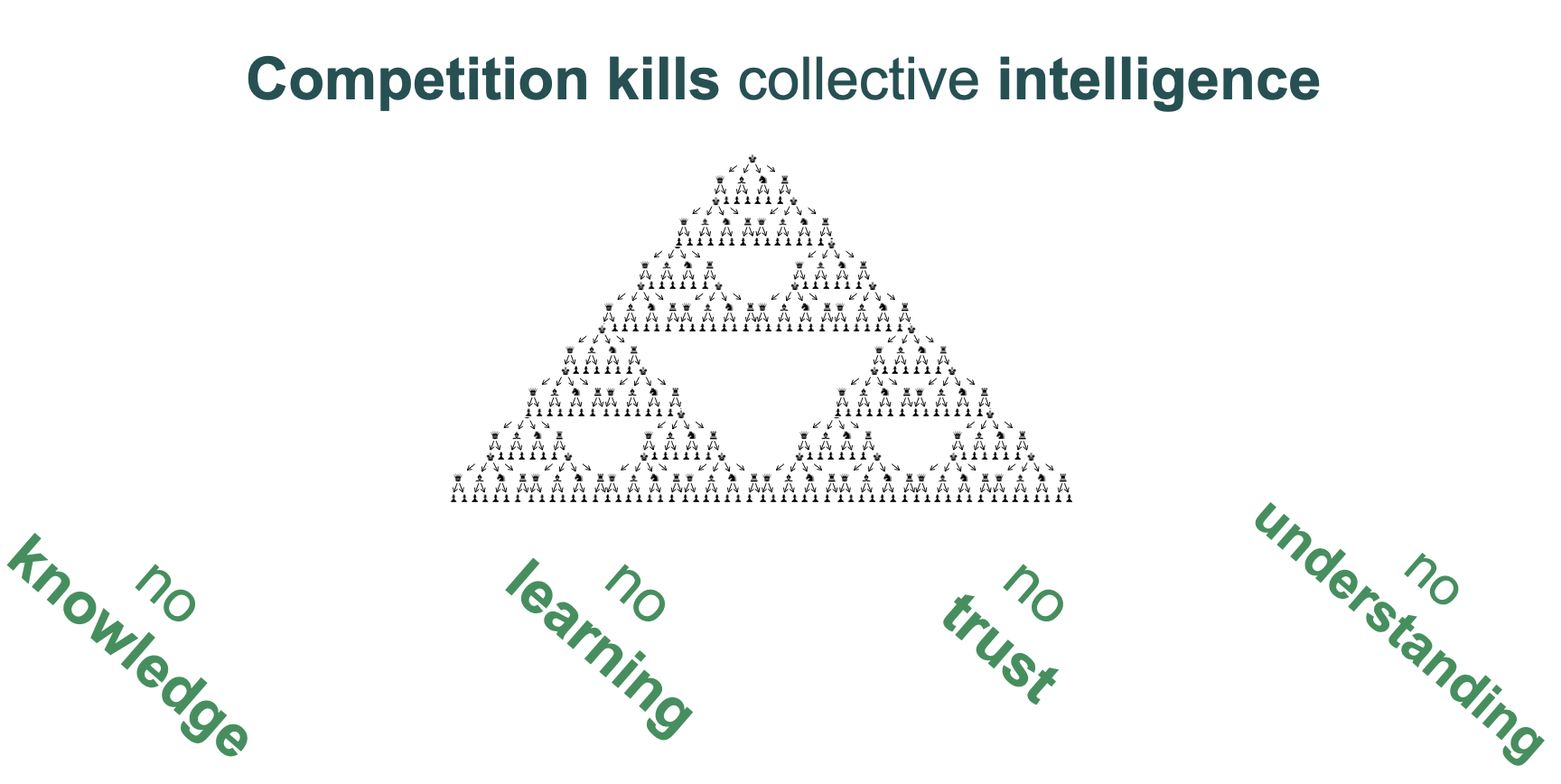
We currently live in a world of co-evolved human scale homo symbolicus, with delusional institutions and digital tools that religiously calculate and predict the behaviour of homo economicus. A fitting quote:
In our work we’ve tried to test some of the basic predictions made by the Homo economics model using some simple tools from behavioral economics applied across a diverse swath of human societies. Not only do we find that the Homo economicus predictions fail in every society (24 societies, multiple communities per society), but instructively, we find that it fails in different ways in different societies. Nevertheless, after our paper “In search of Homo economicus” in 2001 in the American Economic Review, we continued to search for him. Eventually, we did find him. He turned out to be a chimpanzee. The canonical predictions of the Homo economicus model have proved remarkably successful in predicting chimpanzee behavior in simple experiments. So, all theoretical work was not wasted, it was just applied to the wrong species.
Joseph Henrich, What Economists Haven’t Found: Humans
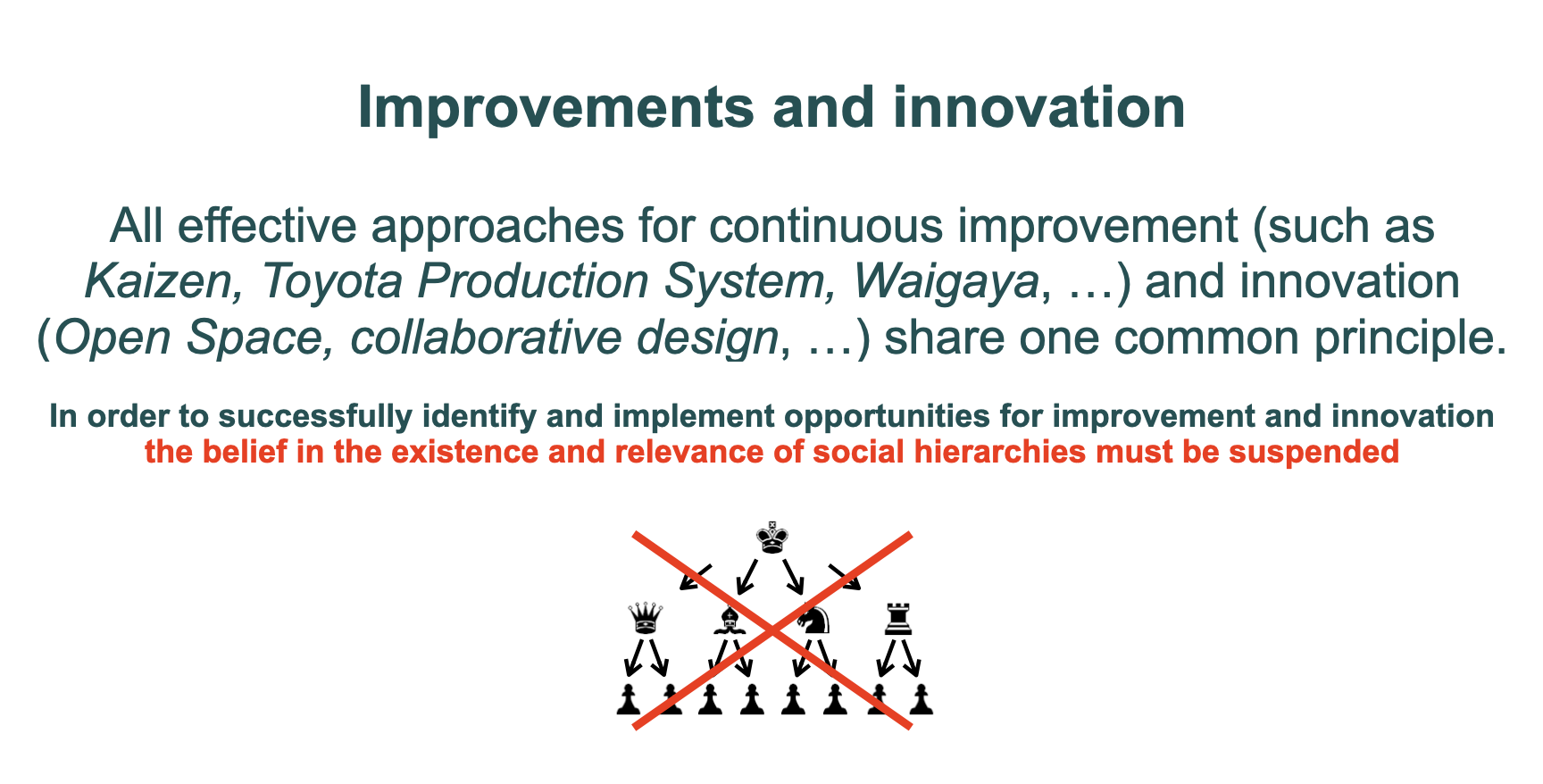
Certainties we can count on:
- Humans have cognitive and emotional limits. Implications: Small is beautiful. There is a human scale that is comprehensible, intimately integrated into Gaia. Beyond this scale, cultural institutions amount to anthropocentric hubris.
- The last human won’t be a capitalist.
Homo ecologus: Cultures based on trust & mutual understanding
The big milestones along the way were events in which simpler forms of life entered into complex collaborations, resulting in multi-celled forms of life, and increasingly complex nested ecologies of multi-celled forms of life.
The fundamental logic of life is relational rather than individualistic and competitive. The complexity and diversity of life are the result of 4+ billion years of co-evolution. The research of Camillia Power in combination with the experimental work of Michael Tomassello provides compelling evidence for the co-evolutionary paradigm shift that occurred as part of the evolution of homo sapiens, i.e. homo symbolicus with a capacity for symbolic language and culture. The latter capabilities enabled humans to out-collaborate other primates in terms of adaptiveness and integration into a diversity of ecological niches. Creative and non-hierarchical collaboration allowed humans to transcend the collective limitations of other primates.

On evolutionary time scales all competitive and anthropocentric human empire building attempts are very short-lived and ecological misalignments that quickly get corrected by the timeless wisdom of 4+ billion years of co-evolution. The current human cultural disease that maximises human busyness and stress, has triggered co-evolutionary processes within Gaia. These processes are kicking in incredibly rapidly, clamping down on the myopic mono-species frame of evolution.

Digital automation has made the human world increasingly busy and event oriented, and less and less flow oriented. Neither we nor our machines understand any of the super-human scale systems we have created to the level needed to avoid existential risks from materialising.
The human spirit is the ability to make sense (co-create coherence) of the chaotic flow of a living ecology. If we shift towards organising and collaborating at human scale, we can keep human tacit knowledge in sync with the externalised knowledge that powers our automation systems. However, if in our naive modern anthropocentric arrogance, we continue to ignore the limits of human scale, our species may be functionally extinct within the next two centuries.
Outsourcing all thinking and thinking tools to machines is a stupid idea. Automated agents can only become increasingly useful assistants if we can relate to them at human scale – if we can easily communicate our motivations and values, and if they then assist us with actions that reflect our motivations and values.
Just like pocket calculators are useful cognitive tools, as long as we don’t lose sight of the hard limits of predictability, more advanced human scale assistants can provide us with calculated results much faster and more reliably than we can ourselves. The wise use of this capacity lies not in generating further busyness and yet another arms race in yet another attempt of outsmarting Gaia and each other, but in freeing up time for reconnecting with our ecological context at comprehensible scales.
“A small country has fewer people.
Though there are machines that can work ten to a hundred times faster than man, they are not needed.
The people take death seriously and do not travel far.
Though they have boats and carriages, no one uses them.
Though they have armor and weapons, no one displays them.
Men return to the knotting of rope in place of writing.
Their food is plain and good, their clothes fine but simple, their homes secure;
They are happy in their ways.
Though they live within sight of their neighbors,
And crowing cocks and barking dogs are heard across the way,
Yet they leave each other in peace while they grow old and die.”
Translated by Jane English, 1972, Chapter 80
Beyond that, advanced human scale assistants will be able to explain their reasoning process in a language that we can understand – but only if we do not unlearn how to think critically and creatively. We must not let naive biases from the information age (big data as the new oil / competitive advantage, fear of “intelligent” machines etc.) blind us and prevent us from seizing the cosmolocal collaborative advantages offered by the digital knowledge age.
Having faith in the living planet
Lived experience in nurturing and maintaining mutual trust at human scale is the key ingredient for being at ease in a seemingly unpredictable world. Being able to rely on each other is at the core of the evolutionary heritage of our species.
Mutual trust is a biophilic ecological phenomenon of emergent local predictability that is not limited to humans. In a dynamic ecological context, enduring relationships of mutual trust constitute the ingredients of a life affirming ecology of care that is integrated into the regenerative cyclical flow of life.
Healing starts with rediscovering our faith in humanity. The sacred cycle of life includes the joy of birth, the art of living well, and the process of dying in good company, and thereby giving back nutrients to the living planet. We heal by following our heart. We reduce cognitive dissonance by being human – by sobering up, by rejecting the life denying mono-cult, by seeing the beauty in all living beings.
In summary, to adapt to the co-evolutionary processes within Gaia that are already in progress, instead of perpetuating the momentum of machine assisted and fossil fuelled busyness as a “solution”, we are well advised to step off the busyness accelerator, and realign human culture with our biological evolutionary heritage:
- Limit the scope of our attention to comprehensible human scale
- Optimise for mutual trust and mutual aid rather than for profit for external financial investors, adopt compassionate cooperative social operating models
- Openly acknowledge and embrace unknowns to catalyse omni-directional learning
- Openly acknowledge considerations that are not-applicable within our human scale ecological contexts
- Celebrate the wonder of life, acknowledge the relevance of the bigger bio-regional and planetary context via our understanding of the natural sciences and in abstract spiritual terms, and avoid becoming overwhelmed by anthropocentric hubris
- Use modern technology for cosmolocal omni-directional learning at human scale, and engage in cosmolocal collaborative niche construction
- Recognise and provide assistance to those who are predisposed to addictions to social power and convenience, without tolerating any establishment of social power gradients
It is not an accident that permaculture principles are spreading like wildfire at a grassroots level. This is a healthy cultural immune response from sober homo symbolicus. In the misguided mono-species dominator model of cultural evolution, culture “is handed down” from god-like authorities.
In the ecological multi-species partnership model of cultural co-evolution, culture emerges from the soil and ecological context and co-evolves with homo symbolicus. Co-creating ecologies of care beyond the human allows us to experience beauty in a world that is completely out of control.
 Jorn Bettin
You must be logged in to post a comment.